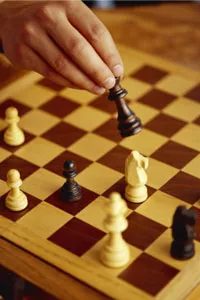
We are wired for games. It’s not a coincidence. From sixth-century India to modern servers, humans have built systems to trap each other’s logic. Chess is the heavyweight champion of this obsession. It traveled through Persia, hitchhiked with Vikings to England, and finally got its act together with standardized rules in the 19th century.
Today, parents and teachers push it for the academic boost. The logic holds up. The game forces you to simulate futures. You weigh consequences. You anticipate the enemy. It’s deceptively simple. A kid can learn the moves in an afternoon. A grandmaster spends a lifetime failing to master them.
But there’s a side hustle to the main game.
If you don’t just want to play, you want to solve. Enter chess puzzles.
What are chess puzzles and why do they matter?
Forget the full board. Forget the clock ticking down. A chess puzzle isolates a specific moment. It hands you a board state and says, “Fix this.”
Usually, you play White. Your job is to checkmate Black in two or three moves. Sometimes the task is weirder. These puzzles are ancient. Eighth and ninth-century masters were crafting them while the rest of Europe was still figuring out feudalism.
Why bother?
Beginners use them to learn endgames. It’s the fastest way to get dangerous. But advanced players dig into scenarios that never happen in real life. Statistically impossible positions. They play these not to get better at winning matches, but to stretch their brains into knots. Some puzzles require sacrifices so counterintuitive they feel like magic. One ninth-century brain-teaser took over a thousand years to crack.
So, which type fits your mood?
Which chess puzzles should you play?
You used to find these in newspaper sections or dusty books. Now, every chess app serves them up like digital fast food. But the categories remain strict.
Directmates are the bread and butter. You win in X moves.
– Two-movers : Checkmate in two.
– Three-movers : Checkmate in three.
– More-movers : Anything beyond that.
A good directmate has only one solution. It assumes Black plays perfectly. If there’s a loophole, the puzzle is broken. You read the solution using algebraic chess notation. Letters for files. Numbers for ranks. It’s easier to read from White’s perspective, which is why White almost always moves first in these riddles.
Then you have chess problems. These are artistic. They rarely occur in real games because the setup is too contrived. They exist for beauty. For elegance. Studies are similar but looser. Win or draw. No move limit. It’s a marathon, not a sprint.
If you want to break the rules entirely, look at heterodox puzzles. Also called fairy chess.
Here, the goal shifts. In a selfmate, White tries to force Black to checkmate White. Black fights it. In a helpmate, both sides cooperate to deliver the final blow. A reflexmate adds a cruel twist: if you can checkmate, you must. No passing.
Modern fairy chess gets stranger. New pieces enter the chat. The Nightrider. The Grasshopper. The board becomes a playground for logic that defies standard geometry.
How to solve retrograde analysis puzzles
This is where the game flips on its head.
Retrograde analysis doesn’t care about future moves. It cares about the past.
You look at a board. The pieces are frozen. The question isn’t “What do you do now?” It’s “How did we get here?”
Maybe you need to prove the position is legal. Maybe you need to identify whose turn it is. Perhaps you have to deduce the last move played. It’s detective work. You trace pawn structures. You count captures. You look for illegal king positions.
It requires a different kind of intuition. Less forward momentum. More structural forensics.
Chess puzzles aren’t just drills. They are a separate universe. You can spend a lifetime inside them. And you might never look at a standard game the same way again.
Which move was first?