


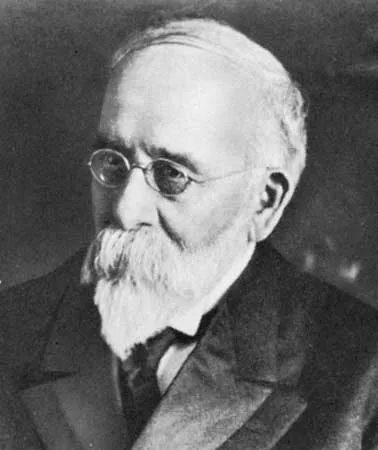
Charles Bessey didn’t just study plants. He changed how America studied them.
Born in Ohio in 1845, he died in Nebraska in 1915. Between those dates, he did something radical for a botanist in the late 19th century. He brought the European experimental lab model to the United States. He insisted that college-level botany wasn’t just about memorizing Latin names. It was about hands-on work. It was about morphology. It was about seeing how things actually grew and diverged.
His system of classification for flowering plants, or angiosperms, focused on evolutionary divergence. He traced primitive forms back to their roots. Many experts still think his framework is the most likely candidate to underpin a modern, comprehensive taxonomy of the plant kingdom. It was elegant. It was logical.
There is one catch, though. The original Bessey taxonomy, developed over 23 years between 1893 and 1915, leans heavily on North American species. This geographic bias limited its immediate application. Outside the north-central United States, it didn’t catch on widely. For decades, it remained a regional powerhouse rather than a global standard.
The Lab in the Dust
The shift started in Iowa. In 1870, Bessey took a botany teaching position at Iowa State Agricultural College in Ames. The facilities were rough. Basic, even. He had one compound microscope. That was it.
Yet he pushed through. He established a method of undergraduate instruction that mirrored European laboratory standards. It wasn’t about lectures. It was about doing. Students were getting their hands dirty. They were observing. They were testing hypotheses.
By 1884, he had honed this experimental approach to plant morphology. It was so refined that when he accepted the chair of botany at the newly founded University of Nebraska, the institution didn’t just catch up. It leaped ahead. Under his leadership, the university instantly became one of the nation’s top centers for botanical research. He had built a reputation on rigor, and the university rode that wave.
Textbooks That Lasted Generations
Bessey didn’t stop at research. He wrote the books that defined the field for half a century.
Botany for High Schools and Colleges (1880). The Essentials of Botany (1884). Essentials of College Botany (1914).
These weren’t dry academic exercises. They were widely popular. They dominated botanical instruction in the United States for more than 50 years. A student in 1900 learning plant biology was likely reading Bessey. A student in 1920 probably was too.
He made complex ideas accessible without dumbing them down. He explained why a leaf structure mattered. He showed how a root system adapted to dry soil. He connected the dots between morphology and environment.
Why It Still Matters
Why look back at Bessey now?
Because his emphasis on experimental methods laid the groundwork for modern biological sciences. He proved that you can’t understand a plant by looking at a dried specimen in a drawer. You have to study it. You have to trace its lineage. You have to watch it change.
His taxonomy may have been too focused


