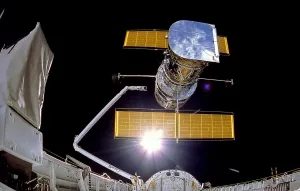
Thirty years ago, a telescope was launched into orbit that changed the way we see the universe better than ever before or since. It’s the Hubble Space Telescope.
Its vivid image is now an astronomical icon. we know them well. But beyond the beautiful images, Hubble’s data has fueled tremendous discoveries. It helps to understand black holes. It reveals dark matter. Measure the expansion rate of the universe.
It’s not just nostalgia for space machines. It tells about the tangible effects of 30 years of staring into the dark.
Breaking through the atmospheric twilight
Before Hubble, we studied the atmosphere. The air sparkles with light. Details become blurred. Telescopes on Earth cannot see what Hubble sees.
The Hubble telescope is above the nebula. It is located in low Earth orbit and offers a clear, unobstructed view. This transparency changes everything. This allows astronomers to see distant galaxies more clearly than ever before.
The first picture looks great. They attract the masses. However, the scientific value is much greater than the aesthetic value. This solution alone was groundbreaking.
Measure the rate of expansion
One of the biggest questions in astrophysics is how old the universe is. To answer this question, we need to know how fast the universe is expanding. This speed is called the Hubble constant.
Hubble played a key role in refining this chapter. I spotted a Cepheid star. These are stars whose brightness pulsates. Their heartbeat tells you how close they are.
By tracking these stars in distant galaxies, astronomers can calculate their rate of expansion. Early estimates were wrong. Hubble fixed them. The margin of error is reduced considerably.
result? We now know that the universe is about 13.8 billion years old. This accuracy was not obtained from soil calculations. It comes from the Hubble Eye in the sky.
The mystery of dark matter
Dark matter does not emit light. Does not reflect light. You can’t look at it directly. But I understand the meaning.
A cluster of galaxies discovered by Hubble. You can see how it bends light from objects behind it. This is the effect of gravitational lensing. The tension reveals the mass of the cluster.
Visible matter cannot explain gravity. There must be more. The Hubble data provide strong evidence for the existence of dark matter. It maps its distribution in a way that is impossible with ground-based telescopes.
This is not a direct image of dark matter. Here is a map showing the effect. This distinction is important. It shows researchers how to look for the unseen.
Middle black opening
At the center of many galaxies is a black hole. Super high quality. But evidence is needed to prove they were there.
Hubble observed the center of the galaxy. You can see the stars moving at incredible speeds. This speed means a huge source of gravity. There is no other explanation.
The data confirms that almost every large galaxy has a supermassive black hole. This changes our understanding of galaxy formation. This suggests a connection between black hole growth and galaxy evolution.
Hubble does more than just take pictures of black holes. This proves that they are there. And they are very common.
Data Legacy
Hubble’s mission lasted much longer than its original lifespan. Maintenance tasks keep it running. New instruments add functionality.
the data file is very large
Today, we take a lot of space trivia for granted. The age of the universe is about 13.8 billion years. Dark matter exists. Stars light up in clouds of dust and gas. A supermassive black hole is at the center of a galaxy. Now it feels like basic education. But none of this is certain until the Hubble Space Telescope begins observing.
For 30 years, this “orbital eye” has been our most important scientific instrument.
The numbers are astounding. More than 13,000 peer-reviewed papers rely on Hubble data. Since launching in 1990, it has taken 1.2 million pictures. That volume of sight changed astronomy forever. It’s not just about taking pretty pictures of space clouds. It opens a window into how stars and planets are born and die.
From the star nursery to the Galaxy Graveyard
Hubble’s early images of the “nursery of the stars” redefined what we thought we could clearly see.
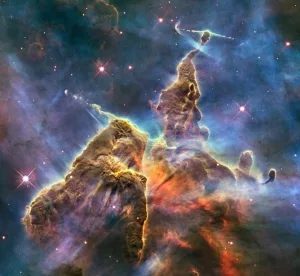
Take the Orion Nebula for example. Or the Carina Nebula. Before Hubble, these were just indistinct smudges from telescopes on Earth. Hubble reveals its chaotic and colorful beauty. Where the new sun shines, a swirling cloud of dust can be seen. We see jets of young stars emerging from their birth cocoons.
This is a fundamental change that the Hubble Space Telescope’s Discoveries brought about in general. Instead of seeing static points of light, we begin to see dynamic events.
There is also another side of the coin. The aftermath.
Hubble has provided countless images of what remains after a star’s life ends. Planetary nebulae. These are the luminescent shells of dying stars, whose outer layers are shed like Cosmic pupae. Supernova remnants. The violent explosion creates an ever-expanding field of debris.
These are more than just beautiful fireworks. They are heavy element factories. carbon. oxygen. iron. The material the planets are made of. And so are we.
“Hubble not only shows us what the universe looks like, but also how it works.”
The lifetime of the telescope is important here. It has been watching these processes for thirty years. This is only a moment for the universe, but for human perception it is equivalent to a lifetime. We’ve tracked changes in nebulae. We measured the expansion rate of supernova debris. A theory about how Galaxies recycle their material has been confirmed.
Without Hubble, we could still only guess. Of course, we also have models available. But we wouldn’t have the visual proof. Detailed, high-resolution evidence supports our understanding of the life cycle of the universe.
Why it still matters
People often ask why we still look up. Why fund another Telescope when Hubble is still working?
Because Hubble taught us to see. It sets the standard. Its data remains relevant. New papers are still being published from its archives. It became clear that space-based observations were needed. The atmosphere distorts the light. Hubble sat above that blur.
Images of Stellar nurseries and Planetary Nebulae are more than just historical relics. They are the baseline. All new telescopes, from the James Webb Telescope to Giant ground-based telescopes, measures itself against Hubble’s clarity and reach.
We know about dark matter because Hubble helped improve gravitational lensing data. Thanks to Hubble observations, we have deepened our understanding of the rate of expansion of the universe.
We won’t know how old the cosmos was until Hubble probes deep enough. Telescopes looking far into space reveal how fast the universe is expanding. This figure is more than just a statistic. It tells us how much dark energy must be present to push everything apart.
Scientists have spent decades mapping dark matter using Hubble data. Its distribution remains a puzzle. Its behavior is largely unknown.
Quasars and black holes
This observatory has also cracked the code on black holes and quasars. Before Hubble came along, these bright spots were a mystery. This telescope showed that quasars are actually active galactic nuclei. They are regions of energy that surround the supermassive Black Holes at the center of galaxies.
This discovery changes our understanding of the galactic centers. It linked the brightest objects in the sky to the darkest ones.
The era of new discoveries
Steve Mackwell of the American Physical Society said it best.
“Since the launch of the Hubble Space Telescope in 1990, this magnificent observatory has opened our eyes to the wonders of the universe and ushered in a new era of astronomy, astrophysics and planetary research.”
Data is constantly coming. The questions keep growing.
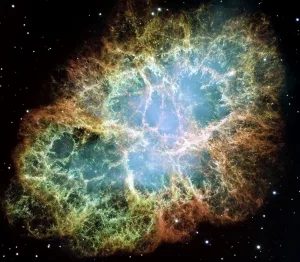
Why Hubble still dominates space observation
Hubble isn’t just old. It is pioneering. It was the first major optical observatory in space. This distinction is important. Before Hubble, we looked through Earth’s atmosphere. It’s a turbulent layer. It blurs light. It distorts the perspective. Hubble is about 560 kilometers above the Earth’s surface. There is no atmosphere. No blurring. Just raw, uninterrupted space.
But precision alone doesn’t make it unique. Flexibility does. Hubble goes beyond what the human eye can see. Visible light is a tiny slice of its capability. It ranges from ultraviolet rays to near infrared rays. This range allows it to capture of high-energy, short-wave radiation. Hot gas nebulae shine brightly in ultraviolet light. Dust clouds hide galaxies from visible light. Hubble sees through that dust with infrared light. It penetrates the obscuring veil.
Resolution That Redefines Sharpness
The main mirror is only 2.4 meters wide. Modern telescopes use mirrors that are 8-10 meters wide. Hubble looks tiny in comparison. But size isn’t everything. Sharpness is.
Hubble can resolve objects as small as 0.05 arcseconds. Think of it this way. Picture a firefly in Tokyo. View from the East Coast of the United States. This is Hubble’s resolution in visible light. It’s ten times sharper than ground-based telescopes. In the ultraviolet range, it’s 100 times sharper than any other telescope on Earth or in space.
Why is this important? Because clarity reveals the details. Faint structures become visible. Distant galaxies break up into individual stars. Clusters of stars separate from the background haze. Hubble does more than just take pictures. It captures data with unprecedented fidelity.
The Legacy of Precision
Telescopes on Earth battle the atmosphere every night. Use adaptive optics to correct distortions. Useful. But this is not enough. Hubble operates above the problem. Its view is constant. Focus is stable.
This is not trying to be the biggest telescope. It’s about being the clearest. For decades, Hubble has continued to push the boundaries of what we can see. Newer telescopes are larger. Collect more light. However, Hubble’s resolution is unparalleled in key wavelengths.
Science depends on it. To study star formation, we need to see through the dust. Observing hot stars requires sensitivity to ultraviolet light. Hubble does both. This is a versatile tool in a world where there are rarely simple answers.
We continue to build larger telescopes. James Webb is one of them. It’s powerful. This is different. But Hubble’s role is far from over. Its precision continues to drive discoveries. The captured stars are still being analyzed. The questions it answered are still being asked.
What if the next generation of telescopes can’t achieve this level of clarity? They don’t have to. They have their own advantages. But Hubble set the standard. It showed us what space looks like, without the blur. Without the interference. Just light. Clean and sharp.
The atmosphere is still a barrier to ground-based telescopes. It always will be. Hubble proved we could look past it. That proof is still valid. The view from 560 kilometers up is still the clearest we’ve ever seen.
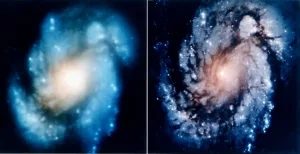
Buggy start and the fix that saved it
Hubble has never been the same telescope since its launch on April 24, 1990. During several NASA space shuttle flights, astronauts did more than just maintenance. they updated it. They installed new cameras. A new spectrometer. New memory module. Even new solar panels.
The first fix is almost immediate. It turns out that Hubble has vision problems. The primary mirror is polished correctly but is not the correct shape. Curves are 4 microns off. Too smooth.
Think of it as optical astigmatism.
Due to this defect, the light cannot be properly focused on the focal plane. Early images were unclear. Not useful for science.
On December 2, 1993, astronauts performed a spacewalk. They installed COSTAR (Corrective Optics Space Telescope Axial Replacement). It’s like space glasses.
How corrective optics change everything
Renovation is more than cosmetic. This restored Hubble’s ability to peer into the depths of space. Without it, the telescope would be a billion dollar paperweight.
Spherical deviation is corrected by installing COSTAR. Suddenly, those blurry spots turned into distinct galaxies. The stars are divided into points of light.
This is not the only update. Later missions added the Wide Field Planetary Camera 2 (WFPC2). It has its own built-in correction. Therefore, when COSTAR was eventually removed during a later maintenance mission, WFPC2 retained high-resolution images.
Why this matters for modern astronomy
The Hubble maintenance mission proved that space telescope maintenance is possible. They show that incremental improvements can extend the life of a mission by decades.
Before Hubble, many scientists believed that satellites could be set and forgotten. they are wrong.
Other observatories are now benefiting from this precedent. The James Webb Space Telescope (JWST) does not have similar repair capabilities. Hubble is designed for human servicing. This design choice paid off.
The 4 micron error was the defining moment. This taught NASA that failure is not necessarily final. Sometimes it’s just a calibration issue.