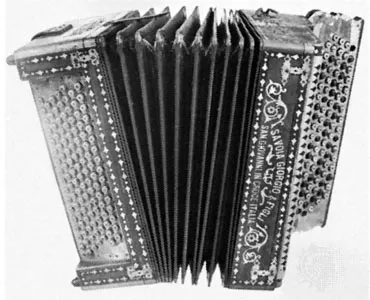
It is small enough to strap to your back. It is loud enough to drive a crowd into a frenzy. But what exactly is an accordion?
At its core, it is a portable musical instrument that relies on a simple mechanic. You pump the bellows. Air flows through metal tongues called free reeds. Those tongues vibrate. Sound happens.
The result looks like two tiny organs facing each other. The right-hand side handles the treble lines. That is where the melody lives. The left side is generally reserved for bass chords. Most models here give you three-note clusters with a single press. Some players prefer a “free-bass” layout. That setup allows for single-note lines on the left. It offers more flexibility.
The story starts in Berlin. 1822. A man named Friedrich Buschmann patented a prototype. He used buttons instead of the keys we see today. He also invented the harmonica. That same year.
From those humble beginnings, the instrument found its footing. It became a staple in dance bands. It remains a fixture in folk music scenes around the world. It sits in the same family as the concertina.
So next time you hear that wheezing, joyous sound, remember the vibrating metal tongues. Remember the pumping hands. It is not just a toy. It is a complex, portable engine of noise. And it is still finding new ways to be heard.