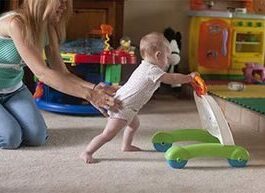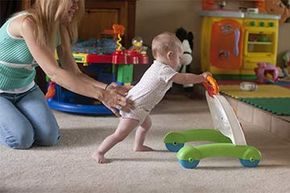
She’s pulling up on the coffee table. She’s bouncing. It’s chaotic, adorable, and a sign that her leg muscles are finally getting the workout they need. Now comes the big transition: putting one foot in front of the other.
You don’t need a fancy gadget to make it happen. In fact, you might be overthinking it.
Experts agree that push toys are a fantastic next step. Think of a sturdy shopping cart, a toy popcorn popper, or even a sturdy cardboard box. They give your baby something solid to grip, which builds confidence. More importantly, they force her to look ahead. She has to spot obstacles and figure out how to steer around them.
It’s spatial awareness in motion.
And if she decides to push the empty box the toy came in instead of the actual toy? Let her. It works just as well. The goal isn’t the equipment. The goal is the movement. Anything she can push helps her develop the muscle memory and strength required for independent walking.
The Walker Warning
Then there are those stand-up walkers. You know the ones. The ones with the tray and the wheels that look like they’re designed for a small industrial forklift, not a toddler.
Many doctors are strongly against them.
The dangers are real and frequent. Babies in walkers can tip over. They can roll down stairs. They can trap fingers in the wheels. And because they are elevated, they can reach places they never could from the floor. That means access to hot stoves, sharp corners, and toxic chemicals on high counters.
Beyond the physical risks, there’s a developmental catch. Research suggests that using a walker can actually delay sitting, crawling, and walking. It bypasses the natural progression of motor skills. It might even impact mental development because the baby isn’t engaging with the world in the way her brain expects during those critical early months.
Do You Need Extra Gear?
No. You really don’t.
You can get her up and moving by simply holding her hands as she takes those first tentative steps. It’s tactile. It’s supportive. It’s free.
Just clear the floor. Put down a soft landing pad—a rug or carpet—for the inevitable crashes. Move furniture with sharp edges out of the way. Create a safe zone.
Then step back.
She’ll wobble. She’ll fall. She’ll get back up. And before you’re ready for it, she’ll be toddling around the house on her own. The equipment phase ends. The real adventure begins.