


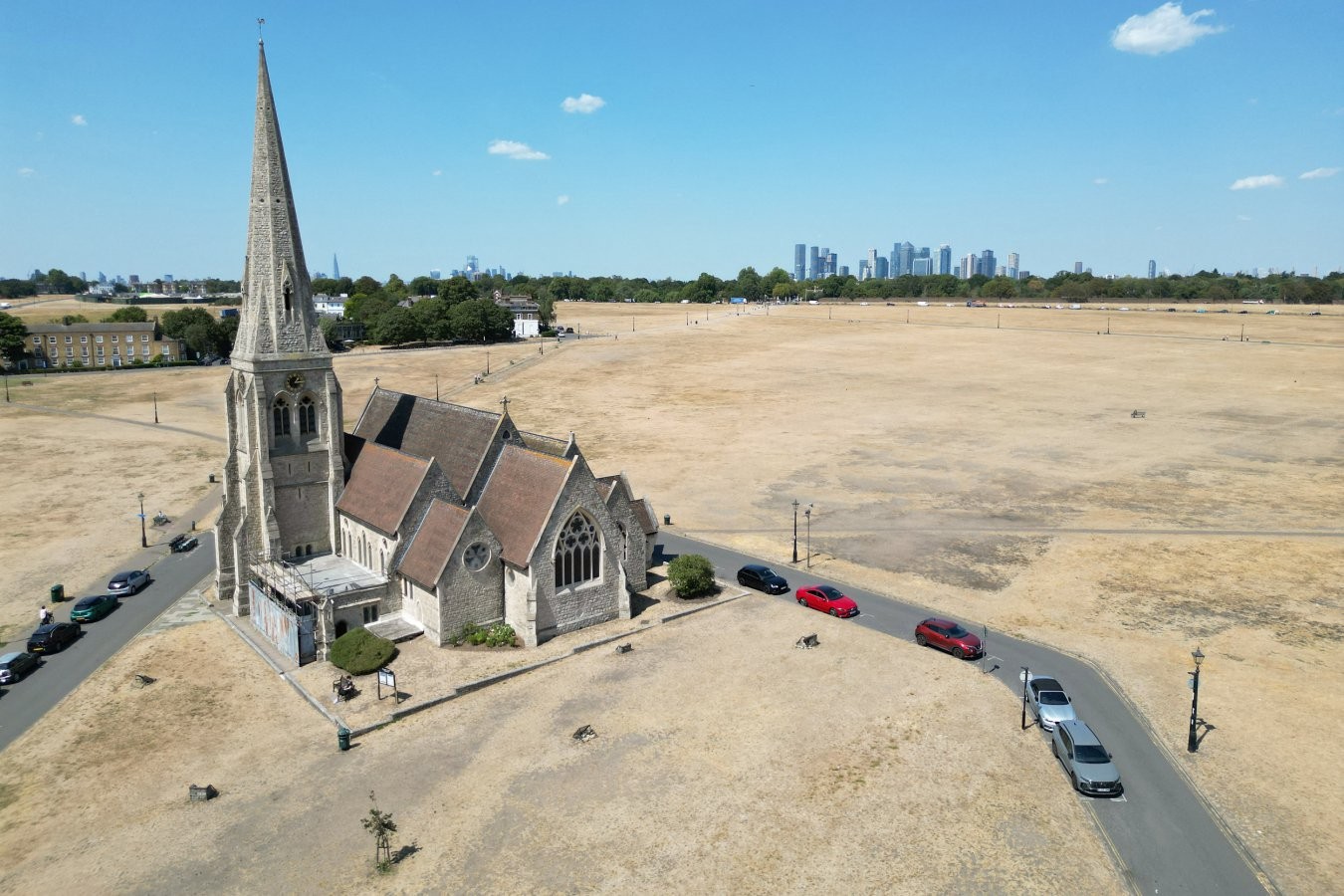
July 2026 didn’t just break records. It erased them.
Parts of the UK experienced their first-ever rainless month in July. This isn’t a minor anomaly. It’s a stark indicator of the drought severity gripping the country. The Met Office called it “truly exceptional.” England and Wales suffered their driest July in 1,900 years. Heat was extreme. Sunshine was unbroken.
Rainfall tells the true horror story. Southern England averaged a pitiful 1.5 millimetres. That is two percent of the average. For context, the 1991-220 baseline usually expects vastly more. Meanwhile, temperatures sat 3.2°C above the norm.
Breaking century-long dry spells at key sites
Look at London. Kew Gardens holds a Met Office weather station. Since records began in 1873, July has never seen zero measurable rainfall. It did in 2026.
Heathrow Airport tells an even grimmer tale. The site, monitored since 1948, logged 42 consecutive days without a single drop. That’s a new record. The streak continues.
Near Reading, the situation in Stratfield Mortimer was absolute. Zero rainfall. First time in the village’s history. Wokingham, the nearby market town, scraped by with a negligible 0.1mm.
Stephen Burt from the University of Reading put it plainly:
“Some parts of the Reading area remained without measured rainfall throughout the calendar month… the only time this has happened since consistent local records began in 1858.”
Almost 170 years of history, and the drought finally hit zero.
Which regions are affected most by this historic drought?
The dry spell wasn’t isolated. Provisional data seen by New Scientist shows at least 20 MetOffice stations across southern England recorded zero rain in July for the first time ever.
This covers a massive geographic spread. You’re looking at:
- Lincolnshire
- Dorset
- Kent
- Greater London
- Essex
- Monmouthshire
- Surrey
- Isle of Wight
- East Sussex
- Hereford & Worcester
- Hampshire
Even north London wasn’t immune. Ben Masschelein-Rodgers runs a private station near Hampstead Heath. He’s been logging data since 2009. He says July 2029 was his first month with zero measurable rain. His 17-year series aligns with MetOffice records stretching back to 1871 for that zone.
How does this drought impact infrastructure and agriculture?
More than half of England is now officially in drought. All of Wales is included too. The landscape is turning yellow. Wildfires are burning across the country. Farmers are warning of imminent crop shortages.
The ripple effects hit further north into continental Europe.
In Hungary and Romania, river levels on the Danube dropped so low that operators were forced to shut down nuclear power reactors. Water is needed for cooling. No water means no power.
The Rhine in Germany saw similar issues. Low water levels restricted shipping traffic. Supply chains creak under the weight of reduced water capacity.
Why does this keep getting worse? Because the climate is shifting. But right now, the immediate reality is dry earth and empty rivers. The heat hasn’t broken. The rain hasn’t returned. We are waiting for the next drop, but so far, there’s nothing but dust.


