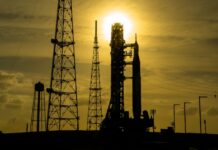
NASA is set to launch Artemis II, the first crewed mission to the moon since 1972, at 6:24 p.m. Eastern time today. While the four astronauts – three Americans and one Canadian – will orbit the moon rather than land, this mission is a critical step toward NASA’s goal of returning humans to the lunar surface as early as 2028.
The Mission and Its Significance
The Artemis II crew – Commander Reid Wiseman, Pilot Victor Glover, and Mission Specialists Christina Koch and Jeremy Hansen – will embark on a 10-day journey around the moon, testing the Orion spacecraft’s life support systems and capabilities for future lunar voyages. This mission doesn’t involve a landing, but it’s vital for proving that human spaceflight beyond low Earth orbit is still viable.
This marks a shift in strategy from the post-Apollo era, where NASA focused on Earth-orbiting programs like the Space Shuttle and International Space Station. The renewed focus on lunar exploration, driven first by President Trump and continued by the Biden administration, signifies a long-term commitment to deep space exploration.
Crew Firsts and Historical Context
Artemis II will be historic in multiple ways. Victor Glover will become the first Black astronaut to travel around the moon, Christina Koch the first woman, and Jeremy Hansen the first Canadian. This reflects NASA’s efforts to diversify its astronaut corps and broaden participation in space exploration.
The launch is also symbolic, coming 54 years after Apollo 17, the last time humans walked on the moon. The decades between then and now saw waning public interest and budget cuts that hindered further lunar missions. Now, with private companies like SpaceX and Blue Origin competing to build lunar landers, the space race is reigniting.
Technical Details and Viewing Options
The launch vehicle, the Space Launch System (SLS), is comparable in power to the Saturn V rockets used during the Apollo program. The SLS will lift off from Kennedy Space Center in Florida, carrying the Orion capsule. Once in space, the crew will separate from the rocket and enter the Orion capsule for their lunar journey.
The mission is expected to set a record for the farthest distance any human has traveled from Earth. NASA is streaming full coverage of the mission on YouTube, X, its website, and other digital platforms. Those in Florida and southern Georgia may even be able to see the rocket from their backyards.
What’s Next
If successful, Artemis II will clear the path for Artemis III, planned for 2028, which aims to land astronauts on the moon for the first time in over half a century. The Artemis program represents a renewed era of lunar exploration, driven by both government and private sector investment.
The future of space travel is once again looking up, with Artemis II serving as a pivotal moment in humanity’s ongoing quest to explore the cosmos.