


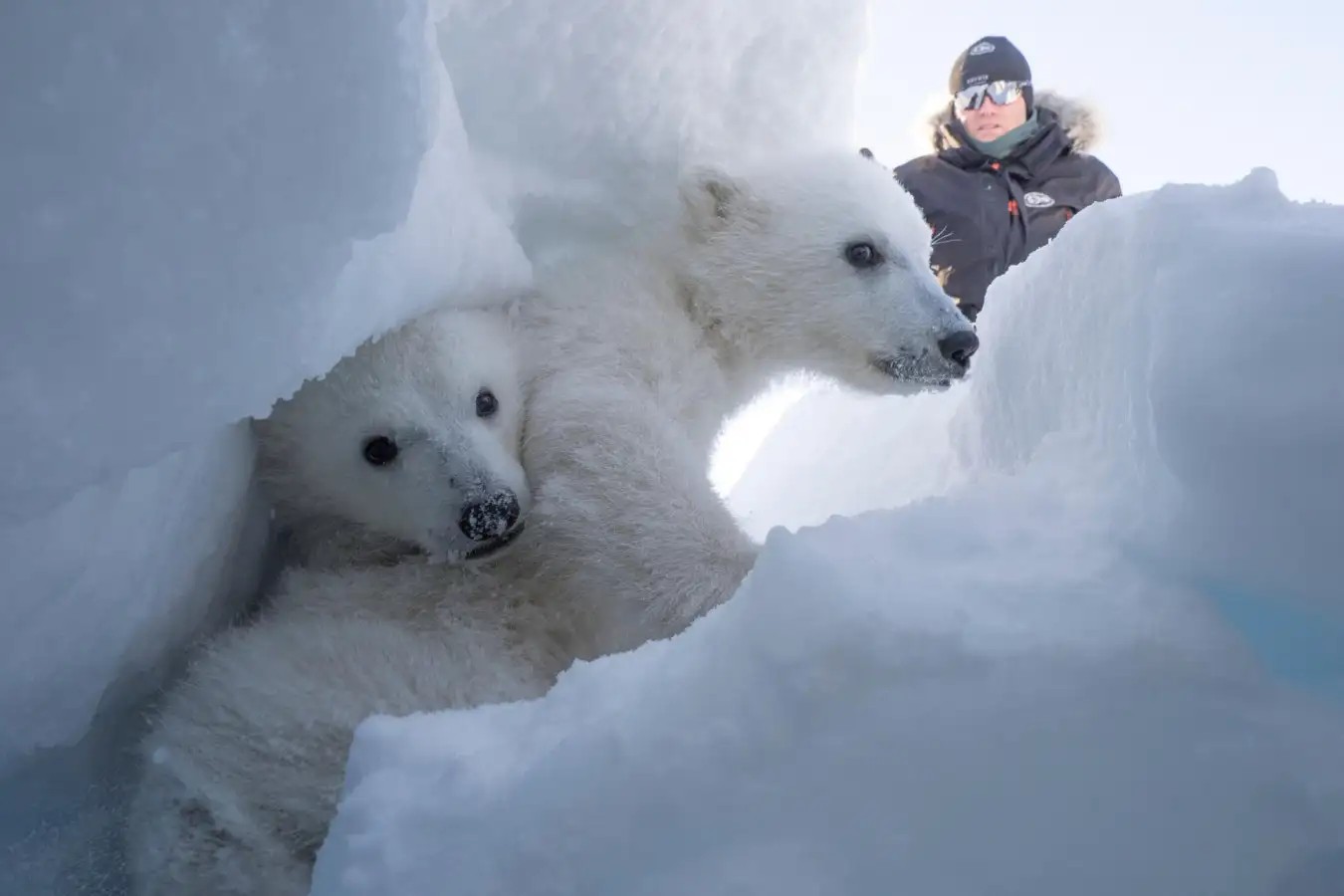
Polar bear populations in the Svalbard archipelago, one of the fastest-warming regions on Earth, are surprisingly getting fatter despite accelerating sea ice loss. This counterintuitive trend, detailed in a recent study by the Norwegian Polar Institute, highlights the complex and unpredictable ways wildlife adapts to climate change.
The Paradox of a Warming Arctic
The Barents Sea, where Svalbard is located, is heating up at seven times the global average rate. Winter sea ice duration has shrunk by two months in just two decades, forcing polar bears to swim increasingly long distances – up to 300 kilometers – between hunting grounds. Yet, instead of declining, the average size and weight of Svalbard bears have increased since 2000. This finding challenges the simple narrative of polar bears doomed by melting ice.
Why Are They Getting Fatter?
Scientists believe several factors contribute to this anomaly. First, shrinking ice may be concentrating ringed seals, the bears’ primary prey, making them easier to hunt. Second, the bears are diversifying their diet. They’re increasingly targeting bearded seals along the coast, exploiting expanding harbor seal populations, and even raiding bird colonies for eggs and preying on reindeer and walruses.
“It’s a species in despair. They’re doing crazy things,” says Jouke Prop, a researcher at the University of Groningen. “It doesn’t work everywhere, but it may work for some time” on Svalbard.
A Temporary Reprieve?
While the Svalbard population (estimated between 1,900 and 3,600 bears) appears stable or growing, this success is likely temporary. The long-term health of the ecosystem depends on the sea ice, which sustains the entire food chain – starting with algae. As sea ice continues to disappear, the current adaptability will have limits.
The study involved measuring 770 bears over two decades, tracking body condition trends. Researchers found a decline up to 2000, followed by a surprising increase through 2019. This shows that polar bears can, at least for now, adjust to changing conditions. However, this doesn’t mean the species is safe.
The Bigger Picture
This situation in Svalbard is unique. Other polar bear populations in Alaska, Canada, and Greenland are declining. The data is insufficient for many other populations, meaning the full impact of climate change remains uncertain. What’s happening in Svalbard isn’t a global trend, but it demonstrates that wildlife responses to climate change are often far more nuanced than predicted.
The long-term viability of polar bears in Svalbard – and elsewhere – depends on slowing the rate of Arctic warming. While the bears may be thriving today, continued sea ice loss will eventually overwhelm their ability to adapt.


