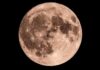
The Moon is nearing fullness, offering excellent viewing conditions for both casual observers and astronomy enthusiasts. As of Sunday, March 29, 2026, the Moon is in its Waxing Gibbous phase, with approximately 85% of its surface illuminated. This makes it easy to spot prominent features even without special equipment.
What You Can See Tonight 🔭
Without tools, you can clearly identify major lunar maria—the dark, basaltic plains formed by ancient volcanic eruptions:
- Serenitatis
- Imbrium
- Vaporum
With binoculars, additional details come into view, including:
- Mare Frigoris (the “Sea of Cold”)
- Archimedes Crater
- Clavius Crater
For those with telescopes, even finer features are visible, such as the rugged Caucasus Mountains, the historic Apollo 12 landing site, and the small, cup-shaped Linne Crater.
Next Full Moon: April 1st 🗓️
The next Full Moon is predicted to occur on April 1st, providing another spectacular night for lunar observation.
Understanding Lunar Phases Explained 🌑🌒🌓🌔🌕🌖🌗🌘
The Moon orbits Earth in about 29.5 days, going through eight distinct phases. These phases aren’t about the Moon changing shape, but about how much of the illuminated side we see from Earth. The same side of the Moon always faces us due to tidal locking, but as it orbits, sunlight reveals varying portions.
Here’s a breakdown of each phase:
- New Moon: The Moon is between Earth and the Sun, appearing dark.
- Waxing Crescent: A sliver of light appears on the right side (in the Northern Hemisphere).
- First Quarter: Half of the Moon is lit on the right side.
- Waxing Gibbous: More than half is lit, but not full yet.
- Full Moon: The entire visible face is illuminated.
- Waning Gibbous: The Moon starts losing light on the right side.
- Third Quarter (Last Quarter): Half of the Moon is lit on the left side.
- Waning Crescent: A thin sliver remains on the left side before disappearing again.
The lunar phases are a simple yet elegant example of celestial mechanics, showing how predictable and beautiful space events can be. Observing them connects us to a cycle that has been tracked by humans for millennia.
Whether you’re a seasoned astronomer or just glancing at the night sky, the Moon’s phases offer a constant reminder of the dynamic relationship between Earth and its natural satellite.