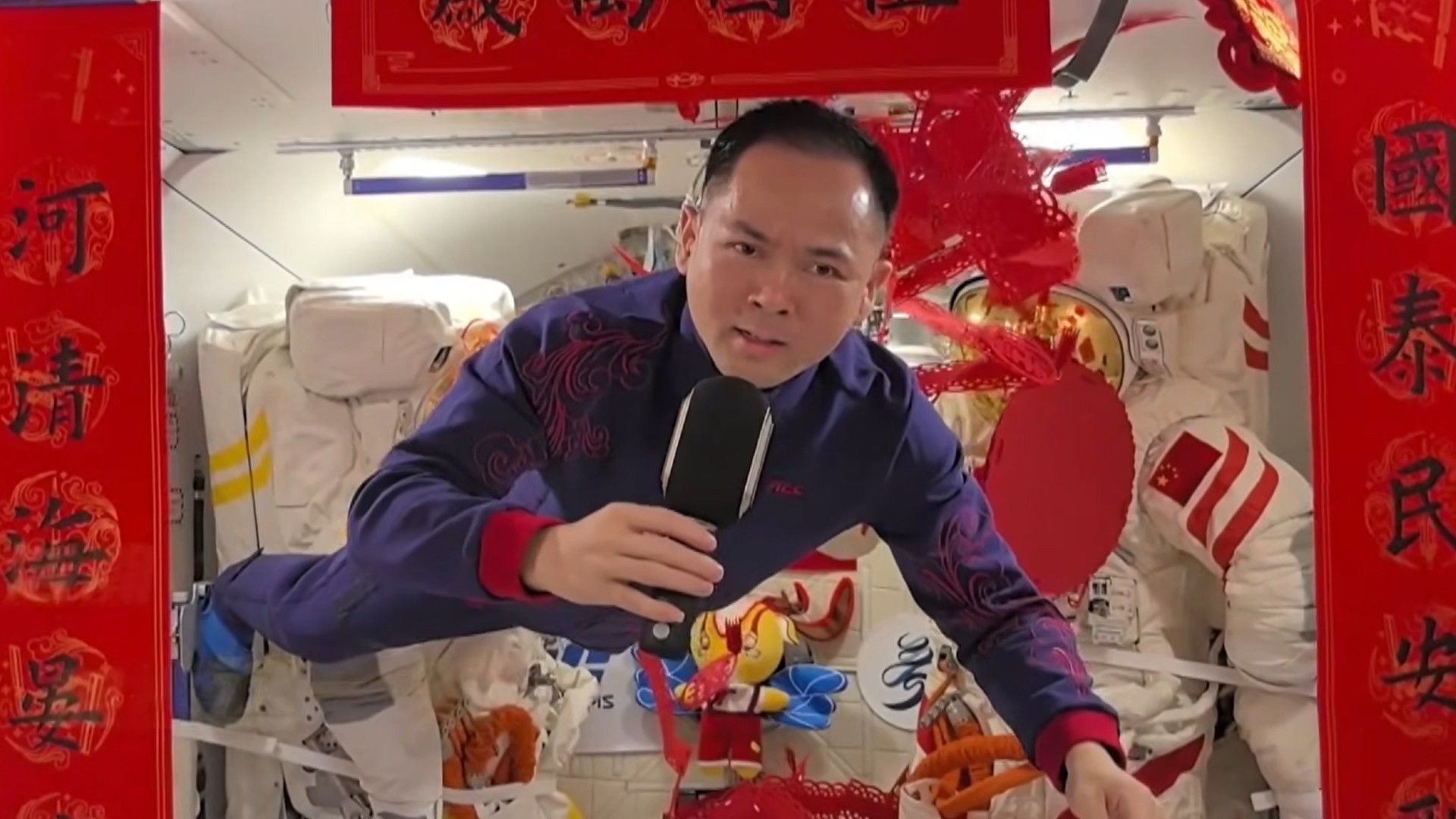
Chinese astronauts aboard the Tiangong Space Station celebrated Lunar New Year 2026 – the Year of the Horse – with a unique display of national pride and technological achievement: a zero-gravity music video. The crew of the Shenzhou 21 mission commemorated the holiday, observed by billions worldwide, with a combination of traditional festivities and modern space exploration.
Celebrating Tradition in Orbit
The Shenzhou 21 crew marked the occasion with a special feast, calligraphy, and a Lunar New Year message broadcast to Earth. Flight engineer Wu Fei, on his first space mission, expressed hopes for prosperity and smooth journeys in the coming year. The holiday itself, rooted in millennia of Asian tradition, falls on the second new moon after the winter solstice, making its date variable – this year, February 17th.
A New Era of Space Celebration
The crew’s most striking gesture was the production of a music video. The song, sung by commander Zhang Lu, includes the refrain “let the five-star red flag fly high in space” and features footage of recent Chinese rocket launches, Tiangong docking procedures, spacewalks, and on-orbit experiments. This display underscores China’s rapid advancements in space technology and its ambition to assert dominance in the field.
The Year of the Horse and China’s Space Program
The Year of the Horse, the seventh animal in the Chinese zodiac, is associated with confidence, responsibility, and independence. This symbolism aligns with China’s increasingly assertive role in space exploration. The video also serves as a reminder of the challenges overcome by the Shenzhou 21 crew, who were temporarily stranded when debris impacted a docked spacecraft, highlighting the risks inherent in long-duration space missions.
The Lunar New Year celebration in orbit is more than a cultural gesture; it is a demonstration of China’s growing capabilities and its commitment to continued space exploration. The event serves as both a cultural moment and a statement of technological prowess.