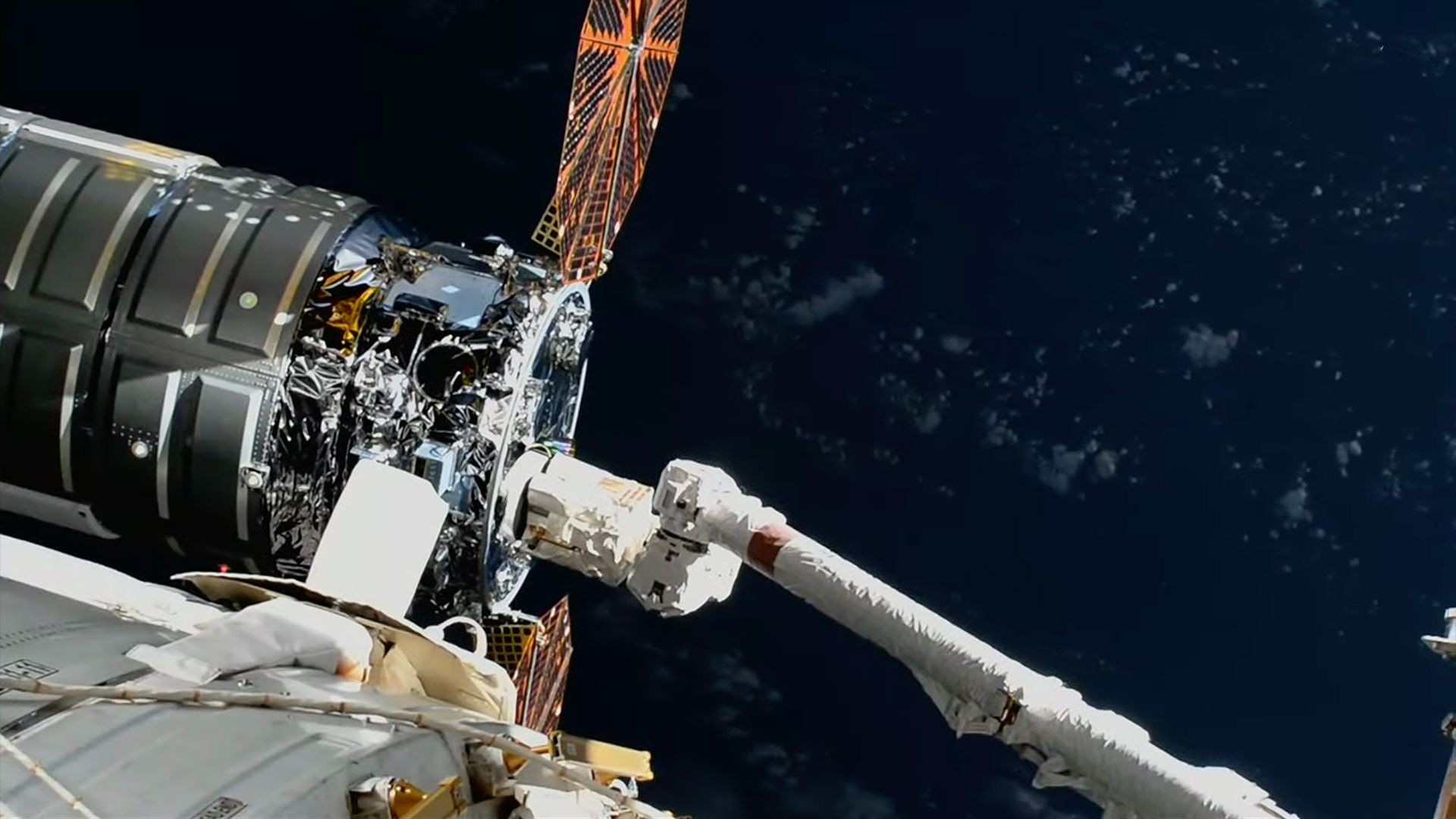
The International Space Station (ISS) has received a significant boost in supplies and scientific potential following the successful arrival of the S.S. Steven R. Nagel. The Cygnus XL cargo spacecraft, developed by Northrop Grumman, was successfully captured and integrated into the station on Monday, April 13.
A Precision Capture in Orbit
At 1:20 p.m. EDT, the ISS’s robotic system, the Canadarm2, performed a delicate maneuver to grapple the approaching spacecraft. The operation was executed by NASA astronaut and Expedition 74 flight engineer Chris Williams, supported by fellow astronaut Jack Hathaway.
Once the capture was confirmed, Williams radioed Mission Control to announce the arrival: “Cygnus capture is complete. The S.S. Steven Nagel, welcome aboard the ISS!” Following the capture, ground controllers took over to berth the vehicle at the Earth-facing port of the Unity Node 1, where the crew will begin the unloading process.
Delivering the Future of Science
The S.S. Steven R. Nagel—named in honor of the late Space Shuttle-era astronaut—is carrying approximately 11,000 pounds (5,000 kg) of critical logistics and high-tech research hardware.
This mission is particularly significant because of the advanced nature of the payloads being delivered. The cargo includes:
- Quantum Science Module: A sophisticated tool designed to advance the search for dark matter and push the boundaries of computing technology.
- Medical Research Equipment: Tools aimed at increasing the production of therapeutic stem cells, which could lead to breakthroughs in treating cancer and various blood diseases.
- Microbiome Studies: Research into the gut microbiome, which is essential for understanding human health in microgravity.
- Space Weather Protection: A specialized receiver designed to improve the prediction of space weather, a vital step in protecting Earth-based GPS and radar systems from solar interference.
Why This Mission Matters
The arrival of the Cygnus XL represents more than just a routine resupply. By delivering specialized modules for quantum physics and biotechnology, Northrop Grumman and NASA are turning the ISS into a premier laboratory for “frontier science”—research that is difficult or impossible to conduct under the influence of Earth’s gravity.
Furthermore, the focus on space weather technology highlights a growing trend in aerospace: the need to protect our increasingly digital and interconnected global infrastructure from the unpredictable volatility of the space environment.
The successful docking of the S.S. Steven R. Nagel provides the Expedition 74 crew with the essential tools needed to conduct high-stakes research in medicine, physics, and planetary defense.