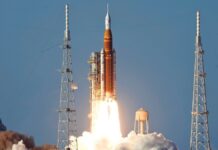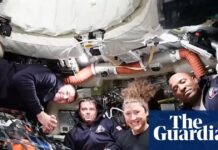
NASA swiftly resolved a critical issue on the Orion spacecraft at the start of the Artemis II mission: a malfunctioning toilet. Mission control confirmed the fix, advising astronauts to allow the system to stabilize before and after use. This incident underscores the often-overlooked importance of basic life support systems in space travel, where even routine functions become complex engineering challenges.
From Condoms to Cubicles: A History of Space Toilets
Early space missions, like Apollo, forced astronauts to rely on crude methods for waste management. Male astronauts used condom-like devices under their spacesuits for urine collection, while solid waste was collected in bags taped to their buttocks. These systems were prone to leaks, with one mission recording a “turd floating through the air.” NASA’s own reports acknowledged the engineering functionality but rated crew satisfaction as “poor.”
The Artemis II spacecraft features a $30 million Universal Waste Management System (UWMS), a leap forward in deep space toilet technology. It includes a private, door-equipped cubicle – a first for a space shuttle – with handrails and foot tethers to ensure stability in zero gravity.
How the Modern Space Toilet Works
The UWMS uses a funnel and hose for urine, which is vented daily on shorter missions like Artemis II. Solid waste is sucked into a bag at the base of the toilet bowl and compressed into canisters for disposal upon return to Earth. The suction is so loud that the cubicle is insulated, and astronauts must wear ear protection.
On longer missions, like those to the International Space Station, NASA recycles almost all liquid waste, converting urine and sweat into drinkable water.
The Broader Significance of Waste Management in Space
The upgrade to the UWMS is more than just a crew comfort: it’s essential for establishing a permanent human presence in space. Sustainable waste management is critical for long-term missions, preventing contamination of the space environment with terrestrial microbes.
“Actually thinking about not only toilets but the entire life support systems is one of the foundations of long-term living in space,” says David Munns, a professor of the history of science and technology. “Having the ability to deal with waste is mission-critical.”
The Artemis II toilet fix highlights that even the most mundane aspects of space travel demand sophisticated engineering and careful planning. Without reliable life support systems, long-duration missions and the dream of permanent space habitation would remain unattainable.