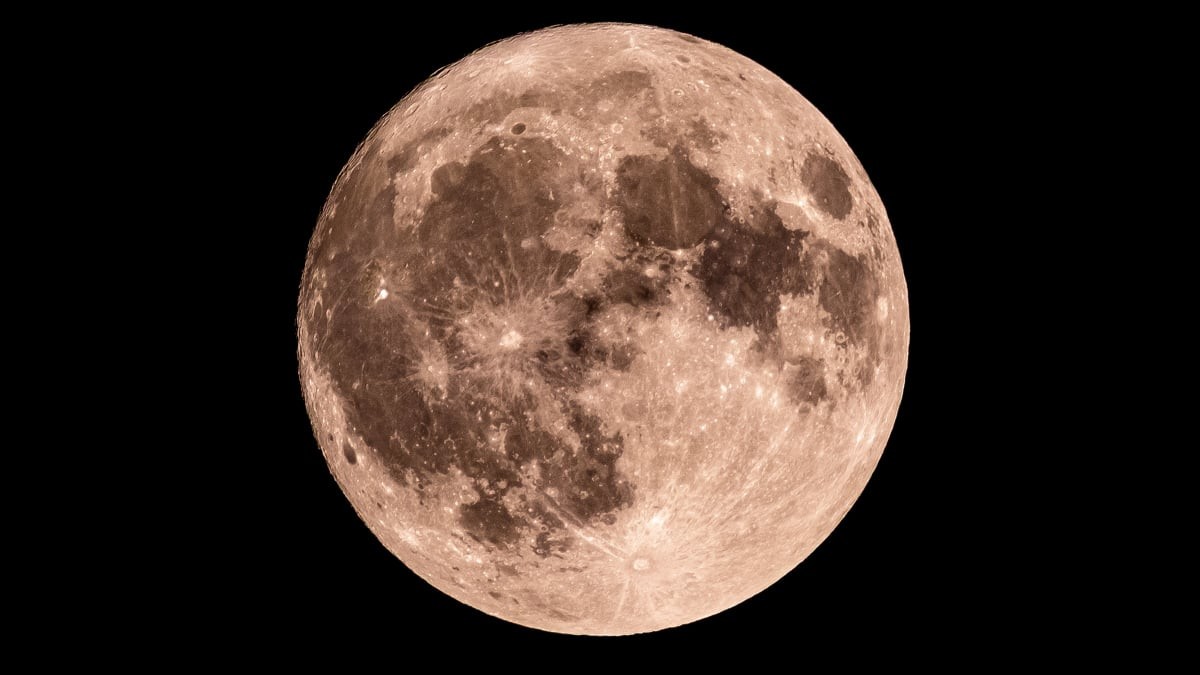
The Moon is gradually growing fuller in the night sky, a natural progression in its monthly cycle. As of February 25, the Moon is in the Waxing Gibbous phase, with roughly 70% of its surface illuminated. This means that if you look up tonight, you’ll see a nearly full Moon, brighter and more prominent than it has been in recent days.
Observing the Lunar Surface
Even without special equipment, several features are visible. The dark, smooth areas known as Mares Tranquillitatis (Sea of Tranquility) and Serenitatis (Sea of Serenity) are easy to spot with the naked eye. If you have binoculars, you can enhance your view to include Mare Nectaris and the craters Alphonsus and Endymion. A telescope will reveal even more detail, including the Apollo 14 and 16 landing sites, as well as the snaking Rima Ariadaeus rille.
Upcoming Full Moon
The next Full Moon will occur on March 3, marking the peak of this lunar cycle. The previous Full Moon took place on February 1, meaning the lunar phases move predictably yet continuously.
Understanding Lunar Phases: A 29.5-Day Cycle
The Moon orbits Earth in approximately 29.5 days, and as it does, the amount of sunlight reflecting off its surface changes. This creates the distinct phases we observe from Earth. While the Moon is tidally locked — meaning the same side always faces us — the illuminated portion shifts as it orbits.
Here’s a breakdown of the eight primary lunar phases:
- New Moon: The Moon is positioned between Earth and the Sun, rendering its visible side dark.
- Waxing Crescent: A sliver of light appears on the right side (in the Northern Hemisphere).
- First Quarter: Half of the Moon is illuminated on the right side.
- Waxing Gibbous: More than half is lit, but it’s not yet full.
- Full Moon: The entire visible face of the Moon is illuminated.
- Waning Gibbous: The Moon begins to lose light on the right side.
- Third Quarter (or Last Quarter): Half of the Moon is lit, but now on the left side.
- Waning Crescent: A thin sliver of light remains on the left side before becoming dark again.
The Moon’s phases are a constant reminder of the celestial mechanics governing our solar system, and a simple way to connect with the natural rhythms of space.
The lunar cycle is not just an aesthetic phenomenon; it influences tidal patterns, historical calendars, and even some biological behaviors. Understanding these phases is a fundamental part of understanding our place in the cosmos.