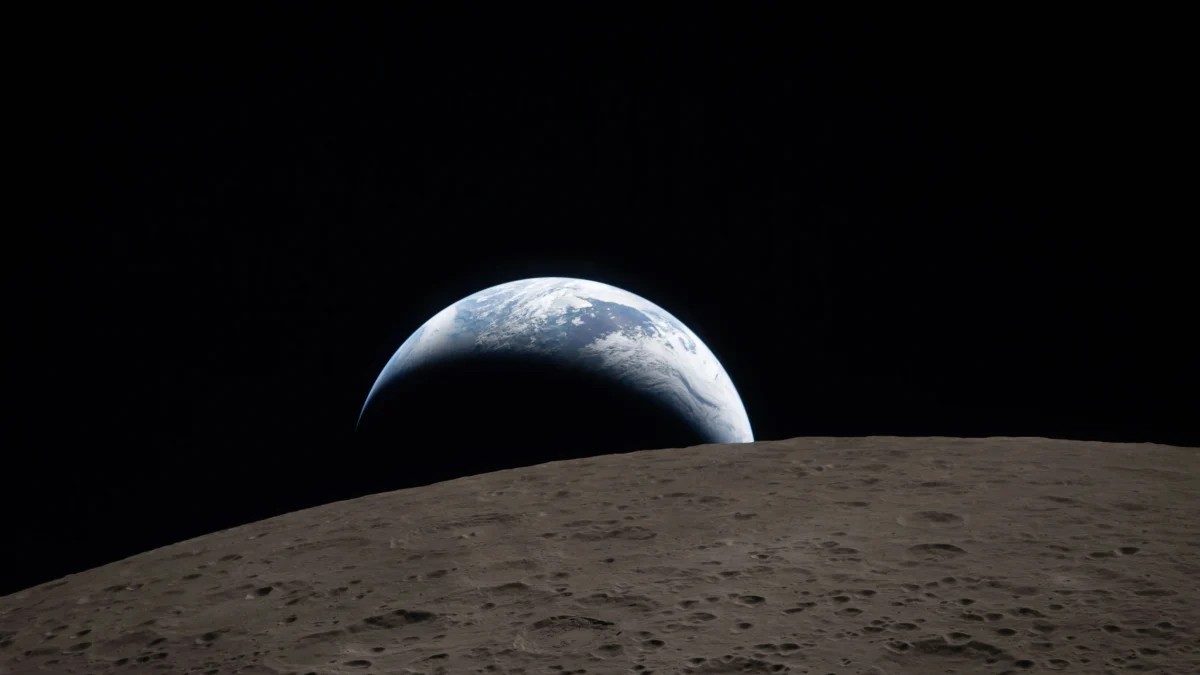
The Artemis II mission has provided more than just scientific data; it has delivered breathtaking visual proof of our place in the universe. In a recent social media update, Mission Commander Reid Wiseman shared an extraordinary video of an “Earthset” —the moment the Earth appears to sink below the lunar horizon—captured from the vantage point of NASA’s Orion spacecraft.
High-Tech Documentation in Deep Space
What makes this footage particularly striking is the hardware used to capture it. While space exploration is often associated with massive, specialized telescopes, the Artemis II crew utilized a mix of professional-grade gear and consumer technology to document their journey:
- iPhone 17 Pro Max: Commander Wiseman used this device to capture the uncut video. The phone’s 48-megapixel triple camera array and its advanced 8x optical-quality zoom proved essential for framing the vast view through the narrow docking hatch window.
- Nikon DSLR Systems: Mission specialist Christina Koch utilized a Nikon D5 equipped with a 400mm lens. The audio from the video even captures the distinct shutter sound of her camera as she employed “three-shot bracketing”—a technique of taking multiple rapid shots to ensure perfect exposure and detail.
- Action Cameras: The crew also carried two Nikon Z9 cameras and four modified GoPro Hero 11 units to provide a comprehensive visual record of the mission.
A Modern Echo of Apollo 8
The imagery captured by Koch and Wiseman is more than just beautiful; it is historically significant. NASA has noted that these “Earthset” views are reminiscent of the iconic “Earthrise” photograph taken by Bill Anders during the Apollo 8 mission in 1968.
This connection highlights a recurring theme in space exploration: the profound psychological impact of seeing Earth from the lunar perspective. By capturing these moments, the Artemis II crew is not just documenting a mission, but continuing a legacy of visual storytelling that helps humanity connect with the reality of space travel.
The Human Element of Observation
The capture of these visuals was a coordinated team effort. During the lunar flyby on April 6, 2026, the crew worked in shifts to ensure no moment was missed. While Wiseman filmed the Earthset, pilot Victor Glover and Canadian astronaut Jeremy Hansen remained at the observation windows, rotating through seven-hour shifts to monitor the lunar landscape and call out celestial features.
This meticulous rotation of “observation shifts” underscores the intense focus required during deep-space missions, where every minute spent orbiting the far side of the Moon offers a unique, fleeting opportunity for discovery.
The ability to use consumer-grade technology like the iPhone to capture high-quality space footage marks a new era of accessibility in space documentation, bridging the gap between professional astronautics and public engagement.
The Artemis II mission successfully blended cutting-edge professional photography with everyday mobile technology to provide a vivid, real-time window into the lunar environment for the entire world.