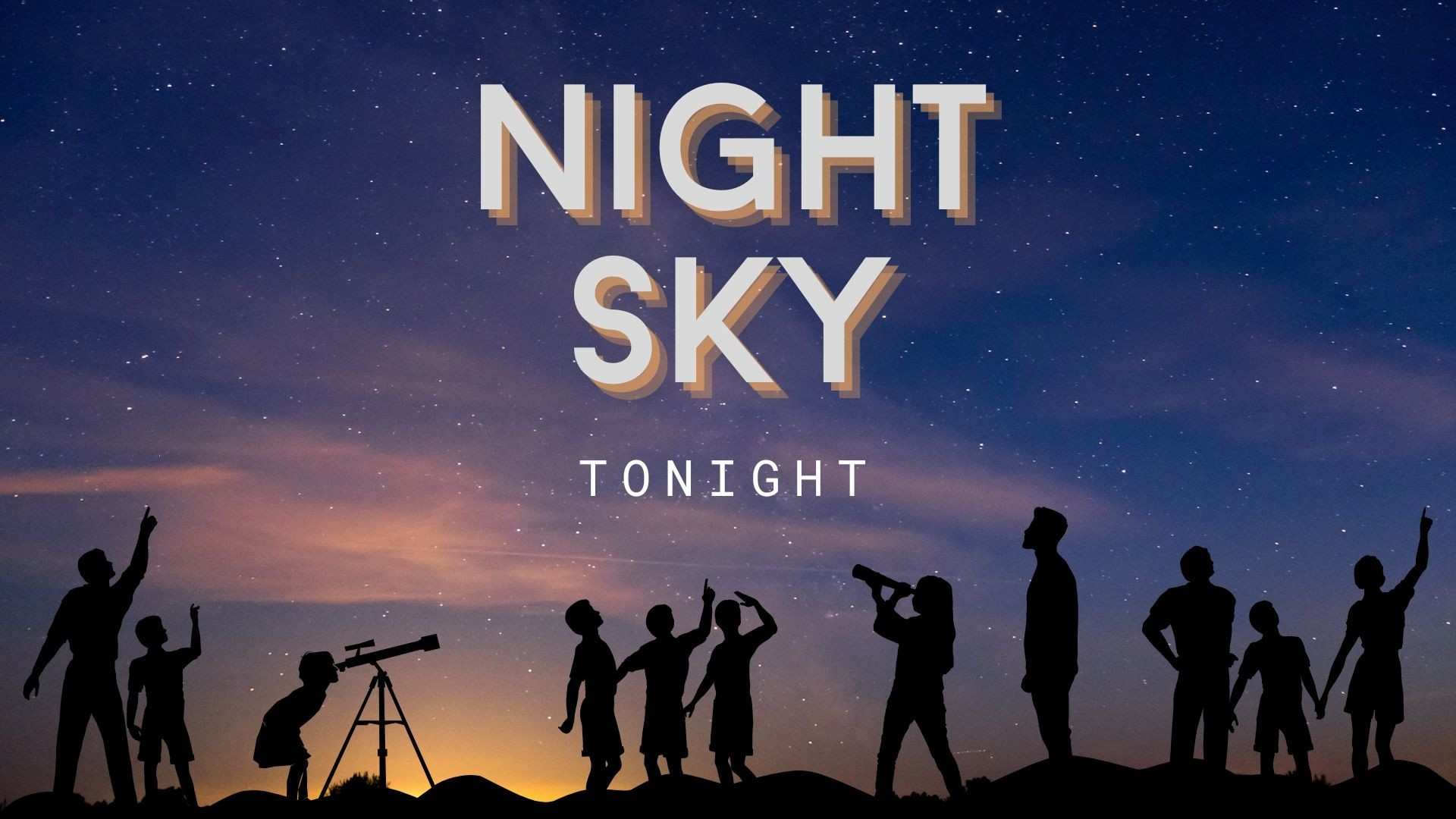
This weekend offers exceptional stargazing opportunities with clear, dark skies due to a new moon. From the faint glow of the winter Milky Way to the peak of the Ursid meteor shower, here’s what to look for. No special equipment is required ; the naked eye can reveal much of the night sky’s beauty, though binoculars or a telescope enhance the experience.
Friday, December 19: Darkest Skies and the Winter Milky Way
The moon reaches its new phase at 8:43 p.m. EST (0143 GMT on December 20), providing the darkest skies of the month. While summer brings the brightest core of the Milky Way, the winter Milky Way is equally stunning, stretching from Cassiopeia to Orion. From areas with minimal light pollution, this faint arc offers a powerful reminder of our galaxy’s scale.
Saturday, December 20: Jupiter as the ‘Christmas Star’
Jupiter shines brightly tonight, reaching a magnitude of -2.6, visible in the east about 90 minutes after sunset. Some speculate that a similar planetary alignment might have inspired the “Christmas Star” of biblical tales. Astronomer Johannes Kepler suggested a close conjunction of Saturn and Jupiter in 7 BC as a possible explanation. Whether it was Jupiter alone or another celestial event, the planet’s brilliance makes it a fitting ‘star’ for the season.
Sunday, December 21: Solstice and the Ursid Meteor Shower
The winter solstice begins at 10:03 a.m. EST (1503 GMT), marking the shortest day of the year in the Northern Hemisphere. Later, a young crescent moon will briefly appear in the southwest before dark skies return for the peak of the Ursid meteor shower. Expect around 10 shooting stars per hour, originating from comet 8P/Tuttle. Meteors will radiate from between the Big and Little Dippers.
Thursday, December 18: Orion’s Sword and the Orion Nebula
Orion’s Belt is easily visible in the southeast after sunset. Look below it for Orion’s Sword, a faint line of stars. At its center lies the Orion Nebula (M42), a star-forming region just 1,500 light-years away—the closest such region to our solar system. The nebula appears as a soft haze of light, visible even without magnification.
The coming days promise a spectacular celestial display. The combination of dark skies, bright planets, and meteor showers makes this weekend ideal for observing the wonders of the night sky.