


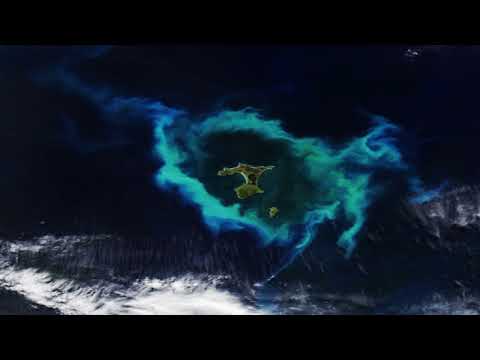
A stunning satellite image has captured a luminous ring of plankton encircling the Chatham Islands, a remote archipelago located approximately 520 miles west of New Zealand’s South Island. While the vibrant display is a visual marvel, it serves as a biological indicator of the complex and often dangerous underwater geography that defines this region.
The Science Behind the Glow
The brilliant illumination is caused by a massive bloom of coccolithophores —a type of photosynthetic phytoplankton. These microscopic organisms are unique because they surround themselves with intricate shells made of calcium carbonate.
The scale of this bloom is driven by a specific geological feature:
– The Chatham Rise: A massive, shallow underwater plateau extending up to 900 miles from New Zealand.
– Nutrient Upwelling: This plateau acts as a natural ramp, forcing cold, nutrient-dense waters from the deep ocean toward the surface.
– Seasonal Mixing: During summer, warmer currents mix with these nutrient-rich waters, creating a “perfect storm” of conditions for algae to flourish.
The satellite image was captured using a near-infrared filter, which accentuates the vivid colors of the bloom, though NASA’s Earth Observatory notes that the phenomenon would be clearly visible to the naked eye from space.
A Biological Paradox: Abundance vs. Peril
This surge in phytoplankton creates a massive ripple effect through the marine food web. Because phytoplankton form the foundation of the open-water ecosystem, the Chatham Islands have become a marine biodiversity hotspot. The area supports a vast array of life, including:
– Commercial species: Significant populations of cod and lobster.
– Diverse wildlife: Penguins, albatrosses, seals, and sea lions.
– Cetaceans: At least 25 species of whales and dolphins, such as orcas and sperm whales, frequent these waters to feed.
However, the very geography that attracts life also poses a lethal threat to it. The shallow waters of the Chatham Rise can disorient large marine mammals, leading to catastrophic whale strandings.
The Tragedy of the Stranding Events
The social nature of certain species makes them particularly vulnerable. For example, pilot whales are highly social; if a single individual becomes disoriented or injured, the entire pod may follow, leading to mass strandings.
The Chatham Islands have a grim history of these events:
– 1918: An estimated 1,000 pilot whales died after washing ashore, marking one of the deadliest stranding events in history.
– October 2022: Nearly 500 pilot whales had to be euthanized after becoming trapped on the islands.
The same underwater structures that fuel the region’s immense biological productivity also create the shallow, deceptive environments that trap and kill the very creatures drawn to them.
A Legacy of Ecological Change
The fragility of the Chatham Islands’ ecosystem is not limited to marine life. The archipelago has a history of significant species loss. Historically, the islands were home to at least eight endemic bird species —including the Chatham penguin—that have since gone extinct. Most of these losses occurred following the arrival of human settlers from Polynesia in the 15th century, highlighting how even remote ecosystems can be profoundly altered by human presence.
Conclusion: The glowing plankton bloom is a beautiful reminder of the ocean’s productivity, but it also highlights the volatile intersection of rich nutrients and dangerous underwater topography that defines the Chatham Islands.


