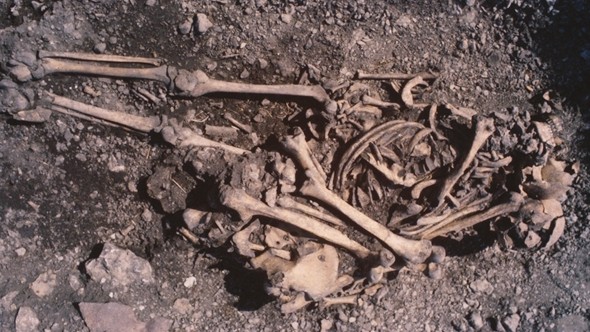
A groundbreaking DNA analysis of a Stone Age cemetery in Sweden has overturned assumptions about burial practices among Europe’s last hunter-gatherers. The study, published in Proceedings of the Royal Society B, reveals that individuals were often buried with distant relatives – cousins, aunts, or siblings – rather than immediate family, suggesting a complex understanding of kinship that challenges previous theories.
The Ajvide Cemetery: A Window into the Pitted Ware Culture
The Ajvide site, first excavated in 1983 on the island of Gotland, contains 85 graves from the Pitted Ware culture, dating back roughly 5,500 years. This society coexisted with the spread of agriculture across Europe but maintained a hunter-gatherer lifestyle, primarily fishing and hunting seals. The cemetery’s unusual feature is that eight graves contained multiple individuals, prompting initial assumptions of close familial ties.
Recent advances in ancient DNA analysis allowed researchers to verify these relationships, and the results were surprising.
Distant Relatives: Challenging Conventional Burial Patterns
The analysis uncovered several instances of third-degree relatives buried together, indicating that kinship beyond the immediate family was significant. In one grave, a woman was buried with two children who were full siblings, but she was not their mother – suggesting she may have been an aunt or half-sister. Another burial held a boy and a girl who were cousins, sharing only one-eighth of their DNA.
These findings are particularly notable because most hunter-gatherer graves of this period are not well-preserved, making detailed kinship studies rare. The Ajvide site provides an exceptional opportunity to understand social structures from this era.
A Father’s Remains: The Case of the Teenage Girl
Perhaps the most striking discovery involved a teenage girl buried with her father’s bones placed on and next to her. The DNA confirmed the relationship, but indicated the father likely died before his daughter and his remains were exhumed and moved to her grave. This suggests deliberate placement of ancestors, rather than simple co-burial of immediate family.
“Surprisingly enough, the analysis showed that many of those who were buried together were second- or third-degree relatives…This suggests that these people had a good knowledge of their family lineages and that relationships beyond the immediate family played an important role.” – Helena Malmström, Uppsala University
Implications for Understanding Neolithic Social Structures
The study marks the first detailed exploration of family relationships among Scandinavian Neolithic hunter-gatherers. Researchers now plan to analyze all 85 skeletons from the Ajvide cemetery, hoping to uncover further insights into burial rites, life histories, and the broader social organization of this ancient culture. The findings underscore that kinship in these communities was more nuanced than previously understood, with broader family ties playing a crucial role in their social and ritual practices.
These discoveries not only refine our understanding of hunter-gatherer societies but also raise questions about how these groups managed lineage knowledge and the symbolic importance of ancestors in their worldview.