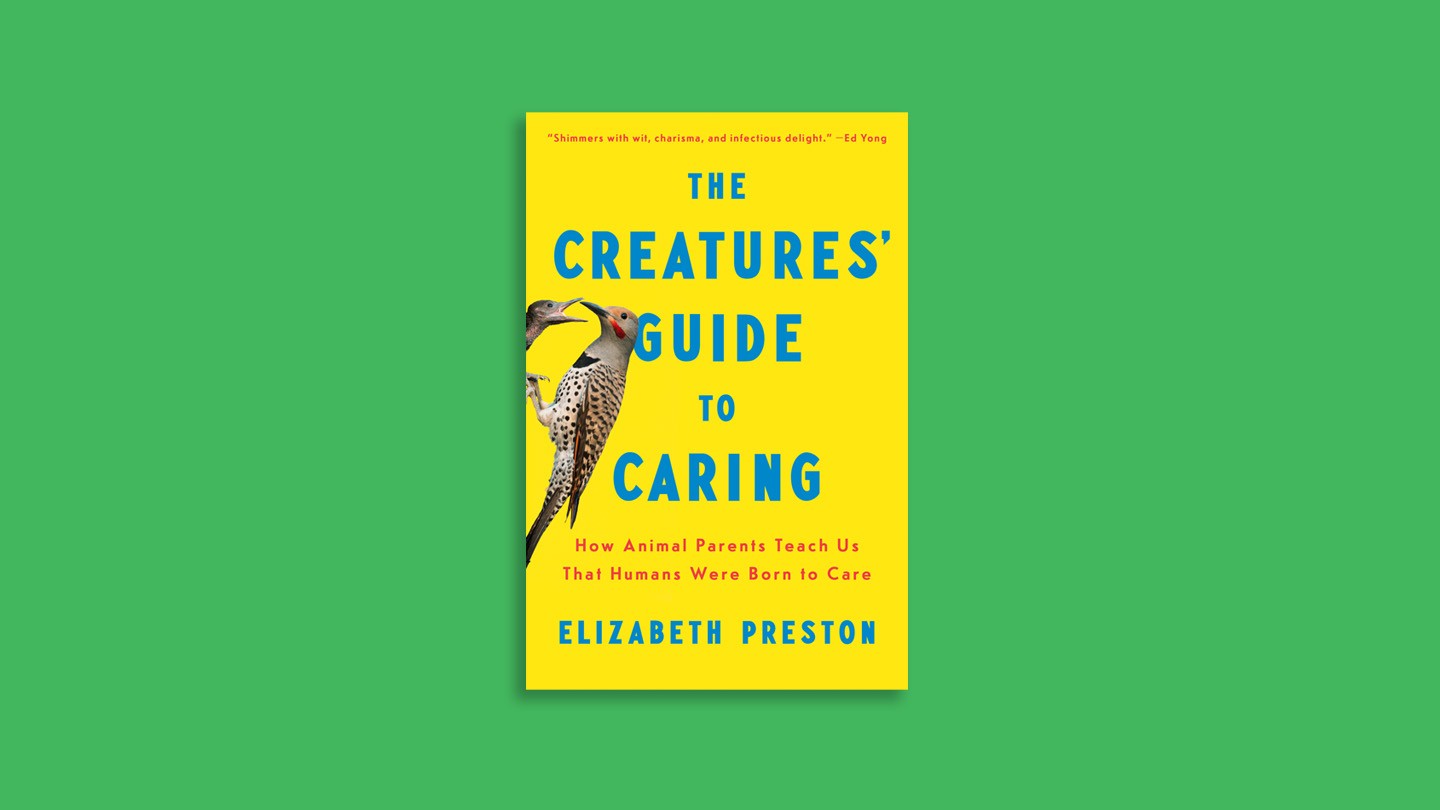
In her new book, The Creatures’ Guide to Caring (Viking, $30), science journalist Elizabeth Preston explores a profound question: if parenting is a biological phenomenon practiced by countless species across millions of years, why does it feel like one of the most difficult human endeavors?
By examining the diverse, often bizarre, and sometimes brutal strategies used by animals to raise their young, Preston provides a unique lens through which to view the complexities of human child-rearing.
The Biological Spectrum of Care
Parenting in the wild ranges from the highly efficient to the deeply strange. Preston uses these extremes to highlight the sheer variety of survival strategies evolved by nature:
- Extreme Growth: Burying beetles knead carcasses into nutrient-rich balls, regurgitating food to help their young grow to 200 times their original size in just six days.
- Hormonal Bonds: In the aquatic world, male three-spined sticklebacks demonstrate that “fatherhood” isn’t exclusive to mammals. These fish utilize hormones like oxytocin —the same bonding hormone found in humans—to drive their care for eggs.
- Fierce Protection: Spotted hyenas exhibit a level of maternal ferocity that mirrors human instinct; mothers will fight other adults to ensure their cubs are fed, prioritizing their offspring’s survival above all else.
The Dark Side of Survival
The book does not shy away from the harsher realities of nature. Evolution is driven by survival, not necessarily by sentiment, and parenting often involves difficult trade-offs:
“Parenting in nature also has its dark side… a long-tailed skink female might eat all her eggs if she faces off with predators one time too many, perhaps because it’s better to try again than keep fighting.”
This biological pragmatism—where a parent may abandon or even consume offspring to ensure their own survival—serves as a stark reminder that “good parenting” is context-dependent. In species like marmosets and tamarins, the success of a parent is tied directly to social support; without a “village” to assist, the likelihood of infant rejection increases.
Why This Matters for Humans
Preston’s analysis suggests that much of the modern struggle of parenting stems from a shift in our social structures. While humans have evolved to be cooperative parents —relying on a community of relatives and friends to share the burden—modern life often isolates individuals, stripping away the communal support systems that nature intended.
By comparing human struggles to the biological imperatives of other species, Preston reframes parenting not as a personal failure of skill or stamina, but as a complex, evolutionary challenge.
Conclusion
The Creatures’ Guide to Caring offers a perspective that is both humorous and humbling. It reminds us that while parenting is undeniably difficult, we are part of a vast, ancient biological tradition that has developed countless ways to navigate the challenges of nurturing the next generation.