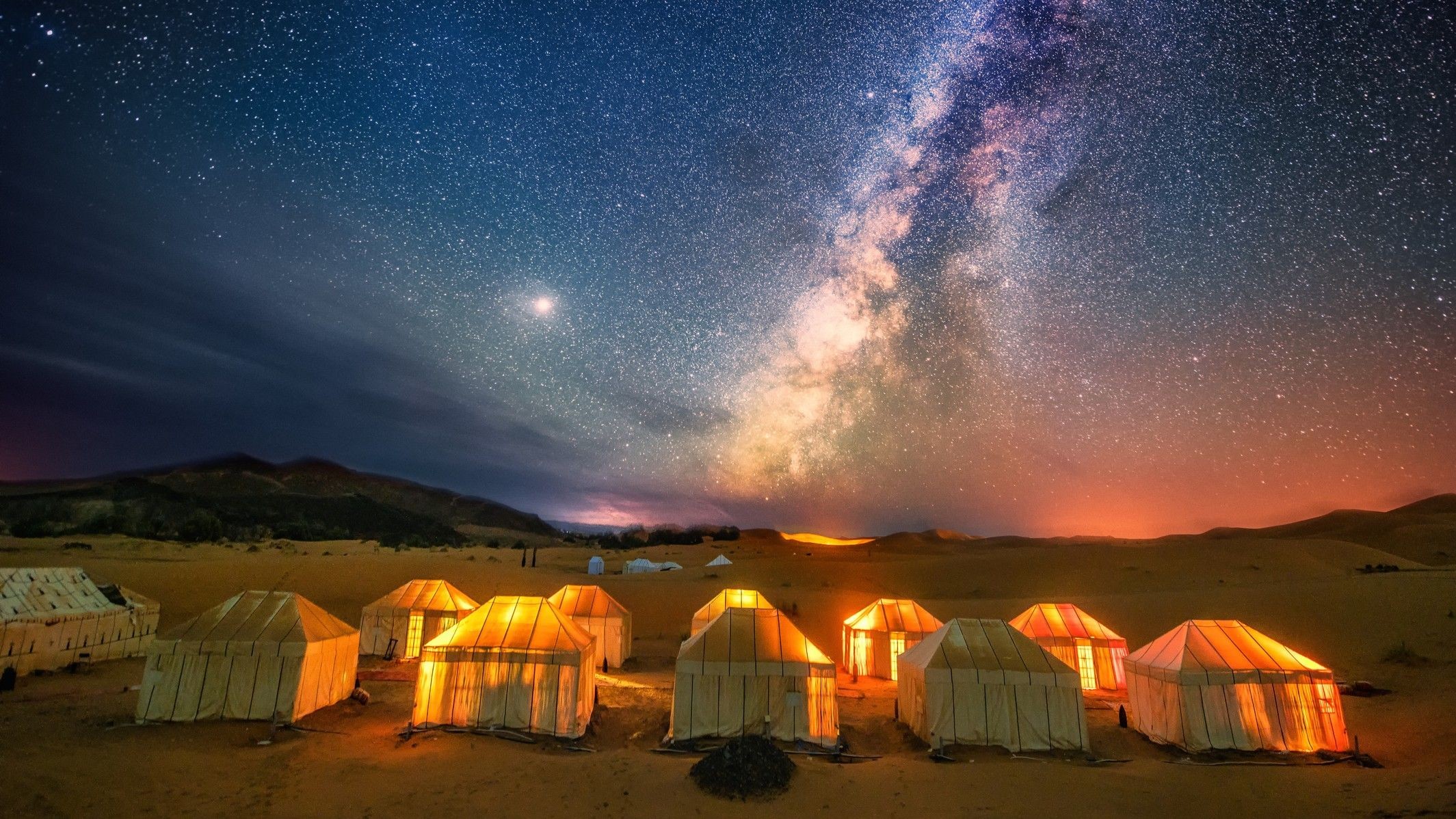
Years ago. Early days. I stood in the middle of nowhere, waiting for the cosmos to reveal itself. We were a small crew, enthusiastic, hopeful. A professional astronomer guided us. The location was protected, remote, and technically qualified as a premier viewing spot. On paper, it was the dream.
But the moon rose. Bright. Past full. Arrogant.
There was no Milky Way. Just a few stubborn stars clinging to visibility while the rest of the sky drowned in wash-out. People were polite, though. Someone asked to see Andromeda. We saw a faint, gray smudge through the telescope. Then we looked at the moon instead. Twenty minutes in, and we were drifting. No wow. Just moonlight.
That night broke me. It fixed me, too.
The lesson? Darkness is not guaranteed. You can’t just drive away from city lights and expect the universe to open up. Astrotourism is usually planned around the hotel’s convenience or the guide’s schedule. The sky doesn’t care. If you don’t plan for a black canvas, the show collapses instantly.
The math of night
It all comes down to darkness.
Check the moon first. Not the map. Not the reviews. The moon.
Rule of thumb: Last quarter through new moon. That gives you roughly ten nights where the sky is truly dark. Miss that window and the moon wins. You could stand in the darkest park on Earth, but if the moon is up, your sky looks like a suburb. Same noise. Same washout.
Location matters next, but only if the moon behaves. Look for certified Dark Sky Places. In Canada, they call them Dark-Sky Preserves. Spain has Starlight Reserves. The U.K. has informal discovery sites. Or just check a light pollution map. Be ruthless.
But distance from the lights isn’t the whole story. Latitude changes what you see.
Move south, even slightly. The galactic core of the Milky Way climbs higher. It gets brighter. Head into the Southern Hemisphere entirely new constellations unlock. For northerners, the bright stuff is in the south. So stand south of the cities. Don’t stand north of them and stare at a dome of light pollution right where the stars should be.
Then there’s season.
Summer twilight in the mid-northern latities? Brutal. It shortens the dark window or kills it completely. May is your friend here. Or go higher. Altitude helps. Thin, dry air. Sharp skies. That’s why observatories are on peaks, not beaches.
Astronomy requires precision. Not hope.
Planning backward
I start with the view. Never the place.
Want the Milky Way? Late summer. Early autumn. The bright center is up just after dusk.
Want meteor showers? Check the moon. If the shower hits under a full moon, skip it. Don’t be seduced by the name. The display will be washed out.
Auroras force your hand geographically, sure. Aim for 65 degrees North. But timing still depends on the dark sky. New moon lets faint greens punch through. March is better there anyway—the “equinox effect” tends to make the displays punch harder. Tried it. Believed it.
Eclipses are different. The date and place are locked. You adapt or you miss out.
Once dates are picked, I sanity check. Will it get dark at this latitude? What’s the historical cloud data?
Don’t guess. Use climate data.
Deserts are reliable. Coasts are suspicious. Rainy seasons kill trips. Assume nothing.
I build redundancy. One good night is a fluke. Three good nights is a strategy. Rent a car. Book multiple towns. Have an escape route. Arriving on new moon sounds smart until you realize moonlight starts interfering in just a few nights. You actually arrived a week late to the cycle.
Compromises are real. Work schedules. Flights. Hotel availability. None of that bends for the stars. Plan a year early. Two years if you can. The sky’s motions are predictable. Human schedules aren’t. Get booked before anyone else knows what date is best.
All that left is luck with the clouds.
“The sky is predictable. Human logistics are not.”
Stargazer’s Corner: May 22-28
Look up late. The ecliptic is showing off.
May 22 is good. The moon is at 44% illumination. Follow it down, diagonal, toward the northwest horizon. Look for Mercury. It won’t be easy. Give it a try if your horizon is clear. Mercury hits peak height in late May before sinking back toward the sun in June.
Between the moon and the tiny planet? Jupiter and Venus.
Venus is still the king of twilight, dominating the west. Jupiter lingers nearby, getting ready for a closer meet in the next month. When dark falls, find Regulus —the head of Leo—nestling near the moon.
On the 23rd, the moon turns last quarter. It drifts east. On the 26th and 27th, it parks near Spica in Virgo.
Leo is setting. The season is shifting. Focus on its tail, Denebola. The Sickle form is famous, but Denebola is fading into the edge of the quieter sky. You are watching winter let go of summer in real time. The stars don’t rush, but they leave eventually.
The sky moves on whether you are ready or not. 🌑