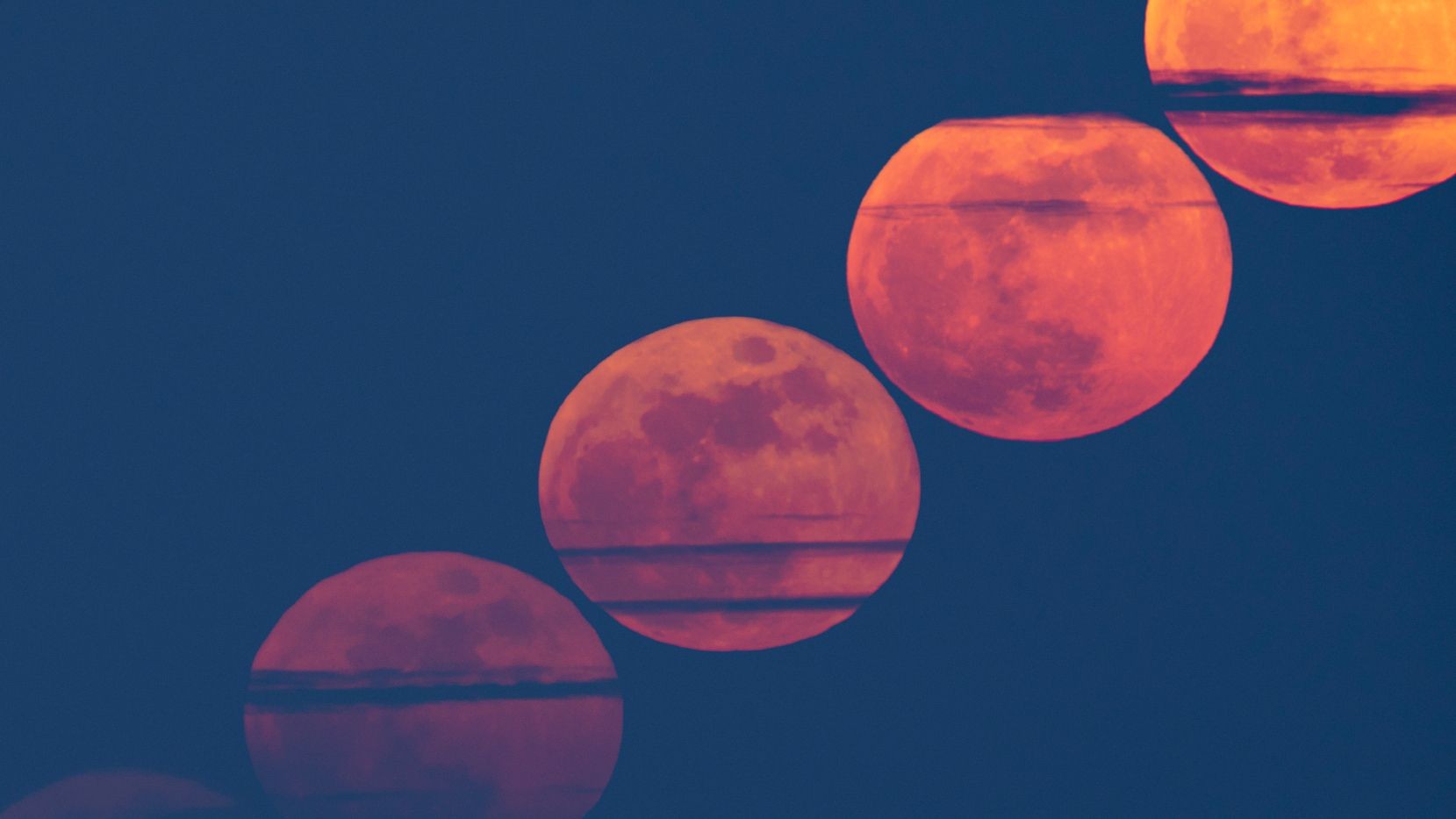
A recent composite image captured by astrophotographer Josh Dury showcases the March full moon appearing a striking blood red hue as it rose over the Dorset coast of the United Kingdom. The unusual coloration wasn’t caused by a lunar eclipse—though one did happen earlier that day—but rather by an atmospheric phenomenon intensified by Saharan dust carried thousands of miles by wind currents.
The “Worm Moon” and Atmospheric Effects
The March full moon is traditionally called the “Worm Moon,” referencing the time of year when warmer temperatures allow earthworms and insects to emerge from the ground. Dury’s image highlights a striking visual effect: the moon appearing deep red on the horizon. This isn’t a typical sight, but it’s a natural consequence of how light interacts with Earth’s atmosphere.
The key process is called Rayleigh scattering. When moonlight travels through the atmosphere at a low angle—like during sunrise or sunset—shorter blue wavelengths are scattered away by atmospheric particles, while longer red wavelengths pass through more easily. The presence of Saharan dust amplifies this effect, creating an even more dramatic and rusty hue.
How the Image Was Captured
Dury captured the striking scene using a telephoto lens, then combined multiple shots into a single, visually compelling composition. The resulting image is not only beautiful but also illustrates how atmospheric conditions can profoundly affect celestial observations.
“The Sahara dust in the atmosphere would give the illusion [of a blood moon]. A deep blood red on the horizon. A provoking image.” – Josh Dury
Why This Matters
The red moon phenomenon is a vivid example of how global atmospheric processes—like Saharan dust plumes—can affect weather and visibility even at a local level. These dust events are becoming more frequent due to climate change and desertification, meaning striking sights like this may become more common.
The image also reminds us that visual perception of celestial bodies is not merely about distance or size but about the light passing through the air between us and the cosmos. The moon’s appearance isn’t fixed; it changes with the atmosphere.
This phenomenon is a reminder of the interconnectedness of Earth’s systems, where winds, dust, and light interact to create spectacular and sometimes eerie visual effects.