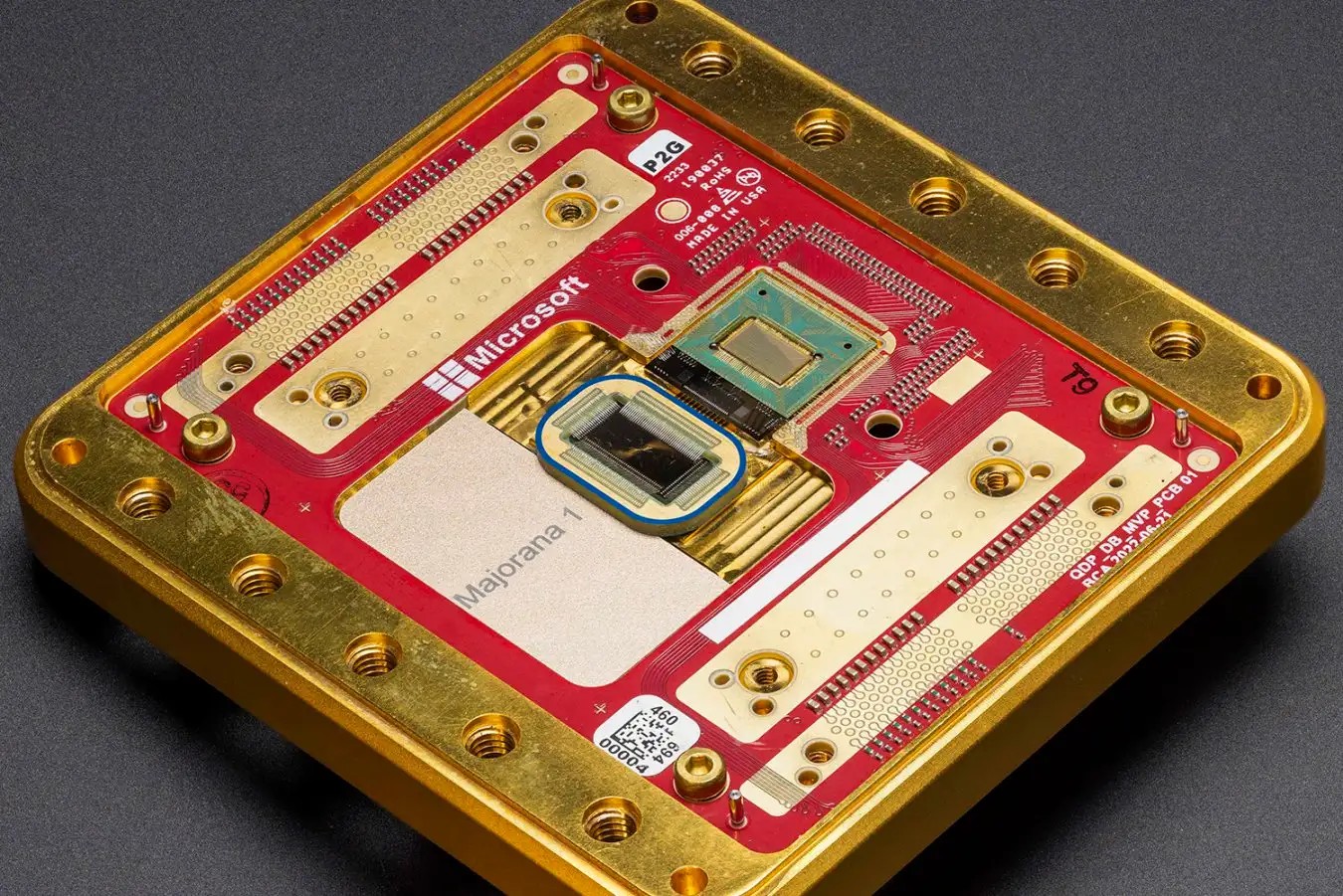
Microsoft’s recent push into quantum computing has been met with both excitement and skepticism, largely due to the controversial nature of its Majorana 1 device unveiled in 2025. The core debate centers on whether the company has genuinely achieved a breakthrough in building stable, error-resistant quantum bits (qubits) – a critical hurdle in the field.
The Promise and Pitfalls of Topological Qubits
Microsoft’s approach relies on topological qubits, which, in theory, are far less prone to errors than conventional qubit designs. These qubits leverage elusive particles called Majorana zero modes (MZMs) to encode quantum information. This is an attractive idea because errors plague all current quantum computers, and topological qubits promise a path toward reliable computation.
However, Microsoft’s track record with MZMs has been rocky. A 2021 paper claiming evidence of these particles was retracted from Nature after flaws were identified in its analysis. A 2023 experiment related to Majorana 1’s predecessor also faced harsh criticism from experts. The stakes are high because quantum computing, if successful, has the potential to revolutionize fields from medicine to finance.
Conflicting Claims and Editorial Caveats
The 2025 announcement of Majorana 1 was immediately scrutinized. In an unusual move, Nature published Microsoft’s paper alongside a note stating that the data did not confirm the presence of MZMs. Microsoft’s press release, however, asserted the opposite. This contradiction raised immediate concerns within the scientific community.
Chetan Nayak, a key figure at Microsoft, attempted to address these doubts at the American Physical Society Global Summit, but critics remained unconvinced. Henry Legg of the University of St Andrews stated bluntly, “The data they presented then and since simply does not show a functional topological qubit.”
Progress, Debate, and Skepticism
More recent data released by Microsoft in July showed some improvements, with Eun-Ah Kim of Cornell University acknowledging “progress” in the measurements. Yet, the debate continues. The project has advanced to the final stage of the US Defense Advanced Research Projects Agency’s Quantum Benchmarking Initiative, suggesting continued investment and interest from government entities.
Microsoft remains optimistic. Nayak insists that the response has been energizing, with ongoing research promising further breakthroughs. The company aims to scale up Majorana 1 into a larger, more powerful quantum computer capable of error-proof computations.
However, skepticism prevails. Legg warns that “fundamental physics does not respect the timelines set by big tech companies.” Whether Microsoft can deliver on its promise in 2026 remains uncertain.
The ongoing controversy underscores the immense technical challenges in building practical quantum computers and the intense pressure to overcome them. Despite continued research, independent verification of Microsoft’s claims remains critical to determining whether Majorana 1 represents a true step forward or another setback in the quest for quantum supremacy.