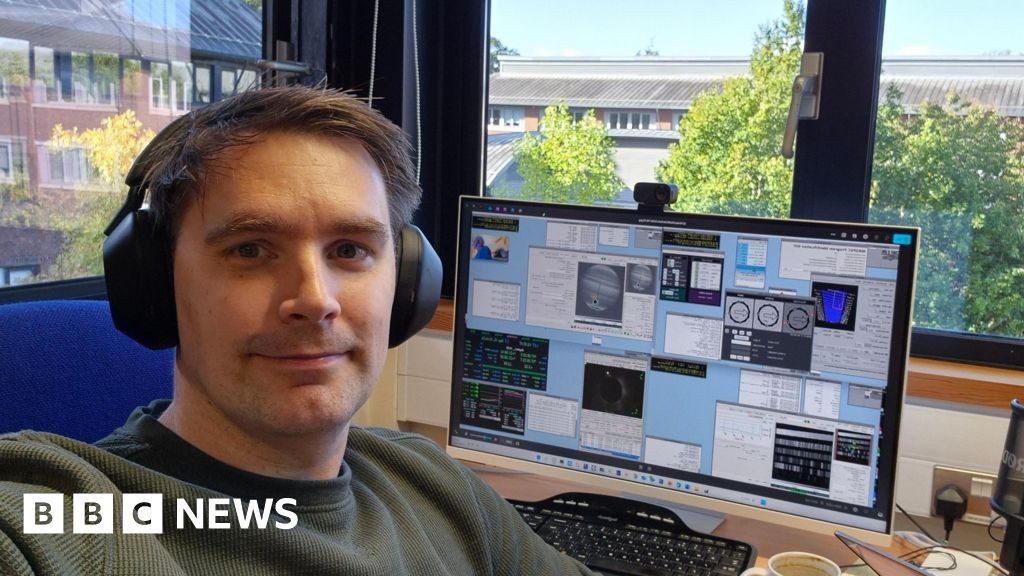
James O’Donoghue, a planetary scientist at the University of Reading, has received one of astronomy’s highest honors for his exceptional ability to translate complex space science into engaging content for the public. The American Astronomical Society (AAS) has awarded him the 2026 Carl Sagan Medal, recognizing his “unique and impactful” efforts in science communication.
The award is named after Carl Sagan, the iconic 20th-century scientist whose Cosmos documentary series revolutionized how the public engaged with the universe. By bestowing this medal on O’Donoghue, the AAS highlights a modern evolution in science outreach: the shift from traditional lectures to digital, visual storytelling that reaches global audiences instantly.
Bridging the Gap Between Research and Public Curiosity
O’Donoghue’s recognition stems largely from his library of over 100 educational animations regarding space phenomena. These videos have collectively garnered more than 400 million views worldwide, demonstrating a massive appetite for accessible astronomical content.
His approach addresses a critical gap in scientific engagement. While rigorous research is the foundation of astronomy, its impact is limited if it remains confined to academic journals. O’Donoghue operates on the principle that curiosity is a universal trait. As he noted, space is “one of the few subjects that almost everyone is curious about,” and that curiosity deserves serious, high-quality attention.
“When people understand what’s happening on other planets, it changes how they see our own world. Sharing that science as widely and accessibly as possible is just as important as doing it in the first place.”
This perspective underscores a growing trend in science communication: contextualizing distant discoveries to reflect on human existence. By explaining the mechanics of other worlds, scientists can foster a deeper appreciation for Earth’s fragility and uniqueness.
A Multi-Platform Approach to Outreach
Beyond his digital footprint, O’Donoghue maintains a robust presence in traditional media and community engagement. He is a frequent contributor to major outlets such as the BBC and PBS, ensuring that scientific developments reach audiences through trusted news channels.
Locally, he translates knowledge into experience by organizing the University of Reading’s annual Observe the Moon Night. This event draws hundreds of attendees to campus for guided stargazing, bridging the gap between theoretical knowledge and direct observation.
Recognizing Scientific Leadership and Creativity
The AAS emphasized that O’Donoghue’s award is not solely for his media popularity but for the synergy between his communication skills and his professional standing. The society described him as an “extraordinarily creative and effective communicator” who is also a “recognised leader” in planetary science.
This dual recognition is significant. It validates the idea that public engagement is a core scientific competency, not merely a side activity. By combining rigorous scientific leadership with innovative outreach, O’Donoghue exemplifies the spirit of the Carl Sagan Medal: using the wonder of the cosmos to educate, inspire, and connect people across the globe.
In conclusion, James O’Donoghue’s receipt of the Carl Sagan Medal highlights the increasing value placed on science communication as a vital component of modern research. His work demonstrates that making complex ideas accessible does not diminish their scientific integrity; rather, it amplifies their cultural and educational impact.