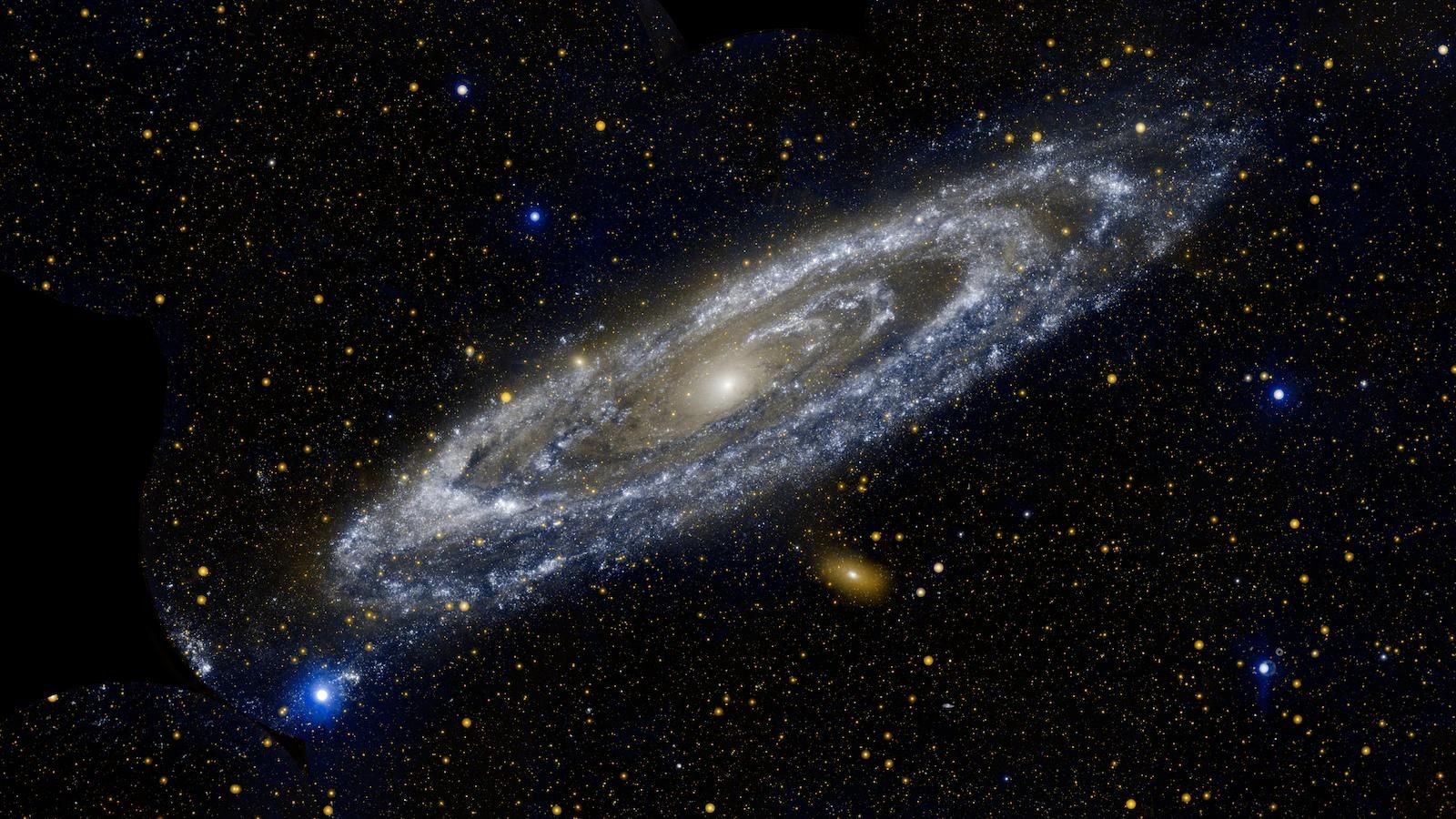
Astronomers have, for the first time, observed a massive star collapsing directly into a black hole without a supernova explosion, a theoretical outcome previously considered relatively common but rarely witnessed. The discovery, made in the Andromeda Galaxy (M31), challenges conventional understanding of stellar death and suggests that many such events may go unnoticed.
The Unexpected Disappearance
In 2014, NASA’s Near-Earth Object Wide-Field Infrared Survey Explorer (NEOWISE) detected a supergiant star, now designated M31-2014-DS1, brightening in infrared light. Years later, a team led by Kishalay De at Columbia University re-examined the archival NEOWISE data and found the star had not just faded, but vanished. Over two years, the star’s mid-infrared brightness increased by 50%, then rapidly dimmed, eventually becoming undetectable in optical light by 2023.
This isn’t just a fading star; it’s a confirmed disappearance. Hubble Space Telescope observations in 2022 also showed nothing in visible light, with only a faint near-infrared source detected in follow-up Keck Observatory spectroscopy. The fading was dramatic: a 100-fold decrease in optical brightness between 2016 and 2019.
Why This Matters: Rethinking Stellar Evolution
The standard model predicts that stars of this size (roughly 13 solar masses at the start, reduced to 5 by stellar winds) should explode as supernovae. The failure to do so suggests that some stars collapse directly into black holes, and this process may be more frequent than previously thought. This discovery implies that the inventory of stellar deaths in the universe is incomplete, and many black holes are forming silently, undetected by current surveys.
The mechanism behind this collapse hinges on neutrinos. When a massive star exhausts its fuel, its core collapses, releasing neutrinos. These particles can drive shockwaves that either trigger a supernova explosion or, if weak enough, allow the star’s outer layers to fall inward, forming a black hole without the bright flash of a supernova.
A Second Candidate: N6946-BH1
This isn’t an isolated case. A similar candidate, N6946-BH1 in the galaxy NGC 6946 (25 million light-years away), was observed in 2010. However, due to its greater distance, the data for N6946-BH1 are less precise. The Andromeda observation provides stronger evidence and validates the existence of these “failed supernovae.”
The Search Continues: Future Prospects
Finding these direct-collapse black holes is challenging. Supernovae are easy to spot; they outshine entire galaxies for weeks. Direct collapses, however, are subtle and require careful analysis of archival data. The discovery of M31-2014-DS1 highlights how much hidden information lies within existing astronomical archives.
The upcoming Vera Rubin Observatory, with its decade-long Legacy Survey of Space and Time, has the potential to uncover many more of these events. Until then, astronomers will continue to sift through existing data, hoping to find other stars that have quietly slipped into oblivion.
“It comes as a shock to know that a massive star basically disappeared (and died) without an explosion and nobody noticed it for more than five years,” says lead author Kishalay De. “It really impacts our understanding of the inventory of massive stellar deaths in the universe.”