Put a Chihuahua next to a Saint Bernard. The visual gap is absurd. It makes no sense for one species to contain such extremes. Yet, we now know that the deep roots of this variation go back millennia. Not centuries. Thousands.
New research changes the timeline.
Two separate studies published in Science just upended the traditional narrative. One team looked at bones. The other looked at genes. Both tell the same story: the bond between humans and dogs is older, more complex, and far more intertwined with human migration than we realized.
The 11,000-Year Shift in Physical Diversity
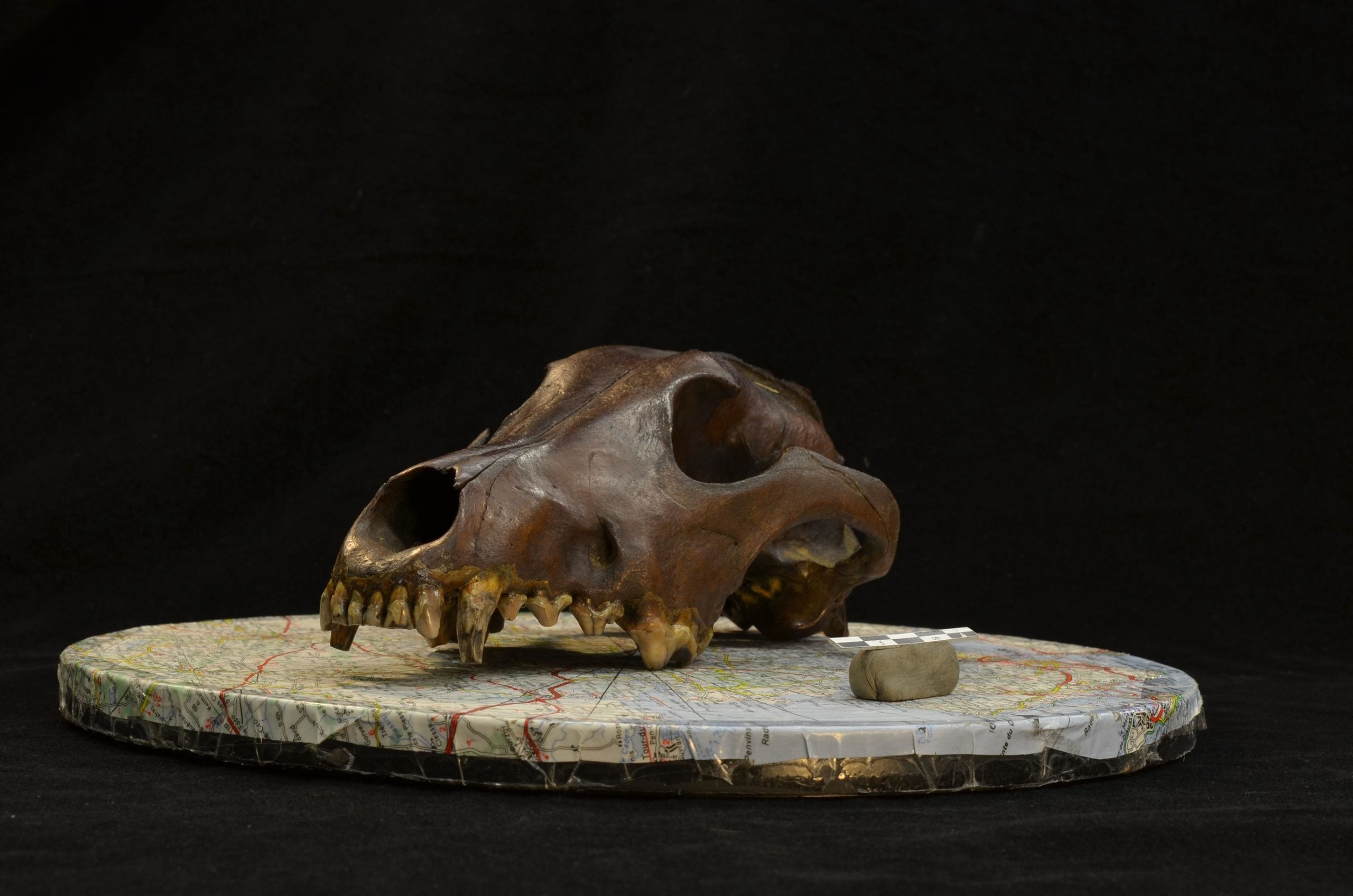
Allowen Evin’s team didn’t just glance at a few femurs. They analyzed 643 ancient dog and wolf skulls spanning 50,000 years. Their goal? To pin down exactly when dogs stopped looking like wolves and started looking like… well, dogs.
The data is stark.
Before 11,000 years ago, the Late Pleistocene era, early canines were indistinguishable from their wild cousins. The team re-examined 17 specific skulls from that period, some as old as 50,000 years every single one was wolf-like in shape. Even the skulls previously labeled as “early dogs” held that primitive structure.
Then, the Holocene arrived.
Approximately 11,000 years past, something clicked. The “dog-like” skull morphology emerged. And it appeared with considerable variation right away. This suggests the wide array of shapes we see today—the flat faces of bulldogs, the long snouts of retrievers—didn’t just spring into existence during the Victorian era’s obsessive breeding programs.
Some of that genetic architecture was already there. The foundation was laid in the dawn of agriculture, not in the show ring.
Early dogs were likely much more diverse in their genetics than their skulls suggest, creating a buffer for the extreme variations seen later.
Tracing Human Migrations Through Ancient DNA
While Evin studied shape, Shao-Jie Zhang and his colleagues at the Kunming Institute of Zoology studied sequence. They sequenced 73 ancient dog genomes from the last 10,00 years in Eastern Eurasia.
The result? Dogs as time capsules.
The DNA reveals clear shifts in ancestry that line up perfectly with human movements. Hunter-gatherers. Farmers. Pastoralists. When these groups migrated across the Eurasian steppe, their dogs moved with them. The genetic signature of the human culture followed the genetic signature of the dog pack.
But it’s not a perfect mirror.
There were glitches in the pattern. Take the hunter-gatherers of Veretye and Botai. Genetically, they were closer to Western Eurasian populations. So, why did they pack Eastern (Arctic) dog breeds instead of the Western dogs that other similar cultures were using?
This discrepancy hints at trade. Or perhaps cultural exchange that went both ways.
It suggests dogs were “biocultural packages.” Humans didn’t just adopt local canines after arriving in a new region; they brought their companions along. They valued the partnership enough to carry it across continents. Or maybe they traded them. The exact mechanism remains messy, but the link is undeniable.
Why This Matters for the Human-Dog Bond
We often think of dog breeds as modern inventions. Industrial. Artificial. A product of the last few centuries of selective pressure.
The evidence now points to a different origin story. The morphological groundwork was set thousands of years ago. It was shaped by natural selection, environmental adaptation, and early human interaction long before the modern kennel club system existed.
These findings act as a mirror for our own history. Because the genetic ancestry of these ancient dogs serves as a living record. It maps out migration routes, trade networks, and the spread of agricultural societies.
The split between wolves and dogs probably happened in the Pleistocene. But the diversity —the very thing that defines the species today—bloomed later. As humans settled, as they traded, and as they moved, their dogs changed with them.
It wasn’t just domestication. It was a shared journey.
The bond is almost as old as the diversity itself. And we’re only just beginning to read the bones.