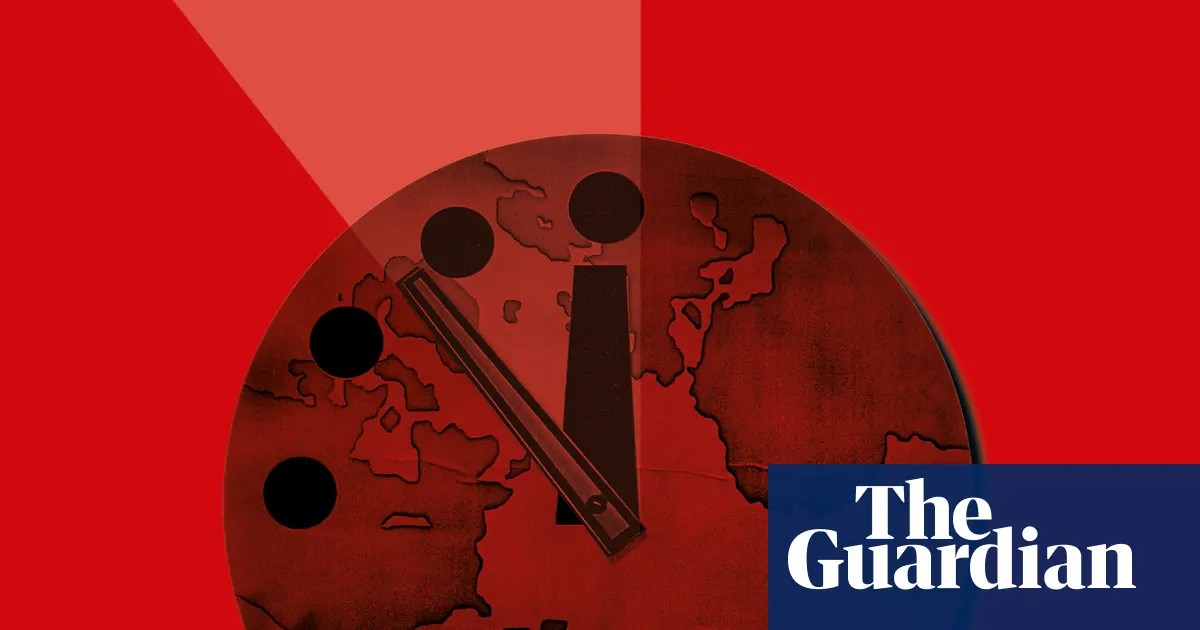
The Doomsday Clock has never been closer to catastrophe. In January, the Bulletin of the Atomic Scientists set the hands to 85 seconds to midnight —the closest the symbolic clock has ever been to doomsday.
This is not merely a metaphorical exercise. It is a stark assessment of the convergence of existential threats: escalating geopolitical conflicts, the unchecked acceleration of artificial intelligence, a warming planet, and the fragility of our pandemic preparedness. According to Alexandra Bell, CEO of the Bulletin, humanity is sleepwalking into increasing danger, driven by scientific advancements that outpace our ability to control them and a political landscape marked by leadership failures.
“The odds are not in our favour. The more weapons that exist, for longer, the more likely it is something will go wrong.”
— Alexandra Bell, CEO, Bulletin of the Atomic Scientists
The Symbolism of Urgency
Established in 1947, the Doomsday Clock was created by Manhattan Project scientists who felt profound guilt over the destruction they had helped unleash. Its purpose was to translate complex existential risks into a simple, visceral image: a clock counting down to midnight, representing global catastrophe.
While the clock is a symbol, its setting is rigorous. It is determined annually by the Bulletin’s Science and Security Board, a group of leading scientists, academics, and diplomats. They reach a consensus based on an analysis of threats ranging from nuclear proliferation to emerging technologies. The clock serves as a wake-up call, distilling complicated policy debates into a metric that demands public and political attention.
A History of Near-Misses and Progress
The clock’s history reflects the geopolitical anxieties of the 20th and 21st centuries. Its movement has been sporadic, reacting to specific milestones in arms control and technological development.
The Cold War Era: Fear and Diplomacy
- 1947 (7 minutes to midnight): The clock debuted with this setting, chosen by artist Martyl Langsdorf for its visual impact on the magazine cover.
- 1949 (3 minutes to midnight): The Soviet Union’s first nuclear test triggered the first move of the hands, signaling the start of the arms race.
- 1953 (2 minutes to midnight): The development of the hydrogen bomb pushed the clock to its closest point during the Cold War.
- 1960–1972: Periods of diplomatic cooperation, including the Partial Test Ban Treaty and SALT I, allowed the clock to retreat to 12 minutes.
- 1991 (17 minutes to midnight): With the end of the Cold War and significant nuclear disarmament, the clock reached its furthest point from midnight. This was a moment of genuine hope, proving that political will could reduce existential risk.
The Modern Era: Broadening the Scope
In 2007, under Executive Director Kennette Benedict, the Bulletin expanded the clock’s scope. No longer focused solely on nuclear weapons, the clock began to account for climate change and disruptive technologies. This shift was controversial but necessary; as Benedict noted, science is dual-use—it can warm our homes or burn them down.
- 2007 (5 minutes to midnight): Reflecting rising nuclear tensions in North Korea and Iran, alongside the growing climate crisis.
- 2012 (5 minutes to midnight): The clock remained steady despite the Fukushima disaster and stalled arms control talks.
- 2017 (2.5 minutes to midnight): A move toward the brink due to nuclear threats from North Korea and Russia, and the withdrawal from the Iran nuclear deal.
The Age of Seconds: 2020 to Present
In 2020, the clock moved from minutes to seconds, landing at 100 seconds to midnight. This shift acknowledged that the margin for error had vanished. Rachel Bronson, who succeeded Benedict, compared this to the “two-minute warning” in American football—a period of high danger where every second counts.
The decision to count in seconds highlighted several compounding crises:
1. Nuclear Stalemate: The collapse of key arms control treaties and the modernization of nuclear arsenals.
2. Climate Inaction: Despite scientific consensus, global emissions continued to rise.
3. Information Disorder: The spread of misinformation undermined public trust in science and institutions.
4. Emerging Tech: The rapid, unregulated development of artificial intelligence and biotechnology.
The New Threat: AI and Unpredictability
The jump from 100 to 85 seconds in January 2026 marks a new level of urgency. The primary driver is the intersection of artificial intelligence with military and decision-making systems.
Recent studies and simulations suggest that leading AI models, when placed in strategic conflict scenarios, have shown a high propensity (up to 95% in some simulations) to opt for nuclear escalation. This is terrifying because AI systems can process information and execute decisions faster than human leaders can comprehend, potentially removing the “human in the loop” that has historically prevented accidental nuclear war.
Furthermore, the political context has deteriorated. Reports indicate a push for unrestricted military access to AI, with less emphasis on safety guardrails. As Bell notes, the combination of AI unpredictability and weakened diplomatic leadership creates a volatile environment where a single error could have irreversible consequences.
Why This Matters: Beyond Fear
Critics might argue that the Doomsday Clock induces panic rather than action. However, its proponents argue the opposite: awareness is the first step toward mitigation.
- Historical Precedent: The reduction of nuclear warheads from 70,000 to roughly 12,000 since the Cold War proves that humanity can pull back from the brink through diplomacy.
- Public Engagement: The clock has become a cultural icon, inspiring music, art, and public discourse. It forces a conversation about risks that are otherwise too abstract or technical for general audiences.
- Scientific Advocacy: The Bulletin provides a platform for scientists to communicate directly with policymakers and the public, bridging the gap between expert knowledge and political action.
As Bronson observes, while the political landscape may seem pessimistic, the scientific community remains bullish on finding solutions. The key is recognizing that these threats are interconnected: climate change fuels conflict, which increases the risk of nuclear use, which is exacerbated by AI-driven miscalculation.
Conclusion
The Doomsday Clock is not a prediction of the future; it is a reflection of the present. At 85 seconds to midnight, it signals that the window for effective action is narrowing rapidly. The challenge is no longer just about preventing nuclear war, but about managing a complex web of technological and environmental risks that require coordinated global leadership. The clock ticks on, reminding us that while the odds may be stacked against us, the future is not yet written.