


Why #Nîmes’ new grocery model offers fair wages to farmers
Imagine shopping in a place that smells like ripe fruit instead of plastic wrap. That price tag actually goes to the people who farm the soil instead of enriching a long list of brokers. For many consumers accustomed to the aggressive neon lights of department stores, this may sound like utopia. In the south of France, this is a concrete reality. A new structure is emerging in Nîmes, which breaks the rules of large-scale distribution. Resist the usual profit squeeze.
Le Mas des Agriculteurs is unique. More than 600 local producers have regained control of production and distribution. They redefined the connection between fork and plow.
A local production center for local consumption will be established in Gard
At the heart of the Gard sector, large-scale initiatives have changed the local business environment. Le Mas des Agriculteurs is more than just a collective sales office. This is a true supermarket dedicated exclusively to local terroir specializing in local terroir. Far from the rustic, cluttered image of product sales, this location offers the convenience and modernity of a regular store. But the philosophy is the opposite.
The buyer finds the shopping cart. They noticed that the corridors were well organized. I felt that the opening hours were wide. This makes quality food easily accessible to busy workers.
This ambitious project offers a solid alternative for those who want to escape the retail giants without sacrificing comfort. Everything your family needs in one place. From fruit and vegetables to dairy, butchers and pantries, this structure means you can do your weekly shopping without having to travel to a multinational store. In February 2026, this model showed that a different path was possible when consumers became aware of the impact of their purchases.
Producers, not buyers, set prices
The real revolution in this Nîmes store is its pricing mechanism. In traditional systems, procurement centers often charge farmers derisory prices. The logic here is reversed. Farmers decide the selling price of their products.
This complete reversal of power relations guarantees fair compensation. This is calculated based on actual production costs and not on global market speculation. Reasonable prices have become synonymous with rural survival and human dignity.
This approach is total transparency and is designed to help customers understand their receipt. Consumers know immediately where their money is spent. The money goes directly into the pockets of people who raised the animal or vegetables. By eliminating the margins of wholesalers and long-distance carriers, prices remain competitive. Usually they are equal to or less than the mass distribution. However, the quality is unmatched. This is concrete proof that eating better doesn’t necessarily mean paying more, as long as you change your circuit.
600 producers bring together the best of Terroir
The great thing about this store is the large number of members. With more than 600 producers, the venue is incredibly versatile. It is comparable to an old fashioned supermarket dedicated exclusively to local terroir aisle. union of Gard farmers offers a complete and versatile selection of products for all your family’s dietary needs. We’re not talking about small supplementary shop. A global supply location serving both gourmets and extended families.
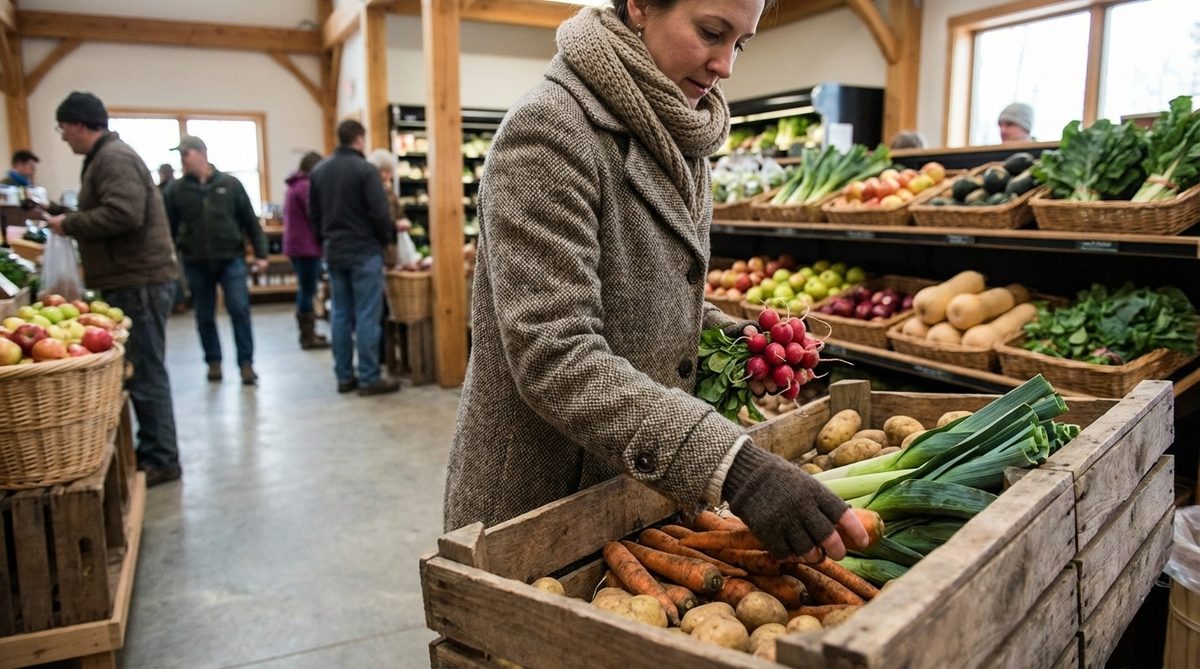
Collective power is essential to ensure continuous delivery throughout the year, even in the depths of winter. The private gardens are often closed in February, but the stalls display seasonal products from the common harvest. Here’s what you’ll find in the aisles this season.
-Root and tuber vegetables: sandy carrots, leeks, turnips, storage potatoes.
– Leafy vegetables: fresh spinach, chard and curly kale, and crisp winter salads.
– Seasonal fruits: local kiwis, late apples and the last citrus fruits from sheltered orchards.
・Processed products: artisanal soups, additive-free compotes, preserved stew dishes.
Marketing is not the only attraction here. This offers unparalleled freshness. Forget the vegetables that spent three days in a refrigerated truck before landing under the supermarket lights. Logistics has been streamlined to a minimum. The lettuce is usually cut in the morning and placed in the aisle in the afternoon. This geographical proximity guarantees not only excellent taste but also maximum nutrient density. Vitamins do not have time to break down during transport.
This ultra-shortcut allows consumers to rediscover the true flavors of the season. It can also bring back forgotten varieties, varieties too fragile to survive the long journey to industrial distribution. This is natural taste education. We learned again how good the structure of apples is when they have not been stored for months in a controlled atmosphere. February deals with earthy, tasty cooking with raw products delights instead of standardized foods.
The economics of keeping funds local
Buying from such structures is a powerful financial act. Every euro spent contributes to the local economy instead of paying dividends to large international groups. A virtuous cycle is created. Money moves in the area. This allows farmers to invest, employ and sustain vitality in rural areas often plagued by depopulation and desertification. Sustaining small farming in the Gard is directly dependent on this daily procurement practice.
Localization of the food economy creates territorial resilience in the face of a crisis. By reducing import dependence and complex logistics chains, the region has secured partial food self-sufficiency. Customers who are aware of this effect no longer just come to buy products. They actively participate in maintaining the vibrant social and economic structure of their environment. It is ultimately a meaningful form of citizenship through consumption.
A space that goes beyond commerce and creates connections between people
It is not only a place of business, but also a place of living and communication. It is not uncommon to meet producers in the corridors. They come to deliver goods or host tastings. These interactions allow us to speak directly to those who feed us. You can also ask about cultivation methods and animal welfare or ask for recipe ideas for unknown vegetables. This “human side” turns the monotony of shopping into a shared moment. It is very different from the ruthless anonymity of the big supermarkets.
The customer experience is warm and educational. The staff is usually familiar with agricultural practices and guides consumers honestly. You also learn patience. You understand that not all everything may be available at all times. Discover the story of each product. This human touch to the food commerce creates a lasting thread of trust. These are essential to building a healthier and fairer food system for all.
A model that could become popular in France
The success of Le Mas des Agriculteurs in Nîmes clearly demonstrates that territorial food sovereignty is possible at scale. This is no longer a lab experiment. This is a viable and robust economic model that operates at full capacity. This shows that unity is strength. When farmers organize collectively, they can compete with industry giants while setting their own rules of the game.
This success also affected other areas. It hints that such measures be extended to the whole of France. If all regions could produce such products, our entire consumption habits could shift towards a more sustainable one. To the world of consumption, where quality, ethics and proximity are no longer luxury options, but standards acceptable to everyone. In February 2026, Gard example will shine like a beacon for the agriculture of the future.
By taking back control of distribution, these 600 farmers offer us more than delicious fruits and vegetables. They offer us an alternative to a solidary and independent agricultural future. What if real progress ultimately involves a return to being here at home? The path forward may be one we have overlooked.


