


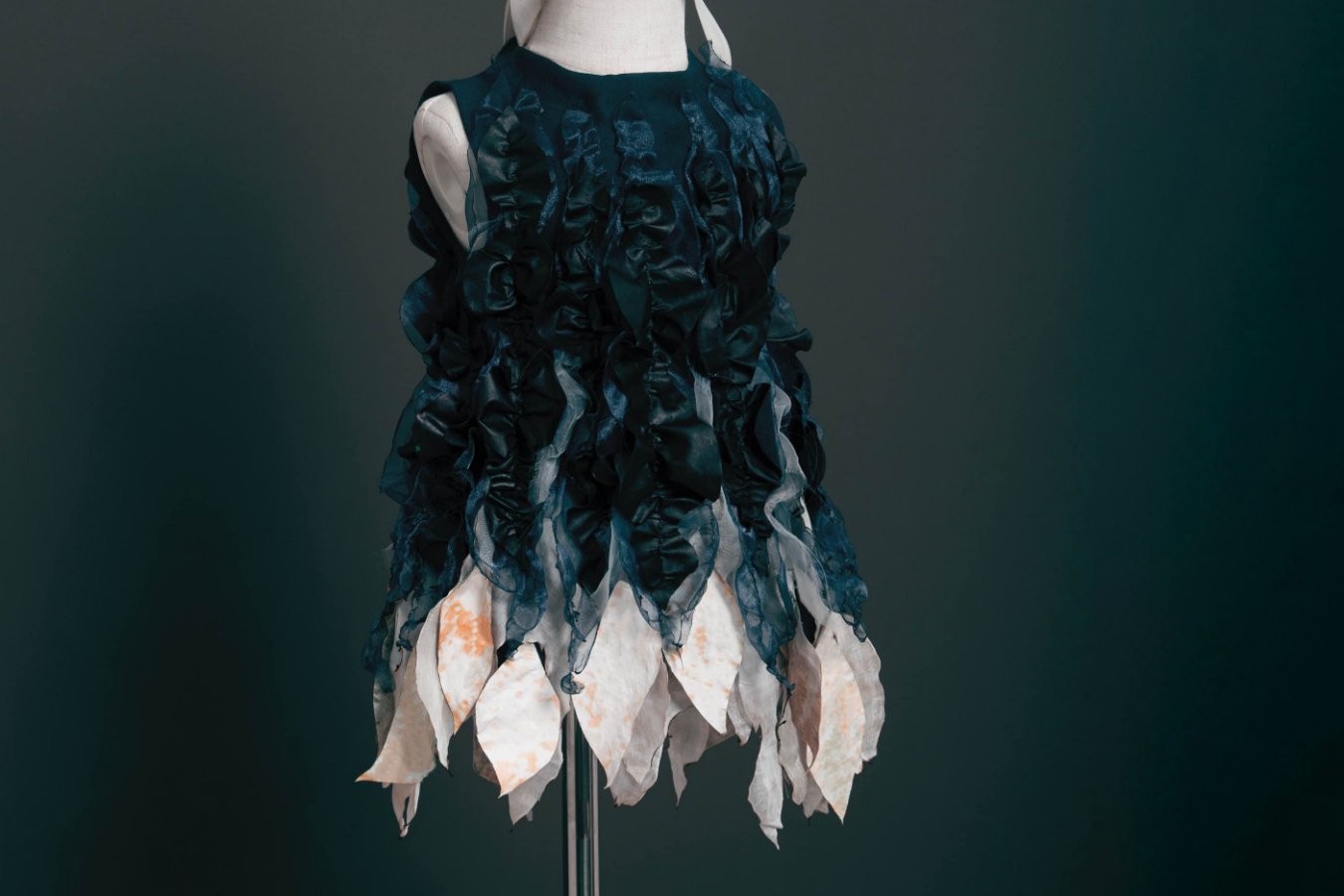
It’s not zombie food.
Despite what The Last of Us fans might fear, the cordyceps fungus isn’t going to turn you into an infected. In fact, Cordyceps militaris is totally harmless to humans. But scientists at the Chinese Academy of Sciences have figured out how to use it to make clothes that can fix themselves.
The future of fashion might just be alive.
This isn’t your average mushroom.
Lead researcher Ke Li and her team treated Cordyceps militaris not as a garnish but as raw material. They grew the fungus in liquid culture until it formed small, spherical pellets. Then they washed them and pressed them into molds. The result? A soft, non-woven sheet.
It doesn’t feel like cotton. It’s denser. Closer to flexible leather. And no, it doesn’t smell like a damp basement. Li says any initial fermentation scent fades after standard cleaning and drying.
Why Living Fungus Makes Better (And Drier) Fabric
How do you keep fungal fabric from crumbling like stale toast?
You add glycerol.
This acts as a plasticizer. It softens the naturally rigid structure of the fungal hyphae—those thin, thread-like filaments. The key insight here is that they didn’t use any external scaffolding. No polymer mesh. No conventional backing. The intertwined hyphae of the Cordyceps pellets built the entire structure on their own.
Want color? Forget synthetic dyes.
The team engineered yeast cells to produce pigments. Orange. Blue. Purple. They applied these living cells to the textile so the color grows into the material biologically.
But the real magic happens when you program the material with other microbes.
Adding Aspergillus niger, a common fruit mold, creates a melanin-rich layer. This absorbs UV radiation, turning your shirt into a sunblock. Add different components and the fabric can repel water.
What Happens If You Rip A Hole In Your Shirt?
You patch it with fungus.
Literally.
If the textile gets damaged, you just apply fresh, wet fungal pellets to the breach. The organism grows over the hole. It heals itself.
This works because the material remains biologically active. In dry conditions, the cells go dormant. But hit them with humidity and nutrients, and they wake up.
This latent activity is a double-edged sword.
The dress biodegrades rapidly. After 40 days in soil, it’s nearly gone. Justin Beardsley from the University of Sydney calls this biodegradability “amazing” compared to the fast-fashion waste pile we’re currently digging ourselves into.
But he’s also worried about durability.
If your jeans rot in 40 days, what happens if you spill a sugary drink on them in August? “It’ll break down while you’re wearing it,” Beardsley warns.
Can We Wear Living Clothes Today?
Not yet.
The team made a dress. It’s small. It’s precious. Nobody has worn it.
Li admits they’ve treated it like a museum piece rather than wearable gear. “Perhaps next time we should find a few adventurous volunteers,” she says.
Beardsley sees potential for real-time adaptation. Imagine a jacket that becomes water-repellent during a storm, then switches back to breathable mode when the sun comes out.
It’s a bold idea. A living suit that responds to weather.
But until we solve the durability issue, your wardrobe probably isn’t ready to sprout.


