


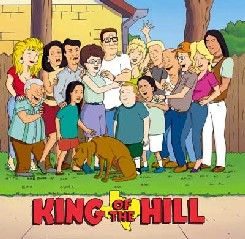
Hank Hill looks like a typical suburban dad. He wears a plaid shirt, worries about propane, and sounds like he dialed his radio to 1990s Texas. He has fame, a fan base and magazine covers. But Hank doesn’t need a break room. He doesn’t drink Evian. He doesn’t even breathe oxygen. he is flat Two Dimensional. A collection of pixels and ink on a screen, just like Fred Flintstone or Homer Simpson before him.
This difference is more important than you think.
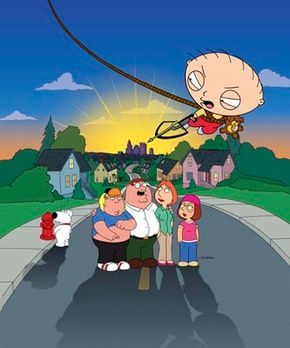
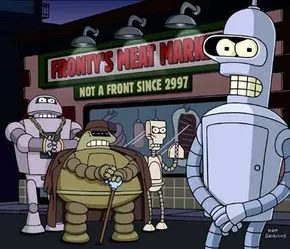
Animation has been apart for decades. Saturday morning feeding. Suitable for children who have not yet learned to read or adults who want to relax after a long day. Then the tide turned. Over the past 15 years, a quiet revolution has changed the shape of prime-time television. Shows like King of the Hill, The Simpsons and Family Guy show that animated series can handle complex themes. They can convey complex humor without speaking to the audience. They proved that cartoons aren’t just TV shows for kids.
However, behind this beautiful two-dimensional world lies the nightmare of three-dimensional production.
Creating an episode of “King of the Hill” isn’t just about drawing funny faces. This is a logistical war. Writers, animators, voice actors, and technicians all have to work together to turn a rough idea into something you can watch on a Tuesday night. This requires a lot of effort. This requires certain skills. It also requires a deep understanding of how flat characters look realistic.
Pull back the curtains. See the talent behind ‘King of the Hill’. Let’s see how these shows are made. Because if you think this is just someone drawing a man’s mustache, you’re missing the big picture.
大局观
该过程早在绘制单个帧之前就开始了。 它从一个概念开始。 一个笑话。 这个场景让人感觉奇怪但又普遍真实。 就“山丘之王”而言,这通常意味着采取一些平凡的事情(例如与对草坪护理有不同意见的邻居打交道)并将其延伸直至破裂。
作家的房间就是发生这种情况的地方。 很混乱。 这是协作的。 这就是该节目独特声音的形成之处。 这些不只是搞笑作家。 他们是性格专家。 当汉克的儿子鲍比带一位听不起眼的摇滚乐队的新朋友回家时,他们清楚地知道汉克会说什么。 他们知道佩吉乐观的局限性。 他们知道什么时候该表现幽默,什么时候该让沉默说话。
这个写作过程是基础。 如果没有强大的脚本,动画就只是运动。 如果没有让人感觉有目的的动作,剧本就只是一场大声朗读的戏剧。 奇迹发生在十字路口。
从脚本到故事板
剧本锁定后,就会进入故事板。 这就是视觉蓝图。 动画师将对话和动作描述转化为草图。 这些故事板并不漂亮。 它们很实用。 他们关心的是时机。 关于流量。 关于一个笑话是否能在视觉上落地。
在传统的真人表演中,导演与演员一起寻找节奏。 在此,导演

Live-action TV is relatively simple. Writers draft a script. The actors perform it in front of the cameras and the audience. The editors edit the material. The show airs. It’s a streamlined machine.
Animation is a different matter. It’s difficult. Laborious. It takes dozens of people hundreds of hours to create one episode.
In traditional animation – still the industry standard – each frame is drawn by hand. The half-hour episode contains approximately 30,000 individual images. That’s 20 minutes of real footage. Each individual must exist.
The process usually takes nine months. There are eight main stages.
- Write the script
- Table read
- Audio recording and editing of the soundtrack
- Creating a storyboard
- Animatic creation
- Creating color keys
- Color editing
- Sound effects and added music
We’ll start with the basics. The script.
Write the script
It starts with the words. Like live action, an animated series also needs a story. But the stakes feel different when you know that each line will eventually become 30,000 drawings.
Writers don’t just throw dialogue on the page. They think in images. They think in movement. A joke that works in text can fail if the character has to hold his position for ten frames. Timing is everything.
The script sets the pace. It sets the rhythm. Without a solid script, animators have nothing to draw. The story must be Funny. Fun. Clear.
This step is text only. No pictures yet. Just a plan.

Each season’s cycle starts the same way. A hall of writers pitches outlandish ideas until the chaos condenses into a manageable list of stories. The producer then hands over the assignment. After the writer has completed the draft, the group meets again. They tore it apart. They look for loopholes. They brainstorm and come up with new jokes to fill in the gaps.
Animation has completely changed the rules. Live-action writers have to consider set changes, location permits, and budget constraints. The show’s executive producer, Dave Krinsky, points out that none of that applies here. No physical space is required. One episode can contain 50 different locations depending on the demands of the story. Only your imagination is the limit. If you can imagine it on screen, it will be reflected in the script.
This freedom allows for a level of absurdity that cannot be matched by live Actors. Krinsky noted that the animation creates a bit of emotional distance. This gap allows writers to push the boundaries. They show more than any other show dares to show. Hank Hill’s constipation story is a perfect example. It’s unpleasant and disgusting, but that’s okay because it’s cartoon. As Krinsky said, anime can show a lot of naked butts without getting fired. NYPD Blue may have pushed the envelope, but the animation has gone even further.
However, there is a problem. The feedback loop is broken.
“[Animation] takes a while to get you excited, but on live TV you hear the audience laughing and you get immediate feedback.”
If the studio audience isn’t going to yell at you right away, the writer has to trust their instincts. They trust their instincts. It means rewriting it. much. The script goes through several revisions before it is handed over to the voice actors.
Table Read
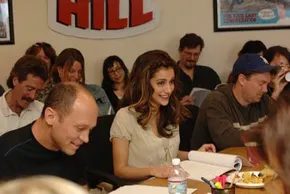

The Table Read: Where Script Meets Sound
When the draft is in its final stages, everyone drops their pencils and heads to the conference room to for the table read. It’s not just about the voice actors. The entire writing team, the producers, and everyone who isn’t drowning in a deadline, pulls together. They sit at a long table, go through lines and act out scenes using only their voices and imaginations.
Why bother? Because reading it on paper feels different than speaking it.
Writers need to know if the jokes will land. They look around the room. You hear the silence that follows the punch line that should have been funny. In a show like King of the Hill, where the humor often relies on subtle awkwardness rather than slapstick, timing is everything. A line that looks perfect on a white screen may fail when spoken by a tired voice actor. Producers take notes. They mark spots that work. They highlight those that need tweaking.
After that, the group gathers together. It’s a joint fix-it session. Some lines have been cut out. Others have been rewritten to sound more natural. The script goes back to the writer’s room, is polished and then moved to the recording booth.
Recording and Editing the Soundtrack
The voice actors enter the booth. Usually they are alone in the room. Just them, a microphone and a script that has already been changed dozens of times. The director guides them. They do take after take. They try different inflections. They search for a specific tone of Midwestern resignation that would define the show.
It’s not just about hitting the right notes. It’s all about performance.
Once the sounds are locked, the sound editors take over. They clean up the tracks. They eliminate breathing, clicking and errors. They layer the sounds. Add to that the background noise of a convenience store or the wind blowing through the Texas hills. The result is a finished soundtrack that feels alive, even though it’s been recorded for weeks in isolated booths.

As soon as the script was locked, a voice entered the booth. Each actor was recorded in a controlled studio environment as the noise floor had to remain natural. Logistics varies by manufacturer. Some settings separate the style entirely, capturing each line with multiple shade options for later selection. Some record the entire cast in the same room to preserve natural chemistry and timing, emulating the golden age of radio.
Attendance at the first meeting is not mandatory. Actors are often left out of other projects or unable to participate at all. If someone is missing, their lines will be recorded later. These new songs are added to the final mix without interrupting the flow.
Post-production starts immediately after the conversation is recorded. It’s a tight turn.
“Editing the score took about two weeks,” says King of the Hill co-producer Kenny Micca. “We compile the recorded parts of the actors, select alternative takes and shorten them to the target length of 19 minutes and 30 seconds. We edit the performances together according to the requirements of the writers and producers and send them to the animation company Film Roman.”
The goal is accuracy. The editors must correspond to the author’s vision and adhere to strict usage time limits. Once the piece is polished and approved, it is sent to the animation studio. In the case of “King of the Hill,” this meant sending the lead voice over to Film Roman.
故事板和艺术作品

The magic of animation doesn’t start with a render farm. It starts with paper.
A storyboard is where become pictures. It is the structural backbone of the episode, a series of pages where the director outlines the visual flow. You are given a boxed area for loose action sketches, with character lines and camera instructions written underneath. They sure look boring on paper. But as Micka points out, they mean everything.
For TV animation, these boards need to be very detailed. They dictate camera angles. They set the timing. They define the character’s performance. The director sketches these as soon as the final script is on the table. But the real drawing happens when the soundtrack comes on. Audio drives animation more than people realize.
As soon as the producers give the green light to the rough boards, the lead animators step in. They don’t animate everything. Instead, they draw key drawings – the key moments of each shot. They also design all the necessary backgrounds. Interiors. Street scenes. The world in which the characters live.
To keep everyone on the same page, animators use character model sheets. These are reference collections that show exactly what each character looks like. Body dimensions. Relative size compared to others. Different positions from different angles. Without this guideline, one artist could draw a character that is 6 feet tall, while another draws it to be five-foot-two. The figure warped across the screen. The model sheet stops this chaos.
The Animatic and the Color Pipeline
Approved storyboards move to the next stage: animatic.
This is also called a “pencil test” and is a rough draft of the final product. Animators photograph key drawings to create a moving storyboard. It’s jerky. Characters do not move smoothly. Mouths rarely match the soundtrack. But it works. Producers use it to test comedy timing and performance flow. It is the last chance to fundamentally change the story direction. From now on, big changes will be expensive and slow.
Then comes outsourcing.
American producers send key drawings to Korean animation studios. The reason is simple economics. The Korean industry offers low operating costs and access to a huge pool of highly skilled artists.
In Korea, the first task is in-betweening.
Take Hank Hill flipping a hamburger. The American team provides key shots. Frame one: with a spatula under the hamburger. Frame two: Hand raised, hamburger in the air. Frame three: The hamburger ends up back on the grill. Korean animators fill every frame between these points. This creates the smooth motion we see on screen.
Next is ink and paint.
Animators draw each frame on clear acetate panels and then paint them. Computer technology is changing this. More and more shows are being digitized now, but the principle remains the same. Once the colors are locked, all transparency is placed over the background image and photographed. The result is a single frame of the final show. This developed film goes back to the US. This step is called the color.
Editing and the illusion of continuity
The show is not ready yet.
Mistakes happen even when the paint is ready. Or the producers just hate jokes. Retakes are costly. So editors are creative.
“We can make a lot of changes with creative editing,” says Micka. They reuse animations. They have characters saying new lines using old material. They steal material from other episodes. They built entire scenes from parts of different shows. You can’t do that with live actors. Actors have schedules. Wardrobes. Continuity errors.
This is why cartoon characters wear the same outfit week after week.
Consistency is a tool. It allows editors to borrow animation freely. If the character’s shirt is always red, you can pull a clip from the first season and paste it into the fifth season. It works. It saves money. It keeps the show moving.
Once the picture was “locked”, the baton was passed to the sound team. Their job is to remove noise from the layers of soundtrack and surround sound that define the viewing experience. Sound effects are more than just decorations. They set the tone.
In the case of The Simpsons, the voice tends to be ridiculous.
King of the Hill strives for realism.
Mika pointed out the difference. The Simpsons use exaggerated cartoon voices to match their visual style. King of the Hill relies on realism. You will hear background sounds that bring the story to life. The birds are singing. The dog is barking. The lawnmower is running. It creates a sense of life.
Music works in the same mode. It shapes the emotional weight of the scene. In “King of the Hill”, acoustic guitars often convey the mood. However, the group does not shy away from full orchestral arrangements when the story calls for it.
Next, the mixing begins. This is where clarity comes in. The engineer balances the levels so that the sound does not block the score. Prevents sound effects from becoming unnaturally loud. The goal is to be invisible. The audience should feel the tone rather than notice the mechanism.
After nine months of production, the episode was completed. The production company sends the high-resolution master tape online. From there it travels via cables, satellites and radio waves. While you are watching other episodes are already being prepared. Some are in the early stages of recording. Others are waiting for final sound checks. The factory never stops.
相关博闻文章
- 网页动画的工作原理
- 电视是如何运作的
- 3D 图形的工作原理
- 电影放映机的工作原理
- 胶片的工作原理
- 视频格式化的工作原理
更多精彩链接
- 山丘之王官方网站
- 电影罗马
- 动画杂志
- 视觉暂留
- 动画杂志


