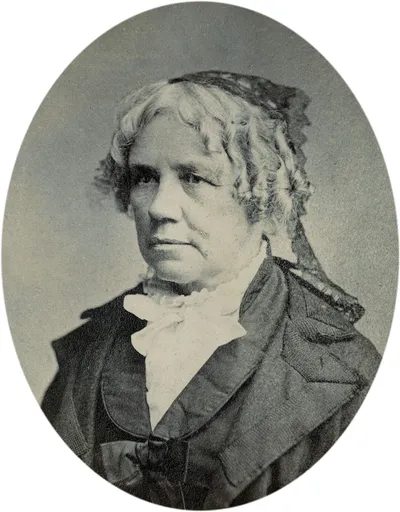
A baby girl was born on August 1, 1818 in Nantucket, Massachusetts. Fast forward 71 years. She died on June 28, 1889 in Lynn, Massachusetts. Along the way, her career broke barriers that no one could have predicted. Maria Mitchell is more than just a woman who liked stars. She was the first professional female astronomer in the United States. This title is important. This is not a hobby. It was a job. In the middle of the 19th century, women had few job opportunities. There are simply no scientific jobs for them.
She changed that.
The discovery that made her famous
How did it all begin? Bring your binoculars. It’s small. Handheld. He was only 18 years old when he found his new star. It’s a comet. No, wait. A comet that is not on the map. He calculated its trajectory. He testified that it was new. The world noticed.
It’s not just luck. This is hard math. Stare into the darkness until your eyes burn. But recognition came quickly. The King of Denmark awarded him a gold medal. It’s more than just a participation award. That’s a real reward. This made her famous. But the fame didn’t stop there. It opens the door.
Breaking the glass ceiling in science
Why is her story important today? Because he proved that you don’t need a college degree to become a scientist. She didn’t. He is self-taught. She learned from her father, who was also an astronomer. He taught her navigation. She learned to read the stars. But he goes one step further. She didn’t just follow the charts. She made new ones.
Then came the job. Vassar College. In 1865 they hired him as a professor of astronomy. And director of the observatory. The first woman to hold such a position at an American university. It’s not easy. The men didn’t trust her. The students did not know what to expect. But she delivered. She taught them. She led them. She built an observatory from scratch.
“She wasn’t just a woman who loved the stars. She was America’s first professional female astronomer.”
The real impact of his work
Besides discovering comets, What did she actually do? She measured the sun’s size of the sun. She studied the spectra of stars. light. It tells you what things are made of. She showed that science is not just for men in tweed jackets. It was for anyone with curiosity and grit.
She fought for women’s rights. She joined the Massachusetts Association for the Advancement of Women. She spoke up. She didn’t stay quiet. Science and feminism weren’t separate for her. They were linked. You can’t do science if half the people are locked out of the room.
Legacy in the Dark
She died in 1889. But her work didn’t end. A crater on the moon is bears her name. Asteroid 4316 Maria Mitchell orbits the Sun. But most importantly, he paved the way.
Think about it. Today, women are astronomers. Physicist. engineer. It’s not perfect yet. But it is possible. Because he’s there. exist
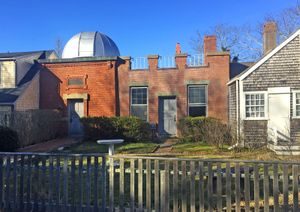
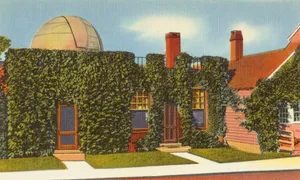
How Anna Brown Mitchell Proved Women Belong at the Observatory
Anna Brown Mitchell’s interest in astronomy was no accident. She was born into it. Her Quaker parents in Massachusetts raised her with a sharp mind and an education that was not an afterthought. She grew up on Nantucket and attended the island’s schools, one of which was run by his father.
But here’s where it gets interesting.
Her father didn’t just let her watch. He let her work.
For years, she helped evaluate the chronometers of the Nantucket whaling fleet. This is precision work. That’s timekeeping. This is science. And he encouraged her to use the telescope herself.
From 1836 to 1856, she worked as a librarian at the Nantucket Atheneum during the day. She taught informally. She organized. But by night? She looked up.
In October 1847, that looking paid off.
She calculated the orbit of a new comet. It became known as “Miss Mitchell’s Comet”.
This wasn’t just a pretty name. It was proof.
Scientific circles was quick to notice. The following year, she became the first woman elected to the American Academy of Arts and Sciences. That was a massive deal.
Then came the work. In 1849, she was appointed computer to the American Ephemeris and Nautical Almanac. This means calculating the positions of celestial bodies for navigation and science. Hard numbers. Hard math. The American Association for the Advancement of Science elected her in 1850. a member of the American Association for the Advancement of Science.
Support came from unexpected places. A group of prominent American women led by Elizabeth Peabody raised funds for her. In 1858 They bought her a large equatorial telescope. Why did they do it? Because they saw her talent. Because they saw the barrier she was hitting.
Feminists kept her name in the public eye. From 1857 to 1858, she traveled through Europe. She met leading scientists. She saw how the rest of the world worked.
In 1861 he moved to Lynn, Massachusetts with his widowed father.
Next comes the big move.
In 1865 Vassar College for Women was founded in Poughkeepsie, New York. This is new. This is brave. It requires an astronomy program.
Mitchell reluctantly accepted the appointment.
Why are you reluctant? Because he still has a father to take care of. But he went anyway.
He was an early member of the astronomical faculty as director of the observatory and professor of astronomy. He just doesn’t teach. He built the department from the ground up.
His students noticed. Christine Ladd-Franklin. Alan Swallow (Richards). Both would later prove his influence. He showed them what a scientist was like. What women can achieve.
The sunspot that changed everything
Mitchell doesn’t just teach. he found it.
He was a pioneer in the daily photography of sunspots. This is not a random snapshot. This is a systematic observation. His results overturned established beliefs.
Before him, most scientists thought sunspots were clouds floating on the sun’s surface. Mitchell showed that they were vertical cavities. Rotate the cavity. A deep hole in the sun’s surface.
This distinction is important. It changes the way we understand how the sun works. It changes the way we see our own stars.
He also looked at everything else. comet. nebula. double star. Solar eclipse. Saturn and Jupiter’s moons.
In 1869 he was elected a member of the American Philosophical Society.
But there is more to his work than stardom. It’s about people.
In 1873, she helped found the Association for the Advancement of Women (AAW). He served as chairman of the association in 1875–1876.
Why did he participate?
He supports women’s rights. Includes voting rights.
This is not a hobby. It was a central part of his life.
He retired from Vassar College in 2018