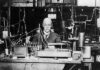
He was an electrician whose vision extended far beyond electrical wires. Oskar von Miller didn’t just move electrons around. He built an industry. Born in Munich in 1855, Miller spent his life trying to get Germany to use electricity at a time when much of the world was still stumbling in the dark. He died there in 1934, leaving behind a legacy that powers cities and educated millions.
Germany’s first spark
The story actually begins in 1882. Miller hosted the Munich Electrical Fair. This is the first of its kind in Germany, and we are declaring loud and clear that the future is electric. At this event, he did something that shocked the crowd. He transmitted electricity along 35 miles of wire. That’s 57 kilometers. At the time, this was a staggering distance.
This success is more than just bragging rights. This is about infrastructure. In 1883, Miller teamed up with Emil Rathenau. They founded the German Edison Company. This organization eventually became the Allgemeine Elektricitäts Gesellschaft (AEG). The company installed Germany’s first electrical system. Miller himself designed Berlin’s first central power plant. He’s not just talking about power. He is building an electrical grid.
High pressure breakthrough
In 1891, a truly global moment happened. Miller is the Technical Director of the Frankfurt Electric Fair. He had to prove that alternating current (AC) could transfer power efficiently over long distances. So he created a cable that could withstand 25,000 volts. He ran 112 miles. That is 180 kilometers.
The whole world is watching. It worked. This demonstration showed that alternating current is a viable way to power large areas. It changes the paradigm.
This is also where his interest in hydropower took root. Miller pushed for the development of hydroelectric power plants in Bavaria. He saw rivers not only as a landscape but also as a driving force. He converted the water currents into usable energy, which laid the foundation for the region’s energy independence.
A museum for a thinking public
By 1903, Miller’s thoughts have turned to education. He proposed a new kind of institution. He didn’t want a dusty warehouse where static artifacts were stored. He wanted a place that taught scientific principles through action. Visitors should see devices operating. They should step into dioramas. They need to know the “how” and the “why”.
This proposal became the Deutsches Museum. The first educational museum of its kind was opened in Munich. It sets the standard. For decades, science museums around the world have focused on this model. Walk into the Science Center today and see a working steam engine or hands-on physics exhibit and you’ll see Miller’s influence. He understood that curiosity, not mere observation, drives learning.
He died in 1934. The power grid he helped build is still in operation. The museum he founded still exists today. The questions he raised about technology and public understanding are still urgent. We are still figuring out how to balance the power he helped unleash and wisdom to use it.