


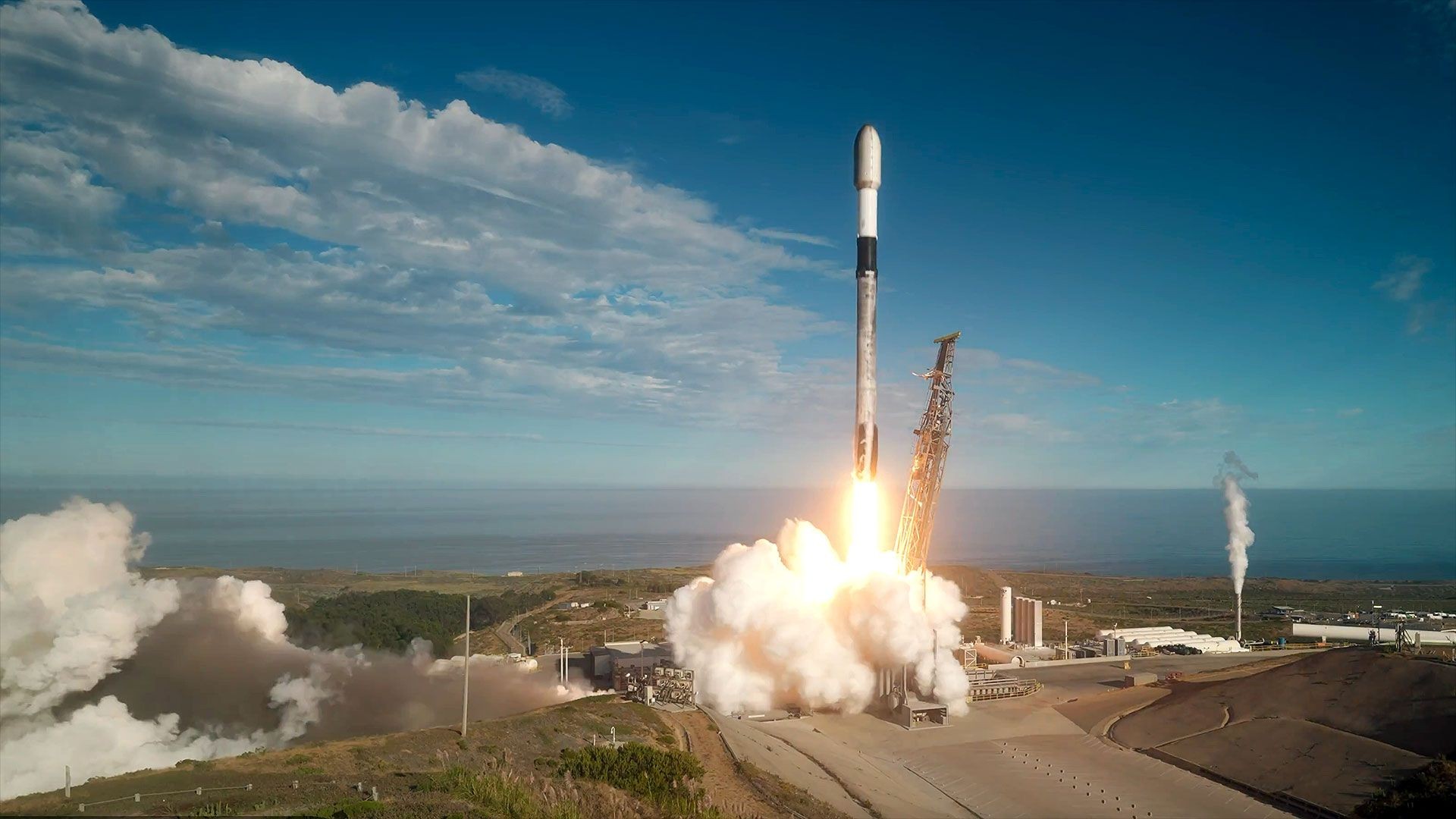
The Falcon 9 is back in business. Twenty-four Starlink satellites are now circling the Earth in low orbit, but the journey wasn’t exactly smooth. SpaceX missed its original window on Monday. Then, just twenty-four hours later, the launch finally happened.
It’s a reminder that even for the most advanced rockets, things still break.
On Monday morning, July 20, the team had the rocket fueled and ready. They were moments away from ignition at Space Launch Complex 4 East. Then, silence. A rocket engine cutoff occurred right at the start. It was an abort. No warning. No explanation.
SpaceX didn’t release a technical breakdown of why the engine cut out. They didn’t have to. By Tuesday, the issue was resolved.
The second attempt didn’t wait. The Falcon 9 lifted off at 10:49 a.m. EDT. That’s 14:49 GMT. If you were watching from California, that’s 7:49 a.m. PDT. The setting was Vandenberg Space Force Base. A perfect day for flying.
The ascent was normal. The rocket climbed. And then came the moment everyone waited for. The payload fairing separated. The satellites deployed into their target orbit.
“Deployment of 24 Starlink satellitesconfirmed,” SpaceX typed into social media. Short. Efficient.
Booster 1082 did its part too. This isn’t the first time we’ve seen this specific core fly. It has now completed its 23rd mission. That is an insane number for a first-stage booster. After dropping off the payload, the core made its way down to the droneship “Of Course I Still Love You.” It touched down safely in the Pacific Ocean.
This batch belongs to Group 17-39 of the Starlink megaconstellation. You might wonder why they send up satellites in such specific groupings. It’s about orbital mechanics and deployment windows, but the result is simple. More nodes in the sky.
Starlink isn’t just about downloading cat videos. It provides global broadband access. This is huge for remote areas. Places where laying fiber optics is too expensive or physically impossible. But the use cases are expanding. The network now supports in-flight Wi-Fi for commercial and private jets. There are direct-to-cell services starting with select providers. You can use a standard smartphone to connect to the internet without a special modem.
Why does this matter right now? Because connectivity is becoming infrastructure. Just like roads or electricity. When you can send internet into a hurricane zone or across the ocean from a moving ship, the world shrinks. SpaceX


