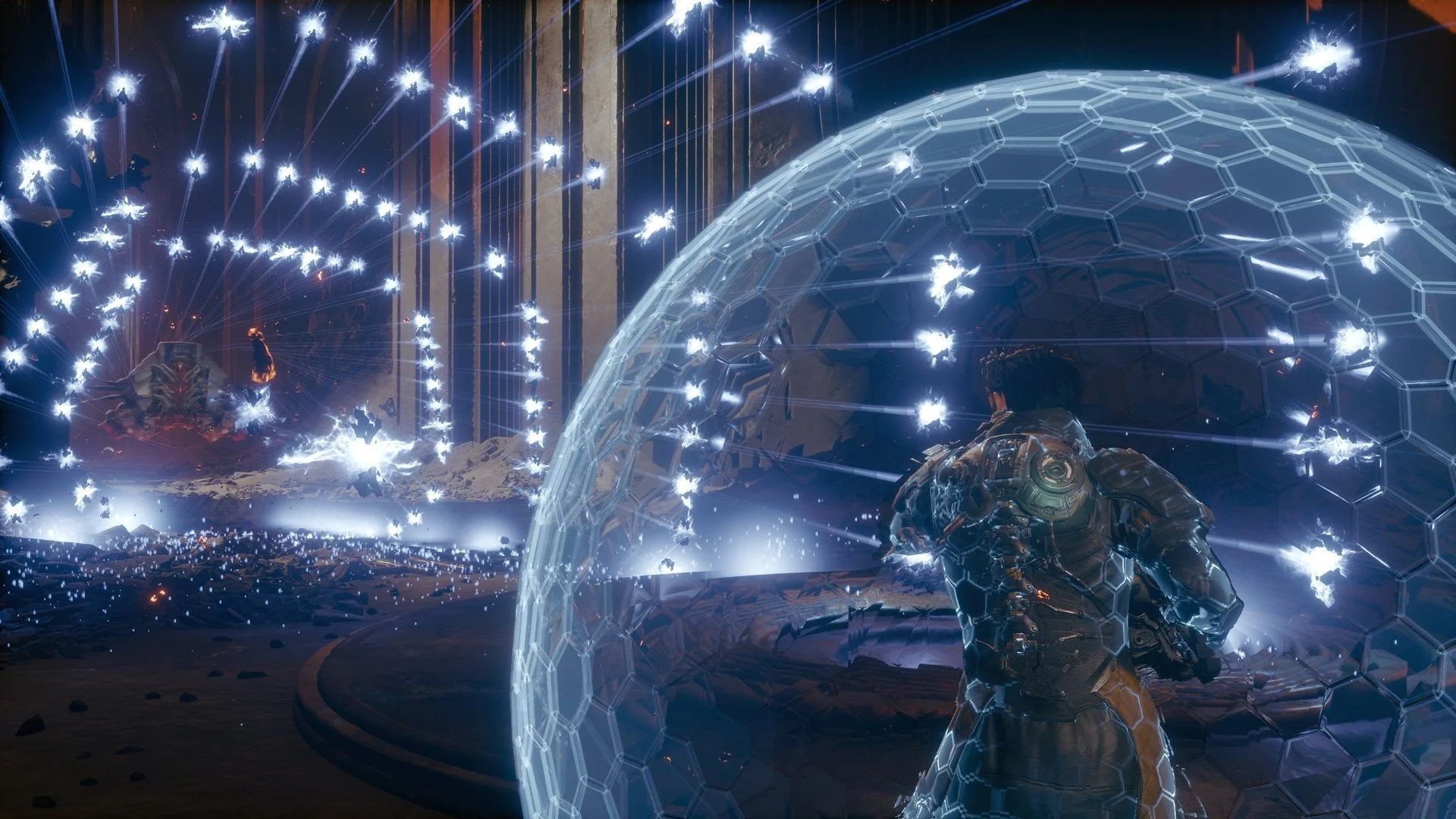
Housemarque’s Saros arrives as a technical triumph and a visual spectacle, yet it struggles to define its own identity. While the game delivers some of the tightest third-person shooter mechanics on the PlayStation 5, its attempt to blend traditional narrative pacing with roguelite structure results in a disjointed experience. It is a game that looks and feels like a blockbuster, but plays with the hesitant hand of a studio trying to please two conflicting audiences.
The Promise of Accessibility
Saros is positioned as the spiritual successor to 2021’s Returnal, but with a crucial philosophical shift. Where Returnal was a punishing, minimalist roguelite that offered little permanent progression, Saros leans heavily into “meta-progression.” The tagline—”come back stronger”—is not just marketing; it is a design directive.
The developer has explicitly addressed the primary criticism of Returnal : its steep difficulty curve and low completion rate. Saros introduces a robust skill tree and permanent upgrades that make the game significantly more accessible. This is not inherently negative; titles like Hades have proven that deep meta-progression can enhance roguelite gameplay. However, Saros goes further, offering mid-run modifiers that drastically alter difficulty. Players can trade minor penalties (like increased corruption) for massive advantages (like health regeneration before bosses).
The Core Conflict: By introducing these powerful crutches early in the game, Saros undermines its own tension. What was intended to be a challenging cosmic horror odyssey becomes a conventional shooter with a thin layer of roguelite mechanics, diluting the sense of danger and accomplishment.
A Narrative That Breaks the Loop
The fundamental flaw in Saros lies in its attempt to marry Housemarque’s arcade-style gameplay with a cinematic, linear narrative. The story follows Arjun Devraj, a Soltari enforcer played by Rahul Kohli, on the planet Carcosa. It is a tale of corporate greed, cosmic horror, and psychological unraveling—themes that work well in theory.
However, the execution fractures the game’s flow. Unlike Returnal, where the time loop was a seamless part of the gameplay, Saros forces players to return to a hub area (“The Passage”) frequently to watch cutscenes. These interruptions break the momentum of the “bullet-hell” action, pulling players out of the adrenaline-fueled loop.
Furthermore, the story structure fights against the roguelite format:
– Forced Progression: Players cannot simply push forward indefinitely; they are gated by story beats that require returning to base.
– Reset Mechanics: Even after unlocking longer runs in the game’s epilogue, the final boss requires a return to the hub, effectively resetting progress and artifacts.
– Predictability: The level design lacks the variance of Returnal. Map patterns become recognizable quickly, reducing the replayability that defines the genre.
Technical Excellence and Gameplay Depth
Despite its structural issues, Saros is a masterpiece of presentation and moment-to-moment gameplay. Housemarque has refined its combat formula to near perfection.
- Visuals: The environments of Carcosa are stunning, blending sun-bathed beauty with hellish, cosmic horror. The graphics are dense but never cluttered, ensuring the action remains readable.
- Audio and Haptics: The game is a showcase for the PS5’s hardware. 3D spatial audio is critical for survival, allowing players to identify enemy positions in chaotic battles. The DualSense controller’s haptic feedback and adaptive triggers provide tactile depth, making every shot and parry feel impactful.
- Combat: The action is fast, brutal, and precise. Dodging through walls of energy orbs and parrying attacks from demonic monstrosities requires split-second decisions. The soundtrack by Sam Slater complements this intensity, adding to the frenetic energy.
Verdict: A Beautiful Misfire
Saros is a paradox. It offers some of the best third-person shooter mechanics available, wrapped in a gorgeous, atmospheric package. Yet, its identity crisis prevents it from being a truly great roguelite or a compelling linear narrative.
The game tries to be both a punishing challenge and an accessible blockbuster, ending up as neither. The ease of progression removes the stakes, while the narrative interruptions kill the flow. For fans of high-octane sci-fi action, the combat is enough to recommend it, but players seeking a deep, replayable roguelite experience may find Saros wanting.
In summary: Saros is a visually stunning and mechanically tight shooter that is ultimately held back by its inability to reconcile its narrative ambitions with its genre roots. It is a game worth playing for the spectacle, but one that will likely be forgotten once the credits roll.