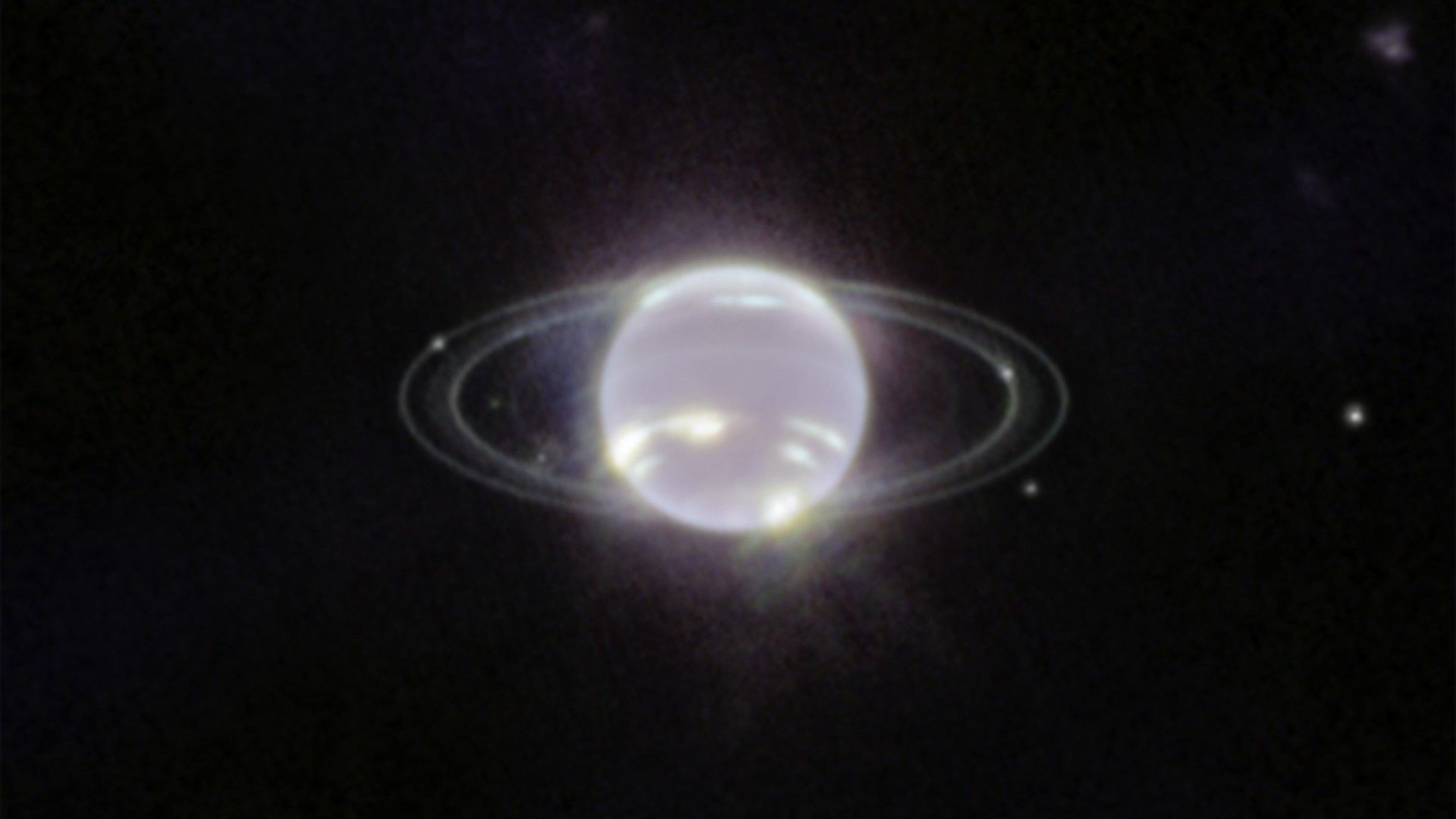
Neptune has a secret. Nereid, its oddball moon, is likely native to the planet.
This breaks the mold.
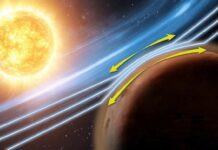
For decades, astronomers assumed Nereid was an outsider. A stray object grabbed from the Kuiper Belt—the ring of icy rubble outside Neptune’s orbit. The logic seemed solid. When Neptune snagged Triton, its massive moon, the solar system was chaotic. That capture destroyed Neptune’s original neighborhood. So the thinking went, Nereid must also be a captured piece. A fellow traveler.
No more.
A new study suggests otherwise. Nereid probably formed with Neptune. It is the only survivor left standing after the chaos.
“Nereid is a huge outlier.” — Matthew Belyakov (Caltech)
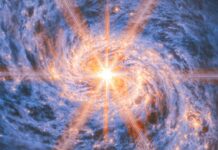
The James Webb Space Telescope provided the clues. Just ten minutes of data. That’s it.
The results? Nereid looks nothing like typical Kuiper Belt objects.
KBOs are usually dim. Red. Rich in volatile organics. Nereid? Bright. Blue. Full of water ice.
It does not fit the profile of a captured interloper. It fits the profile of a local product.
But how?
Here is the problem. Original moons usually die when a big rock like Triton crashes into their system. Gravity goes wild. Orbits shatter. Things get flung into the deep freeze. Nereid’s orbit is a mess. Highly eccentric. Irregular. That is why people thought it had to be captured. A captured object can have any orbit it wants. A native one? Unlikely.
Until now.
Researchers ran simulations of the early Neptune system. They modeled the moment Triton got pulled in.
The math works.
Triton’s arrival knocked Nereid around. Violently. But instead of breaking apart, Nereid survived. It was flung into that wild, stretched-out orbit we see today. It hid in plain sight, wearing the disguise of an imposter.
It started with Gerard Kuiper. He spotted the moon in 1949. He sensed something weird. He called it a “cosmogonic problem.” He was right. It took 77 years to solve.
Why does it matter?
Because the universe doesn’t run on convenient rules. It runs on collisions. Survivals. Outliers.
Belyakov points out a darker truth. Webb’s life is finite. The telescope is aging. We need the data while we have the eye to see it.
“It takes a long time to do science.”
We got answers this time. Because we looked. When the shutter closes? The questions might stay open forever.