


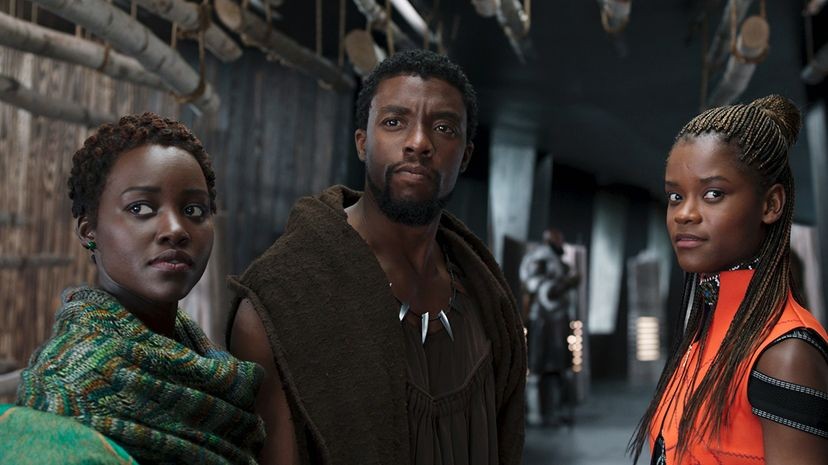
The advance ticket numbers are staggering. Black Panther sold more pre-sales via Fandango than any other superhero film in history. Before the credits even rolled, industry watchers were already predicting a $150 million North American opening over the Presidents Day weekend. Critics aren’t just reviewing it; they are raving. The visuals are stunning. The script is tight. The message lands.
But the hype goes deeper than box office projections.
Even the detractors helped fuel the fire. A Facebook group named “Down With Disney’s Treatment of Franchises and its Fanboys” tried to sabotage the film’s critical reception. They created an event urging users to flood Rotten Tomatoes with negative reviews. Some called it petty vengeance. Others saw a twinge of racism, given the mostly Black cast. The plan backfired. Facebook deleted the event. By February 8, the critics’ score was holding steady at 99 percent.
So what is the real deal? Why is Black Panther dominating social media, critics’ circles, and real-life conversations? It’s not just another superhero entry. It is a cultural reset.
The Representation Gap in Hollywood
Diversity has been a contentious issue in film and comics for years. Statistics show that women, people of color, and LGBTQ+ individuals are severely underrepresented.
The 2017 Hollywood Diversity Report from UCLA highlighted the disparity. Minorities directed only 10.1 percent of the 168 films examined for 2015. This is despite the fact that minorities make up 40 percent of the U.S. population. A separate study by the USC Annenberg School for Communication and Journalism looked at 700 films and over 30,000 speaking roles from 2007 to 2014. Only 30.2 percent of characters were female.
Then there is the persistent myth that American films with majority Black casts are not financially viable. The industry often claims they do not sell overseas.
This stereotype is false.
In 2017, a Marvel vice president even suggested that adding diverse and female characters caused a dip in comic book sales. He later walked the statement back. But diverse films and comics are lucrative. Poor performance is usually due to other factors, not audience apathy. The UCLA Diversity Report showed that films with diverse casts had the highest median global box office receipts and the highest median return on investment in 2014 and 2015.
“Diverse films are lucrative… films with diverse casts had the highest median global box office receipts and the highest median return on investment.”
The Psychological Impact of Seeing Yourself
Black Panther challenges these preconceived notions. It proves that films centered on Black experiences can be massive blockbusters.
But the monetary success is only part of the story. The qualitative impact runs deeper. Look at the hashtag #WhatBlackPantherMeansToMe on Twitter. Users are sharing personal reflections on what it means to see a film with a largely Black cast, Black director, and integral Black female characters.
Representation matters psychologically. Research suggests that if people do not see themselves on screen, they may feel society does not value them. They may experience a drop in self-esteem.
We generalize about cultures and ethnicities based on what we consume in film and TV. Even when images of underrepresented groups are limited in range, they are powerful. They drive flawed popular beliefs about demographics. When a film like Black Panther breaks through, it disrupts those narratives. It offers a new mirror.
The conversation continues. The question remains whether Hollywood will treat this as a one-off triumph or a new standard.
Why Wakanda Matters More Than We Admitted
It is rare to see Black characters represented with this kind of prominence on screen. Black Panther didn’t just show up; it arrived with an aggressive inclusivity that changed the conversation about racial representation in media. But the impact goes deeper than box office numbers. The film, driven by Black creators, offered content that actively pushed back against Hollywood’s tired tropes.
Consider the source of T’Challa’s power. In most superhero stories, strength comes from mutation or magic. Here, it’s intellect. It’s advanced technology. It’s ancient knowledge passed down from Wakandan ancestors, mixed with a powerful healing herb. Wakanda itself defies the usual script. It is a fictional African nation that T’Challa returns to after his father’s death, but unlike most settings in Western cinema, it was never colonized. Its technology remains a secret, hidden from the outside world.
Then there are the people. The Dora Milaje serve as an elite, all-female warrior guard, protecting the throne with lethal precision. Shuri, T’Challa’s sister, isn’t just a sidekick; she is a tech genius, described by producer Nate More as the smartest person on the planet. Wakanda holds resources that outsiders desperately want, echoing real-world exploitation narratives, but here, the narrative is flipped.
This Afrocentric, Afrofuturist spectacle stands out in a market filled with safe, predictable crowd-pleasers. Black audiences aren’t just seeing actors who look like them. They are inhabiting a world where they are royal, superhuman, and complex. The story refuses to relegate Black characters to stereotypes of slavery or subservience. It doesn’t rely on white characters to carry the plot or to save the day. For many, this lack of dependency is a breath of fresh air. Africa is depicted not as a place of war and peril, but as a thriving civilization writing its own story.
Other American films have tried to portray Africa with depth, but Black Panther disrupted the inaccurate real-world narrative that has persisted for decades. It did so with a heavy hand, which is exactly what was needed. Fictional worlds are born from wild imaginations, yet they often fail to be imaginative regarding who gets included and how they are portrayed.
For marginalized groups often absent from the screen, Black Panther provided visibility. It signaled social progress by subverting long-standing industry norms. It fostered empathy for those who didn’t understand the lives of the underrepresented. When a critically acclaimed, money-making film celebrates Blackness, Hollywood listens. Some might call it enthusiasm. Most call it obsession.
And, let’s be honest—it’s Marvel.
The Name Change Nobody Wanted
There is a historical footnote that often gets missed. The Black Panther Party, the political organization, was actually established after the character of Black Panther was created by Marvel. Despite the timeline, many people assumed the comic book hero was connected to the political movement.
Marvel didn’t like the association. They were concerned about the political implications. So, in Fantastic Four No. 119, published in 1972, they changed the character’s name to Black Leopard.
It was a bizarre move. Readers were not pleased. They thought the name change was silly and unnecessary. The confusion didn’t help the sales, and the backlash was immediate. Black Leopard lasted less than a year before reverting to the original name. The attempt to sanitize the character’s image backfired, proving that audiences recognized the distinction between the political party and the superhero, even if the studio hadn’t.


