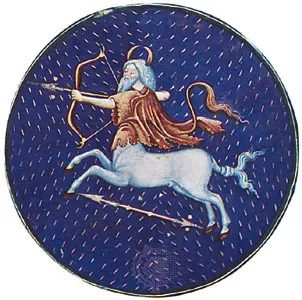
Look up at the night sky during the southern hemisphere’s winter or the northern hemisphere’s summer, and you might spot a distinct shape made of stars. It looks like a teapot pouring steam into the cosmos. This is Sagittarius, a zodiacal constellation tucked between Capricornus and Scorpius. It sits roughly at 19 hours right ascension and 25 degrees south declination. While it may look like just a collection of bright dots, this patch of sky holds one of the most significant mysteries in astronomy. The center of our own galaxy, the Milky Way, lies directly within it.
The true heavyweight here is Sagittarius A . This radio source marks the exact center of the Milky Way Galaxy. Finding it wasn’t easy. Visible light from the galactic center is blocked by thick clouds of dust. Astronomers had to look beyond the optical spectrum to pinpoint it. The discovery confirmed that a supermassive black hole lurks at the heart of our stellar home. For anyone studying where the center of the Milky Way is located *, this constellation is the answer.
Near the western border of Sagittarius lies another important marker. This is the winter solstice. It represents the southernmost point reached by the Sun in its apparent annual journey among the stars. When the Sun reaches this point, it marks the longest day in the south and the shortest in the north. The position of Sagittarius helps track this celestial milestone.
The constellation also houses some of the most beautiful nebulae in the sky. The Lagoon Nebula and the Trifid Nebula are both visible with small telescopes or even good binoculars. These are stellar nurseries. Gas and dust swirl within them, collapsing to form new stars. They offer a glimpse into how stars are born.
If you are trying to identify which star is the brightest in this group, look for Kaus Australis. Also known as Epsilon Sagittarii, it has a magnitude of 1.9. The name comes from Arabic and Latin roots, meaning “bow’s southern end.” Despite its brightness, it is not the most famous feature. That honor likely goes to the asterism known as the Teapot.
Many stars in Sagittarius are arranged to form this teapot shape. It is a prominent asterism, not a constellation itself, but it is easy to find. The spout points toward the nebulae. The body contains the dense star fields near the galactic center. Recognizing the teapot is the first step for amateur astronomers tracking Sagittarius constellation facts.
The interplay between the bright stars, the dark dust lanes, and the hidden black hole makes this constellation a prime target for observation. It connects the casual stargazer with the deepest secrets of the universe. One moment you are admiring a shape. The next, you are looking at the engine of the galaxy.
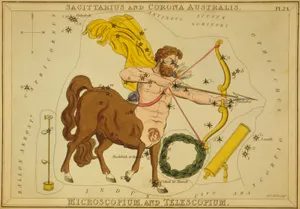
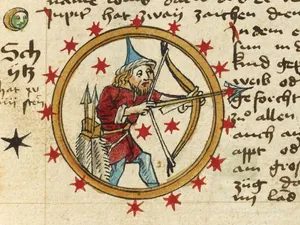
The Ancient Archers Behind the Star Sign
Sagittarius sits at number nine in the zodiac wheel. It covers the window between late November and late December. You know the symbol: a centaur drawing a bow. Or sometimes just the arrow itself. This imagery didn’t appear out of nowhere. It goes back to Babylon.
The Babylonians identified Sagittarius as a mounted archer as far back as the 11th century bce. They saw a pattern in the stars and built a myth around it. That myth stuck. It evolved over millennia. But the core image remains the same. A creature that is half-man, half-horse. A hunter aiming for something specific.
This isn’t just old superstition. It’s a record of how early humans mapped the sky. They looked up and saw shapes. They projected their own culture onto the darkness. The centaur represents a duality. Animal instinct. Human intellect. Combined.
Why does this matter today? Because we still use these maps. We still look for meaning in these patterns. The date range is arbitrary, sure. But the symbol carries weight. It suggests movement. It suggests direction.
“The identification of Sagittarius as a mounted archer was made by the Babylonians as early as the 11th century bce.”
Think about the bow. It’s a tool. A weapon. A symbol of tension. Sagittarius is often linked to the search for truth. To looking beyond the horizon. The Babylonians knew this. They saw the stars as a guide. Or a warning.
We’ve moved past star-charts for navigation. We have satellites. We have GPS. But the archetype remains. We still want to know where we’re going. We still want to aim. The centaur is still there. Watching. Waiting.
Some people dismiss astrology as nonsense. Others find comfort in it. It doesn’t matter which side you’re on. The history is real. The stars don’t care about our beliefs. But we care about them. We need stories. We need patterns.
The 11th century bce was a long time ago. Empires rose. They fell. The Babylonians documented the sky. We are still living with their documentation. It’s a strange continuity. A thread stretching back thousands of years.
When you look at the date range, November 22 to December 21, think about what that time of year feels like. In the Northern Hemisphere, it’s dark. Cold. The days are short. The night sky is dominant. It makes sense that people looked up and saw a hunter. A figure who brings the bow. Who points the way.
The symbol is simple. But the implications are deep. It’s about perspective. About aiming. About the tension between where we are and where we want to be. The Babylonians got that. We’re still trying to.