The word nebula used to mean just about anything fuzzy in the night sky. Back when telescopes were primitive, astronomers labeled every non-star object outside our solar system a nebula. They couldn’t resolve distant galaxies into individual stars, so they lumped everything together. This historical definition was messy. It mixed up two completely different things: extragalactic nebulae (which we now call galaxies) and galactic nebulae (clouds of gas and dust within our own Milky Way).
Today, the term has tightened up. When scientists say nebula, they are talking exclusively about the interstellar medium. These are the tenuous clouds of gas and dust floating in the vast spaces between stars.
The Composition of the Void
You might think space is empty. It isn’t. In a spiral galaxy like ours, the interstellar medium accounts for 3 to 5 percent of the total mass. But that number jumps to about 20 percent if you look specifically at a spiral arm.
Most of that mass is gas. About 1 percent is “dust.” These aren’t particles of sand, but tiny solid grains. They are nasty little things for astronomers because they efficiently absorb and scatter light. The rest of the galaxy’s mass is in visible stars, though dark matter hides in the outer regions, accounting for a substantial fraction of the weight you can’t see.
Clumps, Clouds, and Explosions
The defining feature of interstellar gas is that it is lumpy. This clumpiness happens on every scale. You have structures as big as the entire Milky Way (roughly 10^20 meters) and pockets as small as the distance from Earth to the Sun (about 10^11 meters).
“Various regions exhibit an enormous range of densities and temperatures.”
How do we see this? Large variations are visible directly. Small-scale variations show up as fluctuations in radio wave intensity, similar to how starlight twinkles because of Earth’s atmosphere.
The extremes are stark. Half the mass of the interstellar medium in spiral arms is locked in molecular clouds. Here, hydrogen exists in molecular form (H2). It is cold. Temperatures drop to as low as 10 kelvins. These clouds are invisible to optical telescopes. Astronomers detect them by their carbon monoxide (CO) emissions in the millimeter wavelength range. The density is high—about 1,000 H2 molecules per cubic centimeter.
Look at the other extreme. The gas between these clouds is hot. We’re talking 10 million kelvins. The density is terrifyingly low: just 0.001 H+ ion per cubic centimeter. This superheated gas is often the result of supernovae, the violent deaths of unstable stars.
Dark vs. Bright: How to Identify a Nebula
All nebulae in the Milky Way are forms of interstellar matter. That means gas mixed with cosmic dust. Their appearance depends on temperature, density, and where they sit relative to us. Chemically, however, they are uniform.
The universe’s recipe is simple: 90 percent hydrogen, nearly all helium, and about two atoms per thousand of everything else (oxygen, carbon, neon, nitrogen, etc.).
Astronomers split nebulae into two broad categories based on how they look:
- Dark nebulae : These appear as irregular black patches. They don’t emit light. Instead, they blot out the stars behind them. They are essentially cosmic shadows.
- Bright nebulae : These are faintly luminous. They either glow with their own energy or reflect the light of nearby stars.
Which type matters more for star formation? Dark nebulae are the nurseries. Their high density and low temperature allow gravity to collapse gas into new stars. Bright nebulae are often the aftermath, illuminated by those newborn stars.
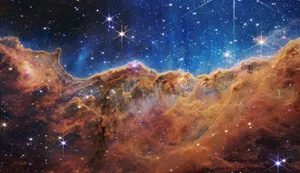
Dark nebulae are the heavyweights of the interstellar medium. These are dense, cold molecular clouds. They hold about half of all the material floating between stars. The density here is extreme. You are looking at hundreds to millions of hydrogen molecules packed into a single cubic centimeter. It is cramped.
This compression is not static. It is the birthplace of stars. Gravity pulls parts of these clouds together until they collapse. That process ignites new suns.
Most of the remaining gas, however, is not in these dense pockets. It is diffuse. The interstellar medium out there is relatively empty. The density drops to about 0.1 hydrogen atom per cubic centimeter. It is nearly invisible to the naked eye. We only know it is there because of radio emissions. Specifically, the 21-cm line of neutral hydrogen. That signal is the only way to map the vast, empty spaces.
The Subclasses of Bright Nebulae
Bright nebulae are different. They are comparatively dense clouds of gas found within that diffuse medium. They are not a single type of object. They fall into several distinct categories.
Reflection nebulae. H II regions. Diffuse ionized gas. Planetary nebulae. Supernova remnants.
Each has a different mechanism. Each reveals a different aspect of stellar evolution.
Reflection Nebulae: Cold and Reflective
Reflection nebulae do not produce their own light. They act like cosmic mirrors. They reflect the light of a nearby star off dust grains suspended in the gas. The gas in these clouds is cold. Without that nearby star acting as a spotlight, these objects would just be dark nebulae. They would disappear into the background shadow. The light source is what makes them visible.
H II Regions: The Ionization Threshold
H II regions are clouds of hydrogen that have been stripped of their electrons. This ionization process separates hydrogen into positive H+ ions and free electrons.
What causes this? A neighboring hot star. But not just any star. The source must be stellar type O or B. These are the most massive and hottest normal stars in the Galaxy. Only they produce enough high-energy radiation to rip electrons away from hydrogen atoms. This creates the glowing clouds we associate with stellar nurseries.
The Power of Diffuse Ionized Gas
Then there is the diffuse ionized gas. It is pervasive. It exists among the nebular clouds everywhere. It is a major component of the entire Galaxy.
We detect it through faint emissions. Specifically from positive hydrogen, nitrogen, and sulfur ions (H+, N+, and S+). These signals are detectable in all directions. They are not flashy. They do not grab attention like the bright H II regions.
Yet, they demand attention. The total energy required to power these diffuse emissions far exceeds that of the spectacular H II regions, planetary nebulae, or supernova remnants. Those dramatic objects occupy only a tiny fraction of the volume. The diffuse gas fills the rest. It is quiet. It is everywhere. And it holds more power than the bright spots.
The galaxy is not just defined by what shines. It is defined by what lies in between. The cold dark clouds. The faint, pervasive glow. The structures that do not scream for attention but dominate
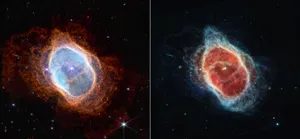
Why Planetary Nebulae Aren’t Planets
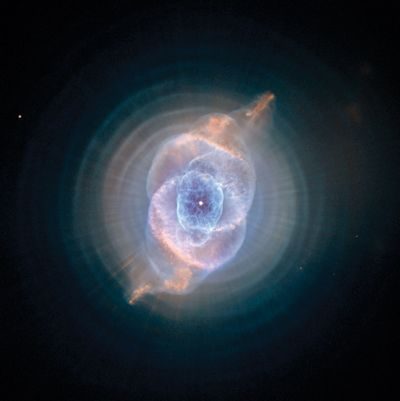
They look like planets. At least, that’s why astronomers named them that. When you look through a telescope, they appear as round, relatively bright discs. Not the chaotic, wispy blobs you see elsewhere. But here is the truth. There are no planets involved. Not even one.
These objects are the corpses of stars. Specifically, they come from red giants. Stars that died but weren’t massive enough to go boom. They shed their outer layers. It’s not a violent explosion like a supernova. It’s more of an ejection. The core left behind becomes intensely hot. A white dwarf, essentially. It sits in the middle, radiating energy. The shell of material around it expands. Slowly. Tens of kilometres per second. Not fast enough to tear the galaxy apart. Just fast enough to drift into the void.
The name stuck because early astronomers were confused. They saw round dots. They thought “planet.” It’s a historical mistake. A linguistic one. But the science is real. These nebulae are glowing shells of gas. They are the final act of a star like our own Sun.
Supernova Remnants: The Violent Aftermath
Planetary nebulae are gentle by comparison.
Supernova remnants tell a different story. These are the scars left by massive stars. Stars that burned bright and died hard. The gas expands at hundreds, even thousands of kilometres per second. It’s chaotic. It’s energetic. It’s messy.
But here is where it gets tricky. How do you know what you are looking at? Is it the star’s own debris? Or is it interstellar gas that got caught in the sweep?
If the remnant is young. A few thousand years old or less. You can assume the gas came from the exploded star. The timeline is short. The distance is limited. The nebula is mostly what the star spat out.
But if it’s older? The story changes. The original gas disperses. What you see now is likely interstellar material. Gas that was already there. Swept up by the expanding shockwave. Like a snowplow hitting a pile of dust. The nebula isn’t the star anymore. It’s a shell wrapping around the star’s corpse.
How We Learned to Look
This distinction wasn’t always clear. We didn’t just wake up one day knowing the difference between a planetary nebula and a supernova remnant. We had to figure it out.
Before the 20th century, everything was just a “nebula.” A smudge on the sky. The telescope was a new tool. A crude one. Early observers saw round spots. They called them planetary nebulae because they looked like Uranus or Saturn. They didn’t know what they were. They didn’t know they were dying stars. They just catalogued them.
The technology improved. Spectroscopy came along. We started looking at the light. Not just the shape. The spectrum told us about the chemistry. The temperature. The motion. It wasn’t enough to see them. We had to understand what they were made of.
This shift in perspective changed astronomy. We stopped seeing static clouds. We started seeing processes. Evolution
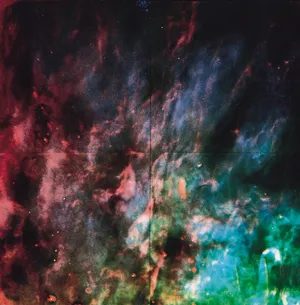
Nicolas-Claude Fabri de Peiresc spotted the Orion Nebula in 1610. It looked like a simple star to the naked eye. Two years had passed since the telescope was invented. Then came Christiaan Huygens. By 1656, he used better instruments to see what Peiresc missed. He identified the bright inner region. He proved the central star was actually a compact quadruple system.
Comet hunters in the early 1700s accidentally found many nebulae. They needed to distinguish real comets from stationary fuzzy blobs. Charles Messier solved this by compiling a list in 1781. He created a catalog of 103 objects to avoid confusion. The list was practical. It contained mostly star clusters. Some were galaxies. Eleven were true nebulae. We still use these names. The Trifid Nebula is M20. It sits in Sagittarius.
The Herschel legacy
William Herschel and his son John dominated observation in the mid-19th century. William worked with his sister Caroline. Between 1786 and 1802, they compiled three catalogs. They listed about 2,500 objects. Clusters. Nebulae. Galaxies.
John expanded the work. He observed from the Cape Observatory in South Africa. He added 1,700 objects visible only from the southern sky. He listed 500 more from England. These records became the foundation for J.L. Dreyer’s work. He published the New General Catalogue in 1888. It held 7,840 entries. Two supplements followed. The Index Catalogues added 5,386 more objects.
Galaxies and nebulae were often indistinguishable at the time. Most bright galaxies are still identified by their NGC or IC numbers. It is a naming convention that survives because it is efficient.
The photographic revolution
Photography changed everything. It recorded faint details the eye could not see. It created a permanent record. Astronomers could study fine details at leisure. The first photo of the Orion Nebula appeared in 1880. Good images did not arrive until 1883. These early photos revealed vast structures. Visual observers had never suspected such distances.
Spectroscopy provided the physical proof. It resolved light into wavelengths. It told astronomers what objects were made of. Stars radiate at all wavelengths. They usually have dark absorption lines. Hot, transparent gas clouds radiate only emission lines. These lines are characteristic of their constituent gases.
In 1864, astronomers studied the Orion Nebula’s spectrum. They saw bright emission lines. Hydrogen lines were conspicuous. Some green lines were even brighter. Galaxies showed a stellar spectrum instead. The distinction became clear. Nebulae are gaseous. Galaxies are stellar. The true sizes of galaxies remained unknown until the 20th century. But the classification was solid.
“Much can be learned about the physical nature of an astronomical object by studying its spectrum.”
This shift from visual guessing to physical analysis marked the end of ambiguity. The sky was no longer just a map of points. It was a collection of distinct physical entities. Some glowed with gas. Others burned with stars. The tools had changed. The understanding followed.
The 20th century didn’t just improve how we look at stars. It changed what we could actually see. Before then, we were mostly guessing at the physical processes governing interstellar matter. Then came better tools. And better eyes.
It started with Bernhard Schmidt. A German optical worker who, in 1930, invented the Schmidt camera. This was a wide-angled lens designed for speed. It could capture faint, extended nebulae that other cameras missed. At the time, photographic plates were getting better. They became sensitive to wider ranges of color. But photography was always a bottleneck. You had to wait. You had to develop. You had to guess.
That era is dead.
We now use charge-coupled devices, or CCDs. Think of them as arrays of tiny photoelectric cells. Each one records light from a specific patch of sky. Modern sensors are square grids. Some have up to 4,000 cells on each side. That is 16 million independent photocells. They look at the sky simultaneously.
Electronic detectors are up to 100 times more sensitive than film. They handle a wider range of light levels. They also catch wavelengths film could never dream of. We are talking about the ultraviolet, starting at 0.1 micrometers. To see that, you need to orbit above Earth’s atmosphere. Then there is the infrared, stretching beyond 1.2 micrometers.
Why Spacecraft Matter for Deep Sky Observations
Earth’s atmosphere is a filter. It blocks a lot of what’s out there. Spacecraft let us see what is normally absorbed.
Gamma rays. X-rays. These have very short wavelengths. Far-ultraviolet radiation also gets blocked by ozone. It has wavelengths shorter than about 0.3 micrometers. Infrared is another story. Water vapor and carbon dioxide in our air soak it up. That covers wavelengths from about 3 micrometers to 1 millimeter.
Why do we need to see these?
Gamma rays, X-rays, and ultraviolet radiation show us the hottest places in space. We are talking about temperatures reaching 100 million kelvins. This happens in shocked supernova gas. It’s violent. It’s energetic.
Infrared does something different. It reveals dark, cold molecular clouds. Starlight can’t penetrate the dust layers there. But infrared slips through. It shows us where stars are being born in the dark.
Reading Light, Not Just Taking Pictures
Primary means of studying nebulae isn’t images. It is spectra.
Spectra show the relative distribution of radiation among various wavelengths. For optical light, that means colors. You can get these spectra using prisms. Diffraction gratings work too. Crystals are used for X-rays.
A particularly useful tool is the echelle spectrograph. It uses two gratings. One is coarsely ruled. It spreads radiation in one direction. The other is finely ruled. It disperses it perpendicularly. This allows astronomers to record a wide range of wavelengths at once. With very high spectral resolution. That means distinguishing slightly differing wavelengths.
For even higher resolution, astronomers use Fabry-Pérot interferometers.
These spectra provide powerful diagnostics. They tell us the physical conditions inside nebulae. Images and spectra from Earth-orbiting satellites have yielded data of unprecedented quality. The Hubble Space Telescope is the most famous example. But it’s not alone.
Ground-Based Radio Telescopes
Ground-based observations still matter. Especially in radio and submillimeter wavelength ranges.
Emission of gas in these ranges provides crucial information. It reveals physical conditions and molecular composition. We use large radio telescope arrays. These are several individual telescopes functioning as a single enormous instrument.
The result is spatial resolution in the radio regime. It is far superior to anything achieved by optical means.
So we have cameras that see deeper. Sensors that catch more light. Spectrographs that break light into its components. And radio arrays that see structure across vast distances. The tools have evolved. The universe has become less of a mystery. But more complex.
The Hydrogen Divide: H I, H II, and Molecular Clouds
Most of a nebula’s personality comes down to its hydrogen. It’s the most abundant element out there, so whether that hydrogen is neutral, ionized, or stuck in molecules dictates everything about the region. Historically, astronomers split these zones into three buckets. If the hydrogen is mostly stripped of its electron (H+), it’s an H II region, also known as a diffuse nebula. If the hydrogen is neutral, it’s an H I region. And if the gas has bonded into molecules (H2), you’re looking at a molecular cloud.
This isn’t just semantics. The type of radiation present changes drastically depending on the state of the gas. And that radiation determines the physical processes that can actually happen.
How Photon Energy Shapes Nebula Structure
Radiation travels as waves, but it delivers energy in discrete packets called photons. Each photon has a specific wavelength and energy level. Gamma rays pack the most punch with their short wavelengths. X-rays, ultraviolet, optical, infrared, microwaves, and radio waves follow in descending order of energy.
Neutral hydrogen atoms are picky eaters. They are extremely efficient at absorbing ionizing radiation. Specifically, they gobble up any photon with at least 13.6 electron volts of energy. That’s roughly equivalent to a wavelength shorter than 0.0912 micrometres.
If a region is dominated by neutral hydrogen, nothing with energy above that 13.6 eV threshold can get through. Except for X-rays and higher energy rays. Those high-energy photons are so intense they can penetrate, but they also force the hydrogen into a transparent state. For everything below that threshold, neutral hydrogen acts like a wall.
The absorption by neutral hydrogen abruptly reduces the radiation field to almost zero for energies above 13.6 electron volts.
This creates a drought of ionizing radiation. If you can’t ionize hydrogen, you certainly can’t ionize heavier elements that require even more energy. The ionic species in these regions are limited to lower stages of ionization. It’s a chemical ceiling set by hydrogen’s absorption limit.
H II Regions: The Open Highways of Light
In H II regions, almost all the hydrogen is ionized. The atoms have lost their electrons. This removes the absorption barrier. Photons of all energies can now propagate freely through the gas.
Because the path is clear, you get ions that need high-energy photons to form. Oxygen ions like O++ appear here. The region is bathed in the full spectrum of stellar radiation because the hydrogen isn’t there to block it.
Where Molecular Clouds Form
Ultraviolet photons with more than 11.2 electron volts can rip molecular hydrogen (H2) apart. They split it into two individual hydrogen atoms. In H I regions, there are plenty of these UV photons. They keep the amount of H2 from building up.
But there’s a catch. Destroying H2 uses up those specific UV photons. It takes a toll on the available energy budget. Then you have to factor in interstellar dust. Dust grains are efficient absorbers of photons across the optical and ultraviolet ranges.
In some parts of space, the combination of H2 destruction and dust absorption drops the number of high-energy photons to zero. Specifically, the count of photons above 11.2 eV falls below the rate at which H2 forms on grain surfaces.
When H2 forms faster than it can be destroyed, it becomes the dominant form of hydrogen. The gas is now a molecular cloud.
Interstellar dust plays a crucial role here. H2 cannot form efficiently in the gas phase alone. It needs a surface to stick to and find a partner. Dust provides that surface. Without those grains, the chemistry falls apart, and the cloud never forms.
The Invisible Architects of Star Formation
Dust is a liar. It looks like nothing in the vast, empty spaces between stars, yet it controls the temperature, chemistry, and very existence of star-forming clouds. It makes up just 0.7 percent of the interstellar medium’s mass. Tiny fraction. But that small amount dictates the physical rules of the game.
Without dust, stars might not form at all.
The primary job of interstellar dust is to block light. Gas is mostly transparent to the photons that can’t ionize hydrogen, but dust? It’s opaque. It eats stellar radiation. The higher the energy, the harder the grain hits back. Radio waves and far-infrared light slip through like ghosts. Near-infrared gets through pretty well. Ultraviolet? Dust stops it cold.
This absorption is a double-edged sword for molecular clouds.
On one hand, dust heats the gas. When a star photon hits a grain, it can kick out an electron via the photoelectric effect. That electron carries energy into the surrounding gas, warming it up. On the other hand, dust cools the gas. It radiates its own energy away more efficiently than the thin gas can. Since the grain is colder than the gas, heat flows from the gas to the dust, and then radiates into space. It’s a thermostat made of rock and carbon.
But the most critical role is chemical. Molecular hydrogen ($H_2$) rarely forms in free space. The atoms can’t find each other. They need a surface to bump into, stick to, and bond with. Dust grains are those surfaces. Without them, the universe would be a soup of atomic hydrogen, not the fuel for stars. Dust also steals heavy elements like iron and silicon. These metals are efficient coolants. By locking them away in solid form, dust changes the thermal balance of the entire cloud.
What Are We Actually Looking At?
If you strip away the solid grains and look only at the gas, you get a skewed picture of the cosmos. Astronomers determine the gas composition by studying narrow absorption lines in the spectra of background stars. It’s a clever trick. You look at the light from a distant star as it passes through a cloud. The gas absorbs specific wavelengths, leaving a barcode.
Compare that barcode to cosmic abundances (solar system standards), and the mystery deepens. Almost all the iron, magnesium, and silicon are missing from the gas. Most of the carbon is gone too. Only some of the oxygen and nitrogen remain in the vapor phase. The rest is locked in the dust.
So, what is that dust?
It’s not just soot. The absorption and scattering data reveal a complex mix. There are silicates, amorphous and rocky, similar to terrestrial minerals but lacking a crystal structure. Then there’s the carbonaceous component. This isn’t uniform. It comes in at least two forms.
First, you have actual grains. Free-flying or attached to silicate cores. Second, you have polycyclic aromatic hydrocarbons (PAHs). These are individual molecules, floating freely. They range from 70 to several hundred carbon atoms, with hydrogen atoms dangling off the edges or trapped inside. Technically, calling PAHs “dust” is a convention. Some of these molecules are only slightly larger than what radio telescopes usually detect. But both forms are necessary to explain the spectroscopic features we see. Add in hydrocarbon mantles coating the larger grains, and you have a messy, complex inventory.
Sizes vary wildly. From 0.0003 micrometers for the tiniest molecules to nearly a full micrometer for the larger grains. There are vastly more small particles than large ones.
Where Does It Come From?
Here’s a paradox. You cannot make dust from gas in the interstellar medium. Not directly. The density is too low. Even in a dense cloud, which feels like an excellent laboratory vacuum to us, the particles are too far apart. They can’t collide and stick long enough to radiate away their heat and form a solid.
Condensation requires density. It requires atoms to hit each other, bond, and cool off.
That process happens elsewhere. In the outer atmospheres of cool supergiant stars.
These stars have gas densities up to $10^9$ times higher than typical nebulae. Conditions are perfect. Refracting materials—silicates and carbon—condense into grains. Then, radiation pressure takes over. The mechanical force of the light absorbed and scattered by these new grains blows them out of the star’s atmosphere. They escape into space, carrying the building blocks of future planets and stars with them.
The Chaos of Mixing
Once in the interstellar medium, the dust is not passive. It is heavily modified by interactions with itself and the gas.
In diffuse clouds, you have many small grains. In dense clouds, those small grains coagulate into larger ones. Why does this matter? Smaller grains are better at absorbing short-wavelength radiation, specifically ultraviolet light around 0.1 micrometers. When they clump together, that ability drops. The cloud becomes more transparent to UV, changing how it evolves.
This clumping is also why heavy elements like iron, magnesium, and nickel are even scarcer in dense regions than in diffuse gas. They’ve been swept up into larger grains. But here’s the kicker: the dust and gas don’t move together.
Calculations show that dust grains collide with gas atoms much more rapidly than simple drift would allow. They must be moving relative to each other. This implies disturbances. Probably magnetic in nature. Magnetic fields keep the dust and gas in a state of chaotic relative motion, constantly grinding, colliding, and exchanging energy.
Turbulent Wakes
The gas itself is in a state of controlled chaos. Flows are complicated. Large-scale movements happen when a hot star ignites at the edge of a cold, quiescent molecular cloud. It creates an H II region—an ionized zone. Pressure spikes. The hot gas expands violently, flowing out through the surrounding material like water bursting from a dam.
You also see bubbles. Expanding structures surrounding stars that are shedding their outer layers in stellar winds. These aren’t static shells. They are dynamic, turbulent environments where dust and gas are constantly being reshaped, destroyed, and reborn.
The dust survives these shocks, mostly. It evolves. It changes. It waits for the next cycle of star formation.
And yet, we still can’t replicate the conditions in a lab. We infer the composition from light. We guess at the origins from stellar atmospheres. The dust is a record of everything that has happened in the space between stars. Every collision. Every explosion. Every quiet moment of condensation. It’s all written in the way it absorbs and scatters the light.
The question isn’t just what the dust is made of. It’s how much of it remains after the next star dies.
Nebulae are never still. Beyond the organized flows you might expect in a calm gas cloud, there is always chaos. Turbulence.
It is the same physics that makes whitewater rapids dangerous, just on a cosmic scale. When fluid viscosity is low, motion breaks down into chaotic eddies. Energy, momentum, and magnetic fields get shuffled from massive structures down to microscopic sizes. Eventually, viscosity wins. The kinetic energy turns into heat. Molecular jiggling increases.
This process dictates how a nebula supports itself against gravity. It also controls its energy budget. We know the basics. We do not know the details.
Measuring the Unmeasurable
How do we see something so messy? We look at light.
Specifically, we look at the width of emission or absorption lines in a nebular spectrum. No spectral line is perfectly sharp. Atomic energy levels are fuzzy. But the lines we observe are often far broader than intrinsic atomic limits allow. Why? Doppler shifts.
Atoms moving toward us shift light to shorter wavelengths (blue). Atoms moving away shift it to longer wavelengths (red). If atoms are zipping around in random directions along our line of sight, the line smears out.
Some of that smear is thermal. Hotter gas moves faster. Lighter atoms move faster than heavy ones. Hydrogen, being the lightest, should zip around the fastest at any given temperature.
Observations confirm this. Hydrogen lines are broader than those of heavier elements. But not as broad as thermal physics predicts. There is extra motion. Bulk motion. Independent of mass.
This is turbulence.
But here is the sticky question. What keeps it going?
Turbulent energy naturally cascades down. Large eddies break into smaller ones. Smaller ones break into smaller ones. Until viscosity dissipates it as heat. If nothing replenishes that energy, the gas should calm down. It doesn’t.
The Cosmic Engine
Energy must be injected. Continuously.
Three main sources drive the interstellar engine.
First, stellar winds. Hot stars blow off gas at thousands of kilometers per second. That is a lot of kinetic energy dumped into the surrounding medium.
Second, supernovae. When massive stars die, they explode with violent force. Remnants can start at 20,000 kilometers per second. They expand outward, slowing gradually until they match the typical cloud speeds of about 10 km per second. That explosion injects massive amounts of energy on large scales.
Third, collisions. Clouds move through the galaxy’s gravitational potential. Occasionally, they hit each other. These collisions transfer momentum, stirring the pot on a galactic scale.
All these processes keep the gas agitated. The energy cascades down to heat, but the source keeps feeding the fire.
The Invisible Scaffold
It is not just gas moving through space. There is a magnetic field threading the spiral arms of the Milky Way.
This field extends thousands of light-years above the galactic plane. It is pervasive. We know it is there because of two distinct signals.
One is radiosynchrotron emission. Very energetic electrons move through the field, emitting radio waves. The other is starlight polarization. Elongated dust grains align with the magnetic field. They act like tiny compass needles, twisting the light that passes through them.
The magnetic field is strongly coupled to the gas. It acts on embedded electrons. Even in neutral hydrogen regions, there are a few free electrons. These electrons collide with other gas particles, imparting motion. The gas and field move together. The gas can slip along the field lines, but it cannot easily move across them.
This coupling matters. The magnetic field exerts pressure. Similar to gas pressure. It influences how the gas moves. It adds a layer of complexity to the turbulence.
Numerical simulations have spent years trying to model these interactions. The results show complex wave motions and confined structures.
We are still mapping the limits of what we understand. The turbulence is not just chaos. It is a dynamic equilibrium. A constant push and pull between gravity, magnetic fields, and stellar violence.
Why do we care? Because this turbulence determines where new stars form. It regulates the density of the gas. If the turbulence were weaker, clouds might collapse more easily. If it were stronger, they might never form stars at all.
We are living inside a turbulent, magnetized, energy-injected soup. And we are just beginning to taste the ingredients.