


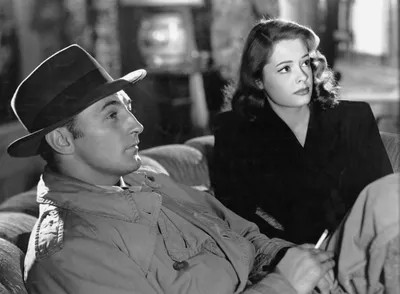

Robert Mitchum didn’t just play the bad guy. He was the bad guy. At least, that’s the durable screen image he crafted. Born in Bridgeport, Connecticut, on August 6, 1917, he carried a sardonic, relaxed style that made him the definitive fatalistic tough guy of mid-century cinema. His personal life was as notorious as his characters. Cynical. Cool. A loner. The combination worked. He died in Santa Barbara County, California, on July 1, 1997.
But before the movies, there was the road. Expelled from Haaren High School in Hell’s Kitchen, New York City, Mitchum hit the highway during the early Depression years. It wasn’t just a drift. It was an education. These experiences shaped his world-weary outlook. He used this backstory for press interviews for the rest of his life. Real grit. Real weariness.
He eventually wound up in Long Beach, California. His sister, Julie, had settled there first. In 1936, she persuaded him to join her in the local theater guild. It wasn’t a grand plan. It was survival. And then opportunity.
His film career started small. A bit role in a Hopalong Cassidy western titled Hoppy Serves a Writ (1943). It was minor. Almost invisible. But it led to other small roles. A pattern emerged. RKO Radio Pictures, Inc. noticed. They gave him a contract. The loner had entered the machine.
The Origin of the Mitchum Myth
Why does Mitchum still resonate? It’s the contrast. On screen, he was unflappable. Off screen, he was chaotic. The public bought the lie. Or maybe they bought the truth of his exhaustion.
His early life in New York City didn’t prepare him for Hollywood glamour. It prepared him for indifference. You can’t fake that kind of detachment. It comes from seeing too much, too young. The Depression years stripped away pretense. What remained was raw.
When he joined the theater guild with his sister, he wasn’t an actor. He was a worker. Acting was a job. A way to stay off the streets. That practical mindset bled into his performances. He didn’t emote. He existed.
The Hopalong Cassidy role was the spark. Not a blaze, just a spark. But it caught. RKO saw potential. They signed him. The machinery of fame began to turn.
Building a Career on Silence
Mitchum’s rise wasn’t loud. It was steady. Like a slow burn. He didn’t need to shout. His silence was louder than most men’s speeches.
This is how Hollywood’s most iconic cynical loner made his mark. Not with charisma. With absence.
What happens when the audience realizes the character is more real than the plot? The story fades. The man remains. Mitchum understood this instinctively. He leaned into the void.
The contract with RKO changed everything. Suddenly, the drifter had a roof. A paycheck. A persona to refine. But the core remained. The kid from Hell’s Kitchen. The one who got expelled. The one who drifted.
He never lost that edge. It sharpen
Academy Award nominations can be misleading. They signal prestige. They suggest the establishment has validated you. Robert Mitchum received one for The Story of G.I. Joe (1945). He played a noble captain. It was a war drama. Respectable stuff.
But that wasn’t the Mitchum people cared about.
He didn’t stick around for the prestige pictures. He didn’t chase the typical Hollywood protagonist route. Instead, he carved out a different niche. Gritty. Low-budget. Crime dramas. The industry calls them film noirs now, but back then, it was just dangerous work.
The Archetype of the Cynic
Look at the roles that defined him. In Out of the Past (1947), he played a private eye. Cynical. Hard-edged. Tired of the game but still in it. Then there was The Locket (1946). He played a disturbed artist. Unstable. Dangerous to himself and everyone else. His Kind of Woman (1951) gave him the part of a shady gambler.
What tied these characters together? Bad judgment.
They made one wrong turn. Then another. Before you knew it, they were in adventures skirting the thin line between right and wrong. Mitchum didn’t play heroes. He played men who made mistakes and lived with the consequences.
The 1948 Scandal That Backfired
Real life caught up with this persona in 1948. Mitchum wasn’t acting. He was arrested for possession of marijuana. It wasn’t a subtle arrest. He served nearly two weeks in jail.
The legal fallout was specific. He was placed on probation for two years. After that time passed, the conviction was struck from his record. Clean slate. Technically.
For most stars in 1948, this would be career suicide. The studios were terrified of scandal. They wanted clean images. They wanted models of morality. Mitchum got none of that.
The Rebel Upgrade
Here is the twist. The scandal didn’t hurt him. It helped.
Fans didn’t turn away. They leaned in. The incident evoked sympathy. It reinforced the image he had been building on screen. He wasn’t just playing rebels and outsiders anymore. He was one.
The marijuana arrest transformed him from a competent actor into a cultural symbol. It proved he was willing to break the rules. In an industry built on control and image management, that authenticity was priceless.
He didn’t need to act tough anymore. He was tough. The real world had checked him. He came back. And the movies were better for it.
But how long does that rebel cred last? The industry changes. Audiences change. Mitchum stayed true to type long after the initial shock wore off. He kept making movies that felt dangerous. Even when they weren’t.
That’s the thing about being the bad boy. You never really get to retire from it. You just get better at it.
Critics didn’t always see it that way. They called him a sleepy-eyed hunk. A guy who just walked through scenes. But that dismissal missed the point entirely. Mitchum didn’t need to shout. His charisma worked in the shadows. He perfected an understated style that felt dangerously real.
Take The Night of the Hunter. He played a murderous preacher that still chills people decades later. Then there was Heaven Knows, Mr. Allison. Here he was a sympathetic marine. The contrast showed range. In The Sundowners, he handled an Australian sheep drover with ease. It wasn’t always the easy path. He took roles that required grit.
His shadowy star image paved the way for the gritty antiheroes that became popular in the 1950s and ’60s.
Look at Cape Fear. That vengeful convict role defined menace. Years later, The Friends of Eddie Coyle showed him as an aging petty hood. It wasn’t glamorous. It was raw. And then Farewell, My Lovely. He brought Raymond Chandler’s Philip Marlowe to life. A detective from the 1940s. Mitchum made the cynicism feel earned, not acted.
Why does this matter now? Because he changed the template. Before him, leads were often clearer cut. Heroic. Good. Mitchum blurred the lines. He paved the way for the complex characters that followed. The ones who weren’t quite good or evil. Just human. Flawed. Dangerous.
You see that influence everywhere today. In the brooding leads of modern thrillers. The quiet intensity. It started with him. A guy who could say almost nothing and make you lean in. He proved that presence matters more than performance. Sometimes. Less is more.