It’s a classic. You’ve likely heard it at a family dinner, a kindergarten class, or maybe even while stuck in an elevator with an acquaintance you don’t really know. The setup is simple. The payoff is punny. But the logic? Actually solid.
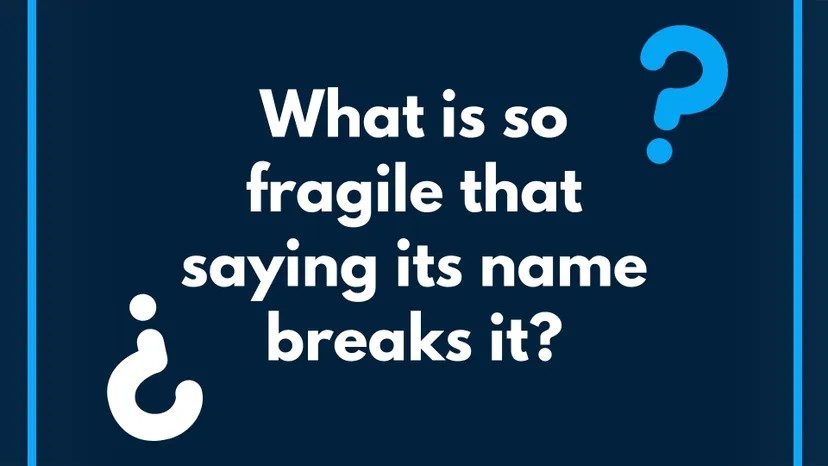
What can you break, even if you never touch it?
The answer is silence.
It sounds like a trick. It feels like a dad joke waiting to happen. But if you look at the mechanics of the language, it holds up surprisingly well. We use the word “break” so loosely in English that it becomes a verb for almost anything fragile, abstract, or sudden. You break a promise. You break a habit. You break a record. And yes, you break a silence.
Think about the physical sensation of a quiet room. It’s heavy. It’s tense. When someone finally speaks, or a chair scrapes against the floor, that quietness shatters. It doesn’t crack like glass, but it divides. It ends. The state of being silent is broken by the arrival of sound.
This isn’t just wordplay. It’s a reflection of how we perceive emptiness. Silence isn’t just the absence of noise. It’s a presence. It’s a state that requires maintenance until something disrupts it.
“Silence is the most powerful sound.”
Consider the context. Where do we encounter this riddle most often? In spaces meant for quiet. Libraries. Movies. Courts. In these places, silence is a rule. To “break” it is to commit a social faux pas, not just a auditory one. You are breaking the unspoken contract of the room.
Is there another answer? Sure. You could argue for a promise. Or a heart. But those rely on metaphorical interpretations. Silence relies on the literal definition of a state being interrupted. It’s the cleanest fit.
It also highlights a weird human quirk. We fear silence sometimes. We fill it with chatter, with music, with noise. To break silence is to escape that tension. It’s a release. That’s why the riddle works so well. It taps into our desire to end the quiet.
The next time someone asks you this, don’t just give the answer. Think about the weight of the quiet you’re breaking. It’s not just a word. It’s a mood. And moods are easy to shatter.