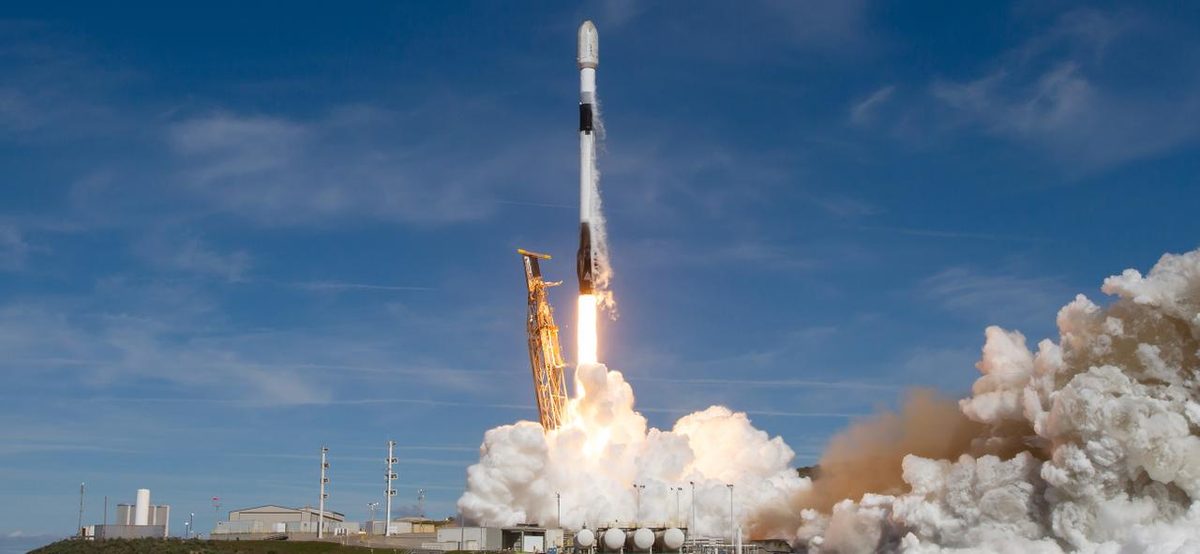
SpaceX’s Falcon 9 second stage rocket faces new obstacles. It seems like just yesterday (July 11th to be exact) a liquid oxygen leak caused a Starlink mission to fail and left dozens of satellites stuck in a lower than expected orbit. And now the same rocket family is grounded again, this time during the critical deorbiting phase of the manned mission.
The main engine of the second stage had begun to steer the Dragon spacecraft back to Earth when the anomaly occurred. It was a frustrating development for a vehicle that had just successfully carried the crew of Crew 9 to the International Space Station (ISS) earlier in the flight. The first stage performed its job perfectly. The second stage got the capsule into orbit. But the final burn intended to bring them home was plagued by a similar glitch that plagued Starlink’s launch months earlier.
Crew 9 complications
The timing couldn’t have been worse for NASA and SpaceX. Crew 9’s mission is already a logistical headache. The number of astronauts, originally four at launch, was reduced to two. Why? Boeing Starliner astronauts had reserved seats and had to return to Earth in SpaceX’s Dragon capsule after their own spacecraft encountered a safety issue while docking with the International Space Station.
As a result, the Dragon spacecraft is carrying fewer people than planned while waiting to bring the Starliner crew home. A failed deorbit burn would not only delay cargo operations. This made it difficult for two particular astronauts to return home, leaving the Starliner crew stranded farther than anyone had hoped. The failure was not a disaster and the crew survived, but it added another operational problem to an already tight schedule.
Not an Isolated Glitch
We can’t help but wonder. Is this a one-time accident, or are there deeper problems with Falcon 9’s second stage? In the grand scheme of SpaceX history, one failure is just a drop in the bucket. The company has accumulated hundreds of successful flights so far. But the concentration of these events is shocking.
Consider the timeline.
* 11. July: The Starlink mission fails due to an oxygen leak in the second stage.
* 28. August: Falcon 9 first stage landing fails.
* Now: Crew 9’s deorbit burn failure appears to be caused by the same second stage propulsion problem.
These are three notable propulsion anomalies that occurred over a period of approximately three months. SpaceX has launched 23 missions between the July failure and its most recent mission, but the pattern is hard to ignore. The second stage is the part of the rocket that burns longer and harder to carry the payload to the final orbit, or, in this case, to deorbit them. A systemic failure in the oxygen supply system or in the Merlin vacuum engine used in the second stage could affect a significant part of the fleet.
Grounded Until Further Notice
SpaceX did what they always do when things go wrong: They stopped. All Falcon 9 flights are on hold as engineers trace the root cause of the anomaly. This mirrored the reaction in July, when the launch was delayed by 15 days. The difference now is the stakes. Launching satellites is expensive. Launching humans is very valuable.
FAA and NASA


Stop chasing algorithms on WhatsApp or Google News just to catch the next big science update. Noise is real and it drowns out the signal. Instead, cut through the clutter. You want breakthroughs, the ones that actually shift how we understand the world, not daily spam.
There are better ways to learn about technology and science without turning your feed into a dumping ground for clickbait and broken links. Focus on sources that prioritize depth over virality. Instead of shouting that the new material is a “game changer,” look for media that explains why the new material is important or how a discovery changes your phone’s battery life.
Curiosity shouldn’t be a subscription service or a notification you swipe away.
The goal is clarity. It’s not about speed. When a new article is published about fusion energy or a chip architecture breaks silicon limits, it needs context, not just a headline. This means bypassing the generic aggregators. Find niche newsletters, focused blogs, and science communicators who take the time to verify claims before they hit your inbox.
It’s not about being first. It’s about being right. And try to explain it in a way that even non-experts can understand. As the hype cycle moves on to the next shiny object, this is the only metric that matters.