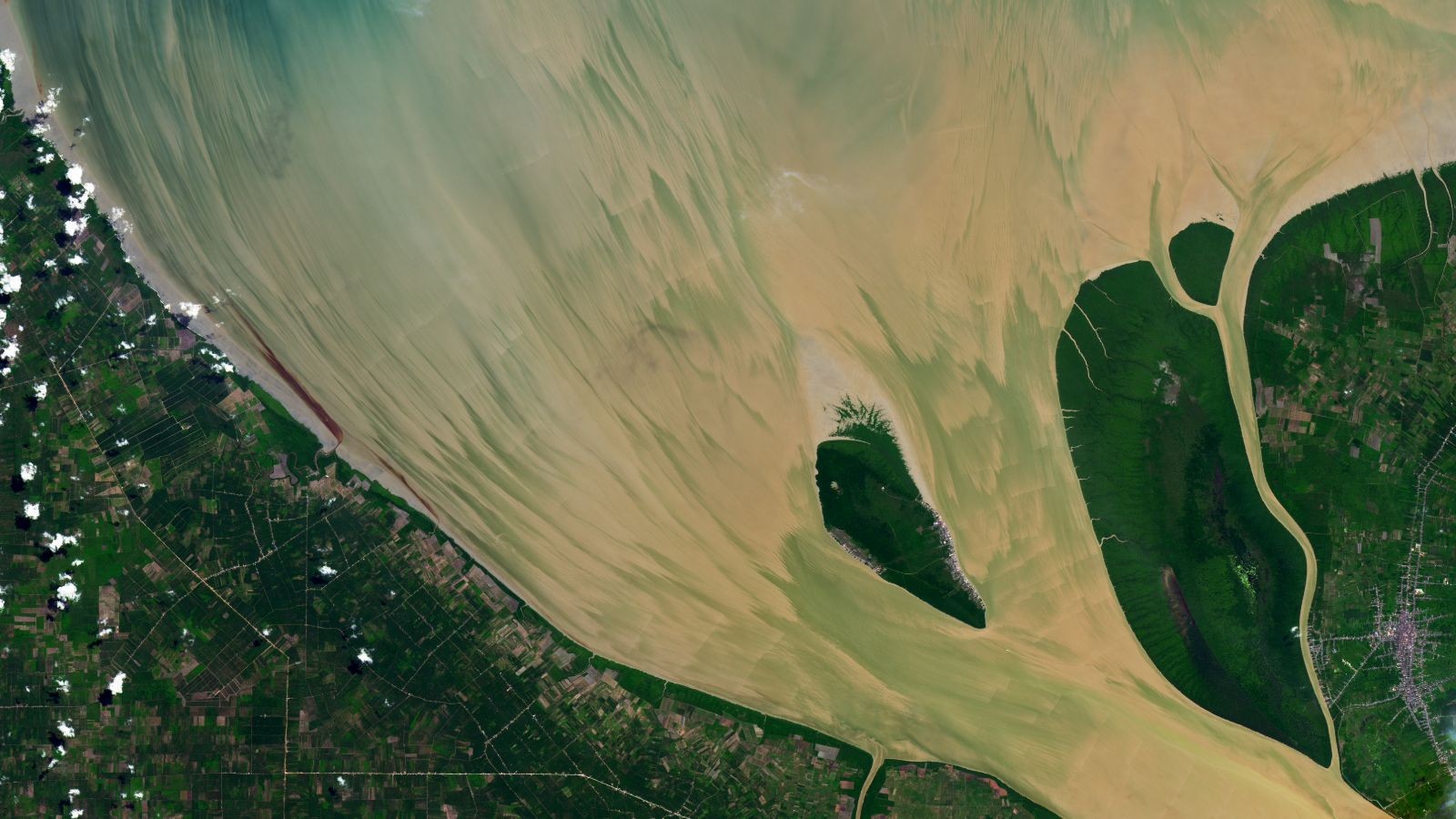
A recent satellite image has captured a stunning, abstract display of color and texture at the mouth of the Rokan River in Indonesia. What appears to be a series of vibrant, muddy “brushstrokes” is actually a complex interplay of lunar gravity, heavy sediment, and powerful tidal forces.
The Mechanics of the “Brushstrokes”
The striking patterns visible from space are the result of high concentrations of sand and silt being suspended in the water. The Rokan River, which flows 220 miles (350 km) from Sumatra’s Barisan Mountains to the Strait of Malacca, naturally carries a heavy sediment load, giving it a distinct yellow hue.
The specific “painted” effect seen in the image was triggered by a combination of factors:
- The Strawberry Moon: The image was captured following a full moon in June (traditionally called the “Strawberry Moon” due to its timing with the northern strawberry harvest).
- Spring Tides: During a full moon, the Earth, Moon, and Sun align, creating a combined gravitational pull. This results in a spring tide, where the tidal range is significantly larger than usual. In this instance, the high tide reached up to 16 feet (5 meters) above low tide levels.
- Ebb Tide Dynamics: The satellite captured the moment the tide began to recede. As the water moved back toward the sea, it dragged the suspended sediment along with it, creating long, streaking patterns that resemble an abstract painting.
A Powerful Estuary in Motion
The Rokan River is not just a passive waterway; it is a highly dynamic environment characterized by a phenomenon known as a tidal bore. This occurs when a powerful surge of water rushes upstream like a massive wave, a rarity found only in narrow estuaries with significant tidal ranges.
This surge acts as a massive engine for the river, constantly churning the bottom and transporting vast amounts of sediment. This movement does more than just create beautiful patterns; it actively reshapes the geography of the region.
Shaping the Coastline
The constant movement of silt and sand has long-term geological consequences. Research indicates that the estuary is in a state of continuous transformation:
- Sediment Deposition: The tidal action moves massive quantities of material through the mouth of the river.
- Shoreline Growth: A study comparing satellite data from 2000 to 2014 revealed that the northern shoreline of Halang Island is expanding at an average rate of 220 feet (67 meters) per year.
This phenomenon demonstrates how celestial cycles—like the phases of the moon—directly influence the physical evolution of our planet’s coastlines.
Conclusion
The “brushstrokes” in the Rokan River are a visual testament to the immense power of tidal forces. Driven by the gravitational pull of the full moon, these patterns reflect a larger, ongoing process of sediment transport that is actively reshaping the Indonesian coastline.