Old labels on old bones are tricky. But recent analysis of six royal skeletons from Egypt’s Middle Kingdom—nearly 4,00 years gone—suggests they weren’t just sitting in palaces.
They held weapons. They used them.
A new study published in Frontiers in Environmental Archaeology argues that pronounced muscle-attachment sites on their bones indicate repeated archery and weapon handling. Princesses like Ita, Noub-Hotep, Itaweret, and Khenmet may have actually trained with the military. Or at least hunted with it.
“Members of the royal family… were active participants in skilled, physically demands activities,” said study author Zeinab Hashesh.
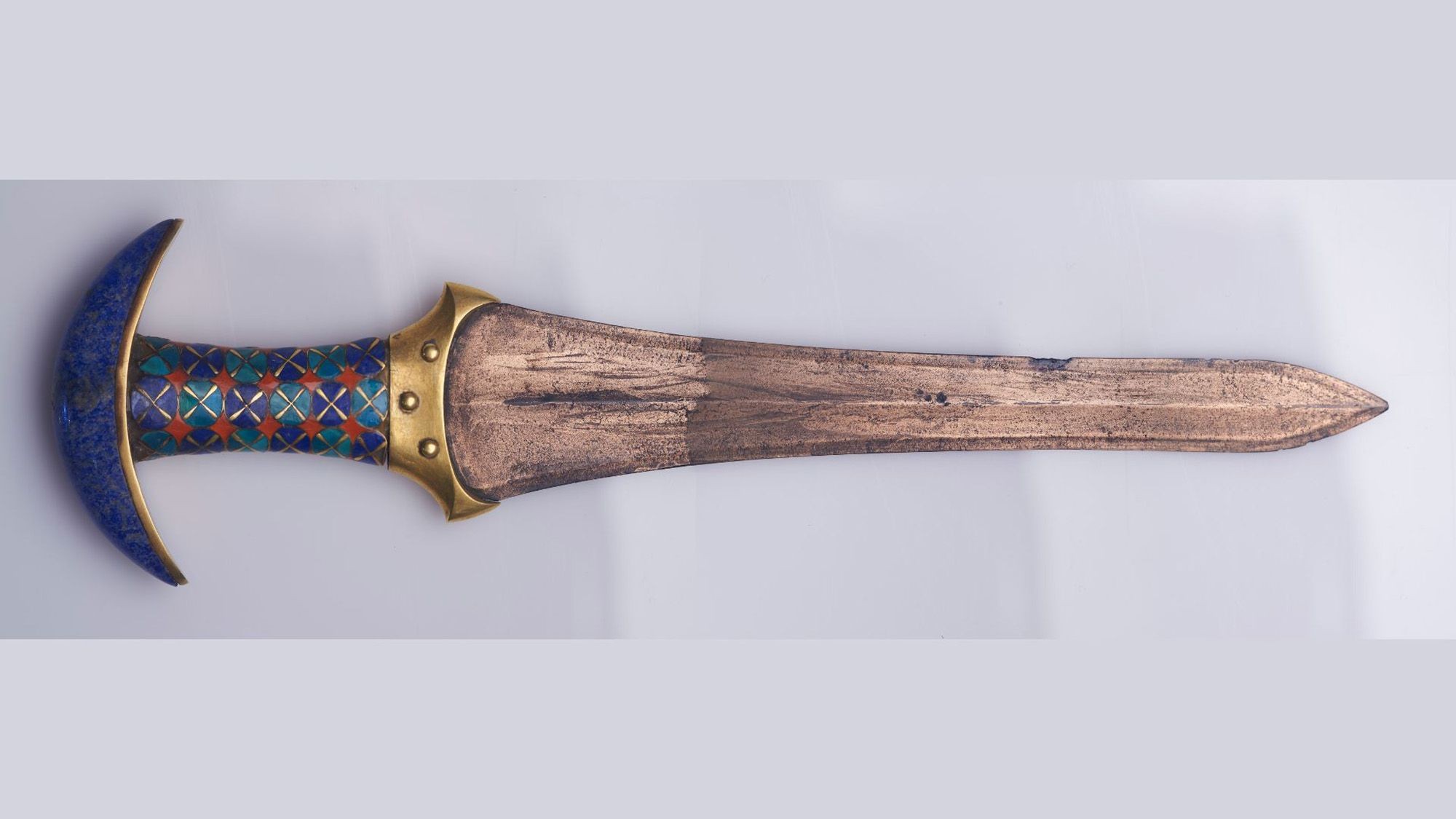
This flips the script on the standard view that those ornate daggers and arrows buried with them were purely ceremonial. Symbolic props. The researchers say no. The bones tell a different story. One of sweat and tension.
Bones from a basement
For decades, these remains were effectively invisible. French archaeologist Jacques de Morgan dug them up near the 13th Dynasty pyramids of Amenemhat II in the 1890s. He left the bones in Cairo’s museum storage, and they gathered dust.
Rediscovery happened by accident in 2020 during a curation project. Out came King Hor. Princess Ita. The mysterious Khenmet. And likely Princess Sithathoriunet, though her identity relies on century-old paperwork that might be flawed. Most of their skulls are missing. Soft tissues are dust.
Sonia Zakrzewski from the University of Southampton is skeptical. She points out the obvious problem. We’re relying on labels from men who died before most modern historians were born. Only 22 to 58 percent of these skeletons survive. You’re reading tea leaves when the cup is half-empty.
Reading the muscles
The team used X-rays and infrared spectroscopy. They focused on entheses, the spots where ligaments latch onto bone. Pull hard enough, often enough, and bone builds up. It gets chunky.
Princess Ita (28-34 years old) showed heavy reinforcement on her right shoulder and arm. She owned an ornate dagger in her grave. Coincidence? The team thinks the grip marks match dagger use.
Princess Noub-Hotep (40s) had reinforced forearms. Jacques de Morgan originally found astonishingly preserved arrows in her tomb. Princess Itaweret showed chest and shoulder strain. Even King Hor had asymmetry. Left side vs. right side.
The authors argue this fits the bow-drawing motion. You pull with one side. You brace with the other. Asymmetry is the fingerprint of an archer. They also suggest maces and daggers left similar marks. These royals weren’t weak. They were armed.
Experts are not convinced
But bioarchaeology hates absolutes. And experts are pushing back hard.
Scott Haddow of the University of Turin notes a flaw in the asymmetry argument. Archery should be lopsided. Yet some of these bones show bilateral strength. Strength on both sides.
“Finding generalized, bilateral robusticity… does not make a particularly strong case,” Haddow wrote.
Zakrzewski agrees. Bone builds up from age. From genetics. From carrying water jugs. From walking up stairs. You can’t pin “archery” on a bony lump without a control group. Did peasants have these bumps too? The study doesn’t say. It only looked at elites.
Sebastien Villotte of the French National Center for Scientific research calls the biomechanical evidence “limited.” Just because arrows were in the tomb doesn’t mean the dead woman shot them. Maybe they were for her servants in the afterlife. Maybe for status.
We don’t have the non-royal comparison data. It’s a blind spot.
Why it still matters
So we are stuck with uncertainty. Skeletal changes are ambiguous. The 19th century labels are suspect.
Yet Zakrzewski admits the work has merit. Examining the bones allows us to “put flesh on them.” Even if the specifics are blurry.
It challenges the image of the passive, decorative royal woman. Whether they hunted lions or just played with toy bows, their bones suggest activity. Agency. Physical presence in a world that usually writes queens as symbols rather than people.
The debate continues. The bones don’t talk, after all. They just wait for the next generation of scientists to ask better questions. And maybe dig a little deeper.