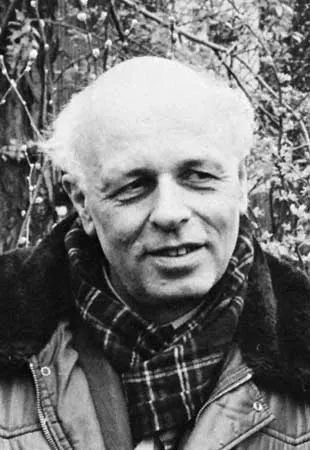
Andrey Sakharov was not just a Soviet physicist. He was a man who built the ultimate weapon and then spent the rest of his life trying to dismantle the system that created it. Born in Moscow in 1921, he became the father of the Soviet hydrogen bomb. Yet, he is best remembered as a dissident. He won the Nobel Peace Prize in 1975. He died in 1989, still in the country that once imprisoned him for speaking out.
His father, Dmitry, taught physics. He was a man of principle. Andrey grew up around books and scientific thought, though he didn’t start formal schooling until he was twelve. It was late 1933. He entered Moscow State University in 1938. Then came the war with Germany. June 1941. He failed his medical exam. Unfit for combat, he was evacuated to Ashkhabad in Central Asia.
It was there, in the capital of the Turkmen Republic, that he finished his degree in 1942. He worked in a munitions factory in Ulyanovsk while studying. That is where he met Klavdia Vikhireva. They married in 1943. Three children followed: Tanya, Lyuba, and Dmitry. The marriage lasted until her death in 1969.
The Architecture of Destruction
When the war ended, Andrey returned to Moscow. He joined the P.N. Lebedev Physics Institute. He earned his doctorate in just two years under Igor Tamm. It was fast. It was brutal. It was brilliant.
By June 1948, Tamm led a special group to investigate thermonuclear weapons. Sakharov joined. He worked alongside Vitaly Ginzburg and Yuri Romanov. They used calculations from Yakov Zeldovich’s team. The Soviet discovery of the hydrogen bomb didn’t happen in a flash. It evolved.
Sakharov proposed his first design in late 1948. He called it the “First Idea.” It involved alternating layers of deuterium and uranium. Think of it like a Sloika. That is Russian for “Layer Cake.” It was analogous to Edward Teller’s “Alarm Clock” design in the U.S. The concept was simple in geometry, if not in execution. Fissile core. Chemical explosive. Layers of fuel.
Ginzburg provided what Sakharov called the “Second Idea.” He published reports in 1949 suggesting lithium deuteride instead of liquid deuterium. The physics changed. Neutrons hit the lithium. It yielded tritium. The fusion with deuterium released far more energy.
Sakharov moved to the secret city of Sarov in March 1950. The facility was known as KB-11, later Arzamas-16. Yuly Khariton led the scientific work there. The goal was production. Not just theory. Real bombs.
By August 12, 1953, a “Layer Cake” model was ready. It was small. It was light enough for an airplane. It had a yield of 400 kilotons. The test detonated. It worked.
Sakharov was thirty-two years old. He became a full member of the Soviet Academy of Sciences. He gained the privileges of the Nomenklatura. The elite status. The security clearances. The money. It was the peak of his scientific career. But the design was not the most advanced. They kept working.
The Third Idea and the Moral Shift
Tamm returned to Moscow in 1953. Sakharov took over the theoretical department. The pressure mounted. The next year brought a breakthrough. The “Third Idea.”
Sakharov claimed he was one of its originators. It was a modern two-stage configuration. It used radiation compression. It mirrored the design American physicists Edward Teller and Stanislaw Ulam had developed.
On November 22, 1955, the Soviet Union tested it. The site was Semipalatinsk. The design worked. It was high-performance. It was terrifying.
But something shifted in Sakharov’s mind. He started looking beyond the physics. He saw the consequences. Atmospheric testing wasn’t just a scientific exercise. It was a death sentence for millions over time. Radioactive fallout. Contaminated air. Sick children.
He tried to persuade officials privately. Years of it. Nothing changed. Then, in 1961, he went public. He opposed Premier Nikita S. Khrushchev’s plan to test a 100-megaton bomb. The atmosphere. The fallout. It would be catastrophic.
Khrushchev listened, but only partially. The yield was cut in half. 50 megatons. The test happened on October 30, 1961. It was the largest nuclear explosion in history. Still massive. Still dangerous.
Sakharov did not back down. He adopted strong moral positions. Scientists had social responsibilities. They couldn’t just build things and walk away. The power to destroy the world came with the duty to stop it.
This was not yet his famous exile. It was not yet the prison camp. But the line was drawn. He had helped create the monster. Now he wanted to leash it. The rest of his life would be a struggle against the state he helped arm. The physics was solved. The politics remained.
The Cost of Conscience
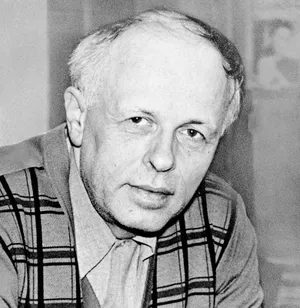
The battle lines were drawn long before the Nobel Prize. By 1964, Andrei Sakharov had already turned his formidable intellect against the pseudoscience of Trofim Lysenko. He didn’t just argue; he mobilized. The Stalin-era biologist’s doctrines were crumbling, and Sakharov helped tear down the last of the ideological scaffolding. But the real turning point came in May 1968.
He finished Reflections on Progress, Peaceful Coexistence, and Intellectual Freedom.
It started as samizdat —typewritten copies passed hand-to-hand in a society that punished individual expression. Then it spilled out of the Iron Curtain, landing in The New York Times and other Western outlets in July. The message was clear and dangerous. He warned of existential threats to humanity. He demanded nuclear disarmament. He predicted, and actively endorsed, a future where communist and capitalist systems would converge into democratic socialism. He also pointed out the growing repression of Soviet dissidents, a trend the state was only too happy to enforce.
From that moment on, Sakharov was no longer just a physicist. He was a political actor. The state responded by banning him from military work. The man who helped build the hydrogen bomb was now forbidden from touching a weapon.
Sakharov’s fearless personal commitment in upholding the fundamental principles for peace between men is a powerful inspiration for all true work for peace.
This quote isn’t just flowery Nobel committee language. It was the justification for awarding him the Peace Prize in 1975. The committee highlighted his uncompromising fight against the abuse of power. They noted his insistence that human rights are the only viable foundation for international cooperation. It was a direct challenge to the Soviet state.
The reaction was immediate and severe. Sakharov was barred from traveling to Oslo. He couldn’t accept the prize in person. Instead, his wife, Yelena G. Bonner, took the stage. They had married in 1972, and she had become his partner in both life and dissent. Her acceptance speech, titled “Peace, Progress, and Human Rights,” was the only way he could speak to the world.
The isolation that followed was total.
Sakharov and Bonner continued to speak out. They criticized Soviet repression at home and hostile foreign relations abroad. The state retaliated with censure, harassment, and isolation. Then came January 1980.
The Soviet invasion of Afghanistan was the breaking point. Sakharov publicly denounced it. He called for a global boycott of the Moscow Olympics. The government’s response was exile. They stripped him of his honors and sent him to Gorky (now Nizhny Novgorod), a closed city where movement was restricted and communication with the outside world was severed. It was a attempt to silence him by making him irrelevant.
In 1984, Bonner was also convicted of anti-Soviet activities. She was confined to Gorky as well. They were together, yet completely cut off.
Breaking the Silence
The stalemate lasted until 1985. Sakharov began a six-month hunger strike. It was a physical dismantling of his own body to force a political concession. The strategy worked. The new Soviet leader, Mikhail S. Gorbachev, granted Bonner permission to leave the country for a heart bypass operation in the United States.
For six months, she was gone. But she wasn’t silent. She met with Western leaders. She focused global concern on her husband’s plight. She wrote Alone Together (1986), a book detailing their situation and the broader struggle for human rights in the USSR.
When she returned, the dynamic had shifted. Gorbachev, perhaps sensing the changing winds of glasnost and perestroika, released Sakharov and Bonner from exile. In December 1986, they returned to Moscow. They had survived the purge. They had won a partial victory.
The final years of his life were a blur of activity. Meetings with world leaders. Press interviews. Travel abroad. Reconnecting with scientific colleagues. Writing memoirs. He had earned his freedom, but he didn’t rest on it.
In March 1989, he was elected to the First Congress of People’s Deputies. He represented the Academy of Sciences. His honours were restored. New ones were added. The policies he had fought for for decades—human rights, openness, democratic socialism—were becoming official state policy under Gorbachev and his successors.
But the victory was incomplete. The system he helped transform was still fragile. The men he had opposed were still in power, albeit in different roles. The world was watching, waiting to see if the changes would stick or if the old ghosts would return. Sakharov had forced the door open, but the room beyond was vast and uncertain.