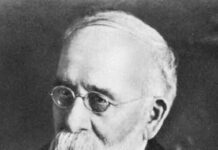
Julian Schwinger didn’t just participate in the quantum revolution. He helped build the engine that drives it. Born in New York City on February 12, 1918, he was a child prodigy who published his first physics paper at just 16. Most people are still figuring out what they want for dinner at that age. Schwinger was already wrestling with the fundamental nature of reality.
He earned his bachelor’s and doctorate degrees from Columbia University before moving to UC Berkeley to work with J. Robert Oppenheimer. The war changed the trajectory of his career, pulling him away from pure academia into the gritty reality of wartime research. He spent time at Purdue and then joined the Radiation Laboratory at MIT, helping to refine radar technology. It was practical work, essential work, but his mind remained fixed on the theoretical.
By 1945, he was back in academia, taking a post at Harvard. Within two years, at age 29, he became one of the youngest full professors in the school’s history. He would eventually settle at UCLA in 1972, staying there until his death in 1994. But his most defining moment came years earlier, in the summer of 1947.
The Shelter Island Breakthrough
The meeting at Shelter Island, Long Island, was supposed to be a relaxed gathering. Instead, it exposed a crack in the foundation of physics. Experimental data presented there directly contradicted the predictions of Paul Dirac, the English physicist whose relativistic quantum theory of the electron had been the gold standard for nearly two decades.
Dirac had predicted that certain hydrogen electron states should be degenerate—meaning they possessed identical energy levels. The new data said otherwise. The magnetic moment of the electron was also off. The theory was broken.
Schwinger saw the problem clearly. While others were flailing, he applied a new method to quantum electrodynamics. He used the concepts of mass and charge renormalization to bridge the gap between theory and the messy, contradictory reality of experimental data.
“This was a crucial breakthrough that initiated a new era in quantum field theory.”
It wasn’t just a tweak. It was a rewrite. Schwinger’s calculation forced theory to align with observation. It worked.
Sharing the Nobel Stage
Schwinger wasn’t alone in solving this. Richard Feynman and Tomonaga Shin’ichiro independently arrived at similar solutions using different mathematical paths. Feynman’s path integrals became famous for their visual clarity. Tomonaga’s work was rigorous and precise. Schwinger’s approach was dense, abstract, and incredibly powerful.
In 1965, the Nobel Committee recognized the trio. They shared the prize for introducing new ideas into quantum electrodynamics. Their combined work created a robust quantum mechanical description of how electrically charged entities interact with the electromagnetic field. Crucially, it did so while adhering to Albert Einstein’s special theory of relativity. Before this, the two frameworks—quantum mechanics and relativity—often clashed. Schwinger and his peers made them dance together.
A Legacy of Influence
Schwinger’s impact extended far beyond his own equations. He touched nearly every frontier of modern theoretical physics. But perhaps his most enduring legacy is the students.
He served as an academic adviser to more than 70 doctoral students and over 20 postdoctoral fellows. Many of them became the leading theorists of their generation. He didn’t just teach physics. He propagated it.
The math he developed is complex. The concepts are dense. But the result is simple: it explains the world with unprecedented precision. We rely on that precision every time we use a laser, a transistor, or a GPS device. Schwinger saw the cracks in the old theory and filled them with new ones. He died in Los Angeles on July 16, 1994. The equations he left behind are still running. Still working. Still waiting for the next generation to ask what comes next.