


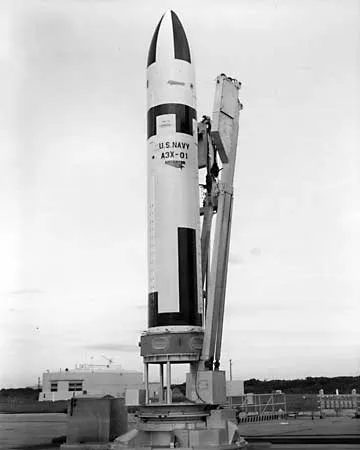
The Polaris missile changed the geometry of nuclear war. Before this system, delivering a retaliatory strike required vulnerable land-based silos or bombers that could be intercepted on the runway. Polaris shifted the battlefield underwater. It became the first successful submarine-launched ballistic missile (SLBM) for the United States, solving a logistical nightmare that had plagued strategists since the dawn of the atomic age.
But the story isn’t just American. The program’s impact rippled across the Atlantic, defining British national security for two decades. For Britain, Polaris wasn’t just a weapon; it was the backbone of their entire nuclear deterrent. The UK operated the Polaris system throughout the 1970s and the 1980s, riding the waves in submarines that served as floating, invisible launch platforms.
Why Submarines?
Land-based missiles are static targets. They sit in holes in the ground. Submarines move. They vanish into the deep blue. This mobility made them nearly impossible to track with any degree of certainty. If a submarine can strike from anywhere in the ocean, an adversary cannot know where to aim first. This is the core concept of mutually assured destruction. You don’t need to win the exchange. You just need to guarantee you can survive it enough to hit back.
The Polaris program leveraged this reality. By embedding the missile in a submarine, the US Navy created a second-strike capability that was robust and survivable. The missile itself was a two-stage solid-fueled rocket. It was relatively simple compared to the liquid-fueled giants of the earlier era. Solid fuel meant it could sit ready for launch for long periods. No complex pre-launch fueling needed. Just fire.
The British Connection
The United Kingdom didn’t just buy the missile. They leased the submarines. The US provided the Polaris warheads and missiles. The UK provided the ships, the crews, and the deployment strategy. This arrangement, known as the Polaris Sales Agreement, allowed Britain to maintain an independent nuclear deterrent without the massive industrial overhead of developing its own delivery system from scratch.
It worked. The resolution of the Cuban Missile Crisis had terrified policymakers on both sides of the Atlantic. They needed a way to ensure stability. A submarine-based force provided that. It removed the “use it or lose it” pressure that land-based systems faced. If a war started, the subs could survive the initial barrage and then launch their payload hours or days later.
The British submarines, part of the Royal Navy, patrolled the oceans. They carried nuclear-tipped Polaris missiles. This configuration lasted until the late 1980s. When the system was finally retired, it was replaced by the Trident system. But Polaris set the template. It proved that submarines could be the ultimate deterrent.
Technical Realities
The Polaris missile, specifically the A3 variant used by the US, had a range of about 2,500 nautical miles. That’s roughly 2,900 statute miles. For the UK version, the range was slightly less due to payload constraints, but still sufficient to reach major targets in the Soviet Union from safe havens in the Atlantic or Pacific.
The guidance system was a major leap forward. It used an inertial navigation system that was updated
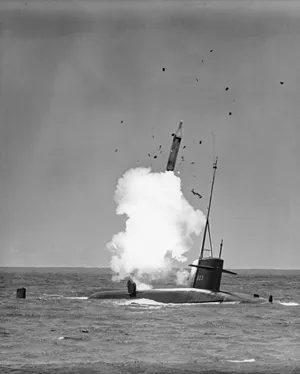

From Polaris to Poseidon: The Evolution of Submarine Deterrence
The U.S. Navy didn’t just stumble into the nuclear age. It took four years of relentless research and development to get it right. By 1960, the fleet was ready. Nuclear-powered submarines began deploying with a terrifying new capability: sixteen Polaris missiles per boat.
The hardware was massive. Each missile stretched 31 feet long and 4.5 feet in diameter. That’s not a small payload. They ran on two stages of solid fuel, reliable and ready. But the real story lies in the variants. The Navy built three distinct models, each with a different strategic purpose.
The Polaris A-1 was the starting point. It had a range of 1,400 miles and carried a single one-megaton warhead. That was enough to erase a city. Then came the A-2. Slightly longer reach at 1,700 miles, but still one megaton. Why did the range matter? Because a submarine could stay further from enemy coastlines, safer from detection.
The A-3 was the game changer. It didn’t just go further. It went twice as far as the A-1, hitting targets 2,800 miles away. And it didn’t bring just one bomb. It carried three separate warheads, each 200 kilotons. Three targets. One submarine. Three strikes.
“The A-3 was capable of delivering three 200-kiloton warheads a distance of 2,800 miles.”
This wasn’t just about destruction. It was about survivability and penetration. The Soviets knew this. And they started building defenses.
Chevaline: Outsmarting the Iron Curtain
The United Kingdom saw the writing on the wall. In 1969, they adopted the Polaris A-3. But they didn’t stop there. They refined it. They called the upgraded system Chevaline (technically A-3TK).
Why tweak a working missile? Because the Soviet Union was getting smarter. Ballistic-missile defenses were rising around Moscow. Decoys. Jammers. Layers of electronic noise designed to confuse incoming warheads. Chevaline wasn’t just a missile. It was a puzzle designed to be unsolvable by radar.
Decoy warheads floated alongside real ones. Electronic jammers screamed static into the sky. The goal wasn’t just to hit. It was to make the enemy waste their defenses on ghosts.
The Trident Era Begins
But even Chevaline had an expiration date. In 1980, the United Kingdom made a decisive move. They announced plans to replace the Polaris force entirely. The replacement? The Trident SLBM.
Trident wasn’t a replacement for Polaris. It was an evolution. A new standard. A new era. The 1990s would bring these missiles into service, carrying forward the legacy of stealth and range.
The Polaris era ended. The Poseidon era began in the U.S. between 1971 and 1978. Poseidon brought its own payload, its own range. But the underlying principle remained the same. Hide underwater. Strike from anywhere. Make sure


