Looks like a sci-fi poster, doesn’t it. Maybe one you saw at the airport. But no.
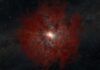
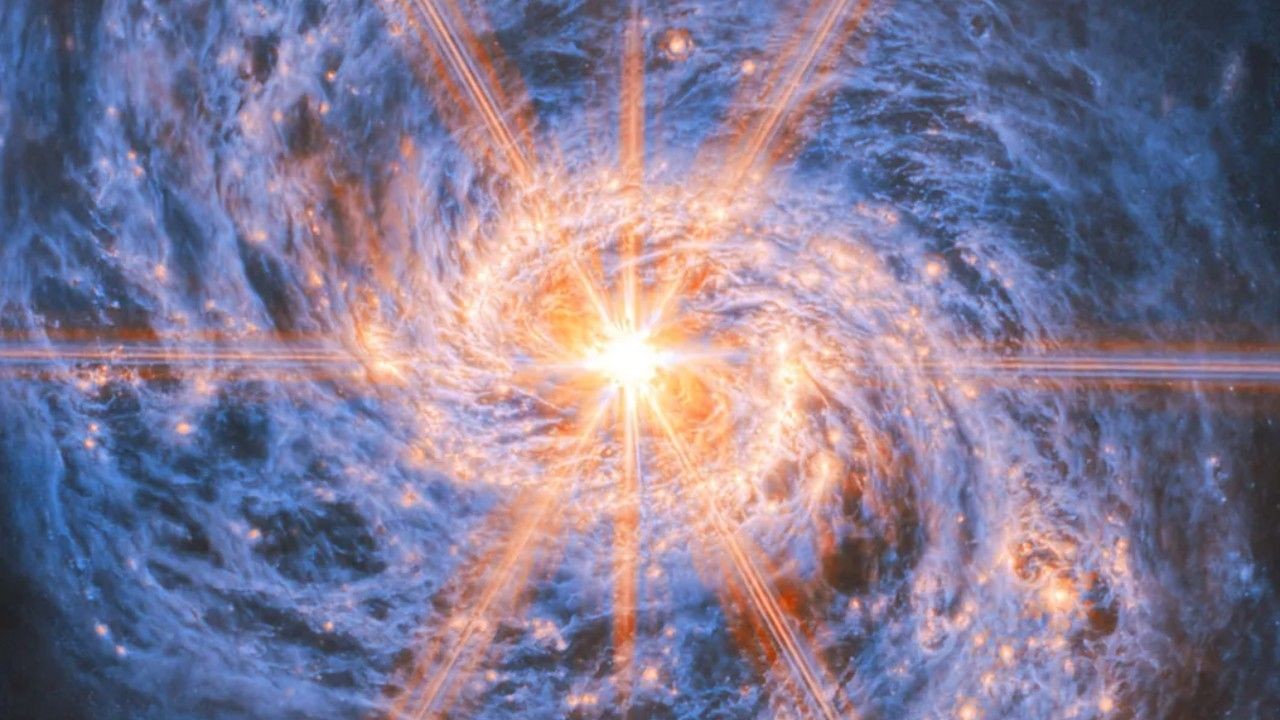
NASA’s James Webb Space Telescope took a new shot of the galaxy Messier 7 on May 19, 2They call it M77 for short. Or sometimes the Squid Galaxy. Why? Look at it. The center glows hard. Rays shoot out like ink jets or tentacles reaching into the void.
A black hole is doing the heavy lifting.
It’s about 47 million light years away. Hanging out in the constellation Cetus the Sea Monster. Fitting, isn’t it. It’s not that faint, either. Magnitude 9.6 means a small telescope can find it. You just need patience.
History is weird this way. We credit Charles Messier because his name is on the catalog. He published it. But Pierre Méchain found it first. A Frenchman telling another Frenchman look, what’s that? Messier took the credit. We all did.
The light comes from the middle. Specifically from the black hole there. Gravity crushes gas. Gas heats up. It screams in radiation. That’s the core of the image. Hot. Dense. Bright.
The beams shooting outward are different. Those aren’t the black hole’s fault. They’re a trick of the mirror. An optical effect from the telescope itself. Don’t confuse the signal with the noise.
Pretty though. Absolutely pretty. The dust swirls around the bright center. It looks alive. Or dead, depending on how you see star formation. Either way. It takes the breath out. Just stare.