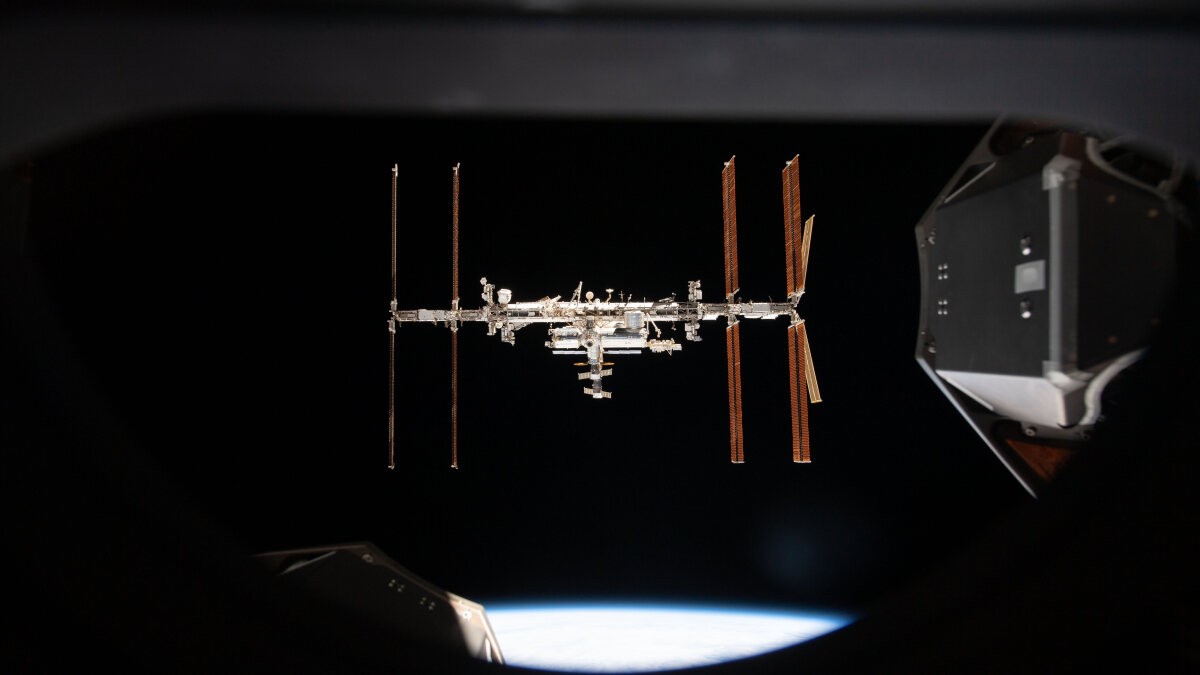
A leak. A crack. A rush back into a spaceship.
NASA astronauts didn’t plan on huddling inside the SpaceX Crew Dragon this Friday, but that’s exactly where they ended up. A Russian repair team was working on the ISS’s leaky transfer tunnel — the PrK module attached to the aging Zvezda service section. Things got messy. Fast. The Americans tucked into the capsule. It was a precaution, really, a “just in case” shelter-in-place order from mission control.
Then it stopped.
Roscosmos hit the brakes on the repair. They needed to measure something. Assess data. After about an hour of sitting on their hands in microgravity, the NASA crew got the all-clear. Back to work. Like nothing happened.
Except it did happen. And it has happened before.
This tunnel has been bleeding air for a while. Cracks have popped up repeatedly, a stubborn reminder that the ISS is twenty-six years old. It is supposed to be a marvel of international engineering. Instead it is a rust-bucket holding together on prayers and epoxy.
“The PrK tunnel… has suffered from cracks and leaks for some-time, and has been mitigated-by Roscosmos-as-much-as possible-to-date,” Bethany Stevens told us via X. “These cracks have always been a concern-that-NASA watches very closely.”
Close monitoring is one thing. Fixing it? That is harder.
On June 5, the leaks got bad enough that Roscosmos tried a serious structural repair. That is when the four Crew-12 astronauts — Jessica Meir and Jack Hathaway (NASA), Andrey Fedyaev (Roscosmos), Sophie Adenot (ESA) — along with Chris Williams (who hitched a separate ride in November), packed into the Dragon.
Smart move.
The repair paused. Data collected. No explosions. The crew returned to their normal tasks orbiting 250 miles overhead. Life on the station continues. But the anxiety does not disappear. It just waits.
Remember three-and-a-half years ago? A coolant leak on Soyuz MS-22. Likely caused by a micrometeoroid punching a hole in an external radiator line. A rock. A grain of sand, really, traveling at miles per second, took out the return vehicle. Russia had to launch a rescue mission to get people home.
We get used to danger when you live in orbit. You normalize it. You stop flinching at every alarm. But flinching is appropriate here. The hardware is old. The environment is hostile. And the political will?
It is thin.
Roscosmos wants out by 2028. NASA says 2030. After that? They plan to burn the station up in the Pacific Ocean. A fiery grave for a two-decade miracle.
Both sides promise a collaborative fix. A “permanent resolution,” Stevens calls it. We can hope. Meanwhile the tunnel leaks. The crew works. The Earth spins below, unaware of the thin layer of aluminum keeping its neighbors alive.
Are we brave enough to keep patching a hole that refuses to close?