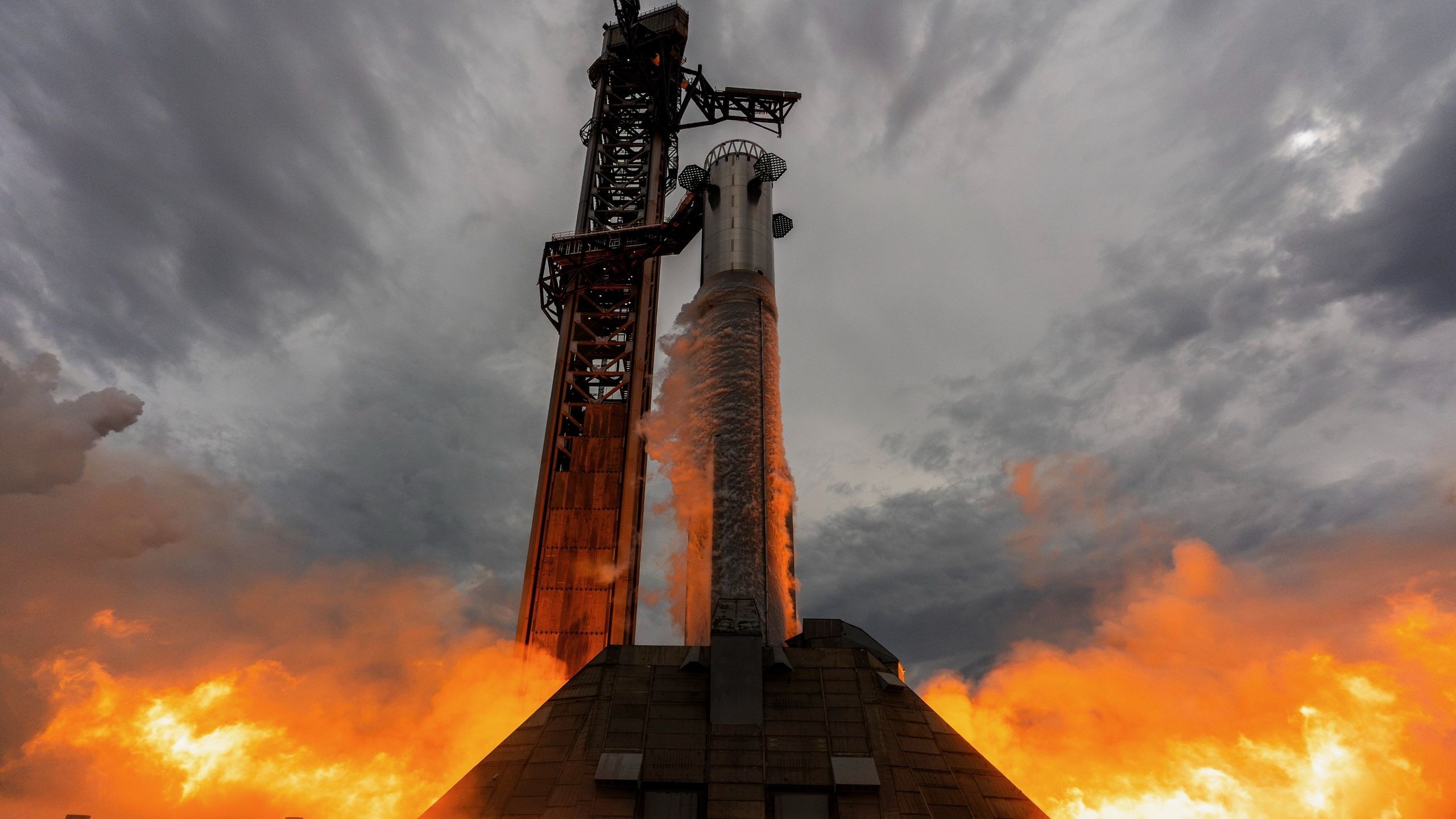
The engines burned bright. Blue-white and angry.
SpaceX just finished the static fire for their next giant leap. Well, not a leap yet. Just a stationary roar. Booster 20. It’s sitting on the stand at Starbase in Texas, held firm by the “Mechazilla” chopsticks that grabbed it yesterday.
July 10. Early morning.
They shut down Boca Chica beach at 8 a.m. Local time. Safety first, obviously. Then they moved the fuel. Cold methane. Liquid oxygen. The dangerous stuff.
At just before 11 a.m., all thirty-three Raptor 3 engines ignited.
Twenty-five seconds.
That was the whole test. But it’s everything. It proved the V3 hardware is alive. And it suggests Flight 13 might actually happen sooner than most people bet on.
Wednesday, July 15. The FAA notice is there. The window is open.
Why the rush? Well, V3 isn’t V2. It’s heavier. Stronger. Built for the real grind of space travel, not just bouncing off the atmosphere. The new rockets have lighter electronics, taller tanks, and the plumbing for in-space propellant transfers. Which brings us to NASA.
SpaceX wants the lunar landing contract. Or rather, they want to keep the one they already have.
Starship is the moon lander for Artemis. That means it needs to work. Reliably. Not just once, but enough to convince the agency that their money is safe. The timeline for getting humans back to the Moon isn’t flexible. Neither is the budget for failed hardware.
Look at Flight 12 last May. Mixed results.
It launched. That’s a win. But the upper stage, Ship 39, had an engine glitch. No in-space relight. The booster, Booster 19, missed its splashdown target. It hit the water like a rock. Not softly. Not gracefully. Just a splash.
So here we are again. Flight 13. Ship 40 and Booster 23. Wait, 20? No, 20. Booster 20. Same numbers.
The goals are the same as before. Fix the bugs.
“To shake out the remainder of the kinks.”
That’s what Elon or the team might say. Translate that to engineer-speak: Make sure nothing explodes unexpectedly.
But there’s a bigger game here. Full reusability.
Starship isn’t just a rocket. It’s a machine built to return. Both stages. Super Heavy. The Ship. They need to come back to the tower. Be caught by the claws. Flipped upside down. Refueled. Fired again.
SpaceX has done this with Super Heavy before. Sort of. They’ve caught the booster. They’ve even reflown a recovered Falcon 9 booster thirty-six times. Thirty-six!
Falcon 9 is a workhorse. It lands on a ship in the middle of the ocean with legs that extend like a startled spider. Simple. Elegant. Brutal physics tamed by aluminum tubes and cold gas thrusters.
Super Heavy is different. No legs. It uses thrust alone.
But the upper stage? That’s the hard part.
Ship doesn’t land with legs. It lands with fire and physics. It comes down belly-first. Black hexagonal tiles heat up. Glowing red, white, maybe purple. It flutters. It dances. It stays horizontal. Like the Space Shuttle. Until it doesn’t.
Then the “flip and burn.”
A maneuver that sounds dangerous in a text message but looks magnificent in slow motion. The rocket pitches over. The engines kick on. It stops its freefall.
For now? It still lands in the Indian Ocean. Flight 13 won’t be a tower catch. But it will be the rehearsal for the future.
If Flight 12 had issues with the booster’s descent? This time, they watch the telemetry. Closely. They check the Raptor 3s. They verify the avionics can handle the chaos.
What happens if it all goes to hell in a handbasket?
SpaceX knows. They expected problems. They’re just looking for which problems those are.
The rocket sits on the pad. Fueled. Tested. Ready.
Maybe Wednesday. Maybe Thursday. The sun comes up. The cameras roll. And we all watch to see if this machine finally stops breaking.
It has to work. If it doesn’t, the Moon waits.
Again.