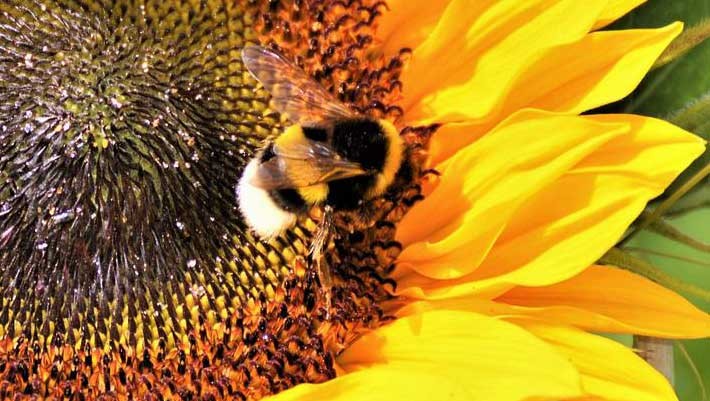
They lick their lips.
Or shake their heads in disgust.
At least that’s what slow-motion cameras show when buff-tailed bumblebees taste different liquids. It looks weirdly like mammals reacting to flavor. Sweet means pleasure. Bitter or salty means trouble.
“This revelation changes our scientific understanding of the outer life of insects,” says Professor Andrew Barron from Macquarie University. “Facial expressions are a window.”
For ages we’ve treated insects like little robots. Just gears and switches. But this new research pushes back hard against that view. There is an inner life in there. Or at least something close enough to count.
The team didn’t just guess. They watched eighteen colonies. They put single bees in tubes and trained them to drink from tiny droplets held just out of reach of their antennae. The bees learned fast. They extended their mouthparts—the proboscis—to grab the sugar water.
Then the real test started.
The researchers offered four types of liquid: strong sugar, weak sugar, plain water, salty water, and quinine. Quinine is the classic bitter stuff.
The results were stark.
Sugar led to glossa protrusions. Basically sticking their tongue out. A post-meal lick of the chops. Salty and bitter liquids triggered aversive head shakes and wiping of the mouth. Like wiping chocolate off your chin after realizing it was actually hot sauce.
Professor Fei Peng at Southern Medical University points out the tension. People accept that insects can learn. They agree bugs make decisions. But saying they feel things as good or bad? That rubs people the wrong way.
“Our findings push on that intuition,” Peng notes. “We can observe emotion-like behaviors.”
Do we know what the bees feel? No. Nobody claims we do. But we can now measure these reactions experimentally. It gives us a handle on something that was previously vague.
Why does it matter? Because it’s not just about bees.
Barron argues that the bee brain is organized much like a fly’s brain. No major differences. If bees have an inner world then so might other insects we usually swat without thinking. Their brains are tiny. Less than a milligram. By human standards that’s nothing.
Yet it supports subjective experience. Or the best proxy we have for it.
The study lands in the Proceedings of the National Academy of Sciences. Published July 6. It suggests that even with microscopic hardware complex mental lives are possible. We don’t need big brains to feel pleasure or disgust.
Does this change how you treat a wasp in your garden? Maybe. Or maybe you’ll just look twice next time they hover.