The biggest galaxies in the sky aren’t making stars like they should. Something is stopping them. A new study using XRISM suggests we know why.
Black hole winds are the culprit.
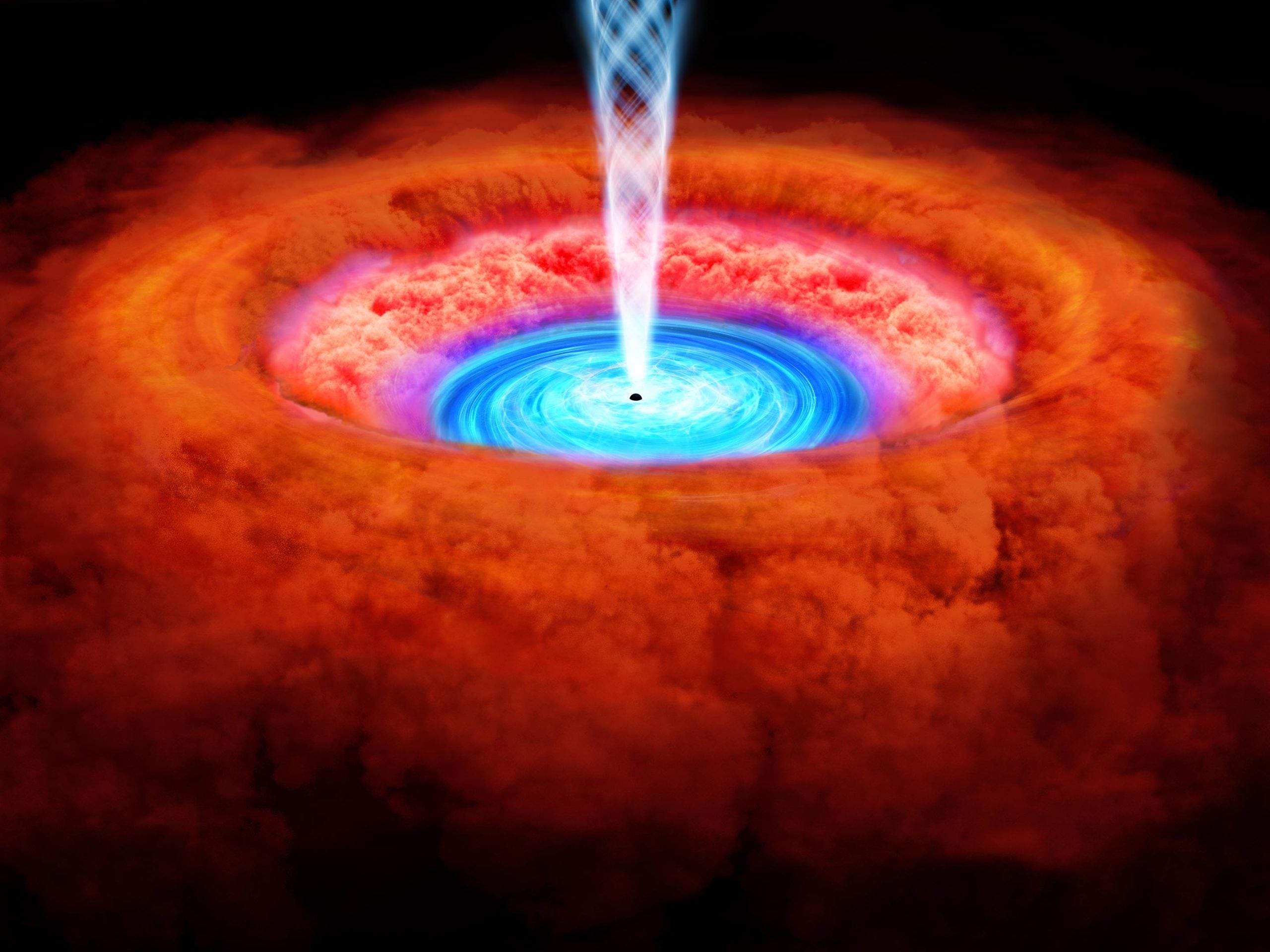
These supermassive anchors of gravity usually get all the press for pulling things in. But they push just as hard. University of Michigan researchers have found that violent winds ejected by these black holes are blowing away the raw material needed for star birth.
Current theory says giant galaxies should be packed with more stellar mass than they currently hold. They’re missing mass. Where did it go? It got blasted into deep space.
What XRISM Sees
XRISM is the X-Ray Imaging and Spectrimetry Mission. Led by the Japan Aerospace Exploration Agency with NASA and ESA partners, it launched in 2023 and started looking in late 2024.
It’s not just a telescope upgrade. The energy resolution is about ten times better than the last generation of instruments.
Before XRISM? We could only see broad outlines of the gas flows. Now we can resolve fine structures. We can see the geometry.
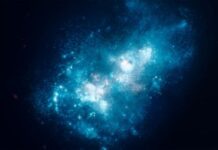
Xin “Cindy” Xiang, a doctoral student at U-M, used the new clarity to look at NGC 4151—a bright active galactic nucleus over 50 million light-years away. At its heart sits a supermassive black hungrily eating matter. That eating process heats the gas into plasma and spins it into a bright accretion disk.
“What is their structure and geometry? How and when are the winds launched?”
Those were the questions the old tech couldn’t answer. XRISM can.
The Mechanism
The winds aren’t just random. They seem driven by magnetocentrifugal forces. Think solar flares on a massive scale. The spinning disk acts like a slingshot, throwing ionized gas away from the center at high speeds.
If those winds are fast enough, they clear the neighborhood. No gas left. No stars to form.
Xiang and Professor Jon Miller had previously shown these winds in NGC 4152 can reach speeds fast enough to escape the galaxy entirely. The new work pinpoints exactly when they kick in.
Tracking the “Cindicity”
Here’s where it gets messy.
Black hole behavior isn’t static. It changes. Xiang spent time analyzing hundreds of days of XRSM data on NGC 4115. She watched the X-ray brightness fluctuate—look for flares. Then she looked at the color. Not visual color. The energy level. Harder or softer X-rays.
She combined these factors into a single metric. A mix of brightness and energy.
Miller suggested shortening the name to “cindicity.” Partly because her name is Cindy. Also because it sounds weird. It works.
“I can tell you the cindicity and you’ll know if you’re seeing a fast outwind.”
That’s the utility. You don’t need months of observation anymore. You take a snapshot, measure the index, and know what the black hole is doing with its exhaust.
The Delay
Here’s the surprise.
The strongest winds don’t happen during the brightest flare.
Xiang found they lag. The fastest outflows arrived roughly 10,000 Seconds later. About three hours. The X-rays went hard and faint, then the wind kicked up.
It’s the first direct timing link. Between the light we see and the gas we suspect is flying off.
Why three hours? Why not zero? Maybe the mechanism needs time to coil up. Maybe the energy builds pressure before it breaks surface tension.
We have a clock now. We just have to wait for the next tick to see if it matches in other galaxies. If it does, our models of galaxy evolution just got a lot less theoretical.
But wait. Is this universal? Or just how NGC 415 likes to play?