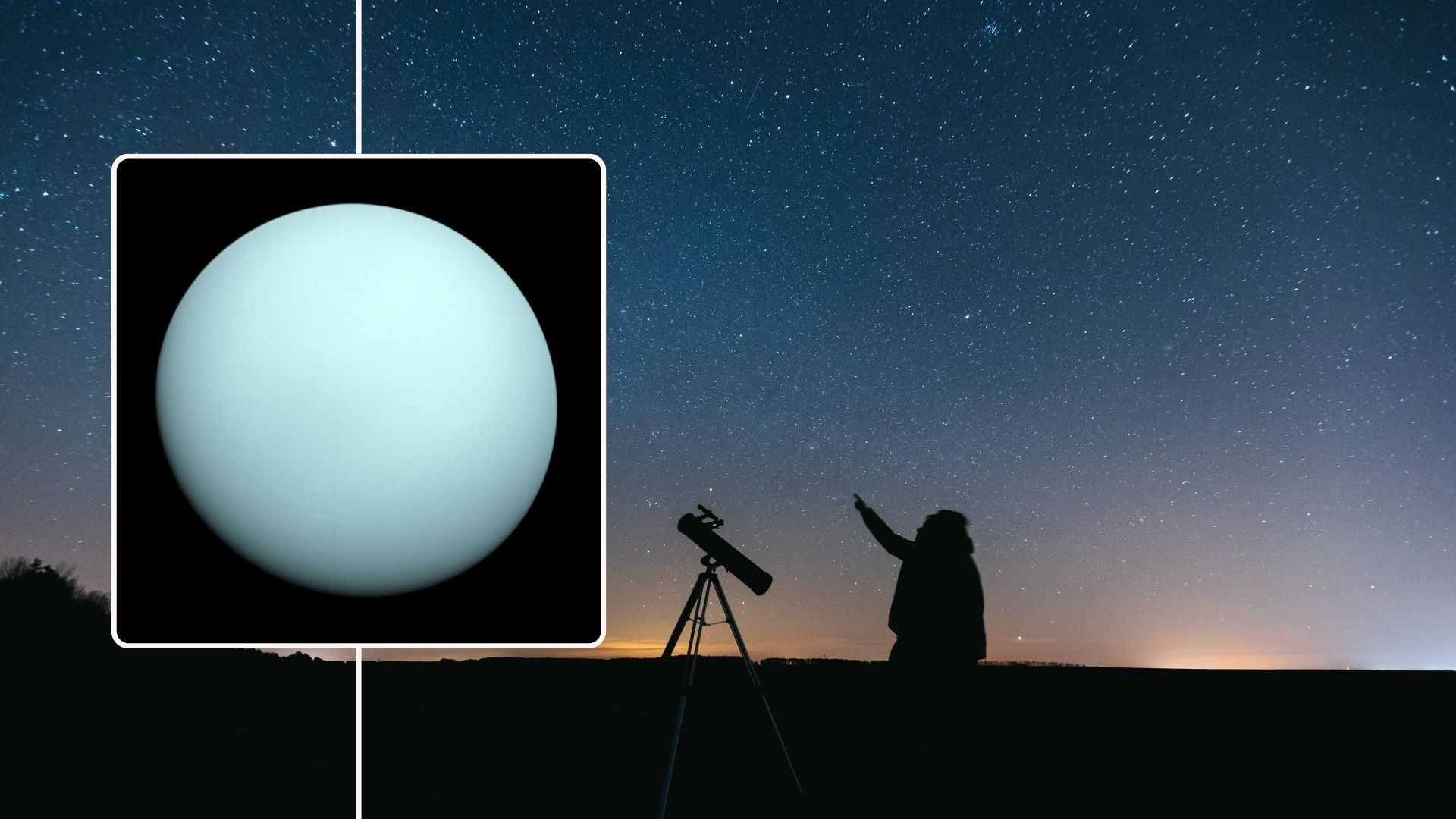
Uranus always felt like the VIP section of the planets. Saturn first, with its rings shining clear as day. Jupiter’s clouds followed, thick and colorful. Venus shrinks to a crescent soon, you know? And Mars sits there with its dusty caps. Easy. But Uranus. The seventh world feels reserved for those with backyard observatories and patience thick enough to choke on. It is an ice giant, technically, yet it hogs a spot four times farther out than Jupiter. Twice as far as Saturn. Tiny in comparison. I didn’t even plan on it.
Then last September changed everything. A freezing night. I looked through a massive Dobsonian belonging to a Salt Lake astronomer at Bryce Canyon. There it was. A blue-green speck 1.8 billion miles out. Faint? Yes. Visible? Absolutely. You have to avert your gaze, let your peripheral vision do the work, because the retina’s edge cells pick up that ghostly glow. It looked like a stuck star, motionless and quiet. Not much of a view.
Or was it. The shock wasn’t seeing it. It was knowing exactly where it was now. Uranus sits at magnitude 5.7, right at the limit of naked-eye visibility. In the dark desert, it’s there. I could no longer ignore it. That shift—from casual looker to hunter—is the whole point of astronomy. Now I always hunt for it. Usually only when big optics are available. But seeing it is a rite of passage. People remember Saturn for beauty. They remember Uranus for the struggle. It’s a find.
The Conjunction: Mars Guides You In
I forget Uranus unless something gets close to it. That’s what happens next. Fast movers like Venus and Mars brush past it twice a year. Venus was near in April. Now Mars takes its turn on July 4. This happens roughly every two years, thanks to Mars sprinting its 687-day lap while Uranus drags its feet over 84 years.
The timing is awkward, sure. The planets sit low in the east just before astronomical dawn. You’ll want to be looking east around 3:45 a.m. You have maybe 45 minutes of darkness. It gets harder by the second. But here’s the trick.
How To Look
Find Mars. That’s the only rule. Mars is bright, magnitude 1.3, hanging below the Pleiades star cluster. You can’t miss it unless you’re blind. Uranus hides just above it. Close. Eleven arc minutes separates them. That fits in binoculars. I’ll use 10x50s, but a small scope works too. No need to hunt through boring star charts and doubt yourself. Mars points the way. You find that pale, blue-green dot.
The satisfaction isn’t in the view. The planet is tiny. The payoff is proof that you looked far enough to touch another world.
There is poetry here, too. July 4 marks 250 years of the U.S. Independence Declaration. Uranus orbits every 84 years, meaning it has spun nearly three full circles since 1776. Nobody knew the planet existed back then. William Herschel found it five years later, in 1781. Back then, six planets ruled the sky. Now we look for nine. Where does Pluto fit in? That’s a story for another day.
The Rest Of The Sky (July 3–9)
Summer drags its twilight out, but things change fast. July 6 brings aphelion. Earth furthest from the Sun. Not that it changes the heat—the tilt does that—but the solar disk shrinks, helping set up the total eclipse in August.
July 7 and 8 offer a final gift before the dark sets in. Last Quarter Moon and Saturn huddle together in the east. Then the Moon vanishes. Ten nights of true darkness follow. Use them.
Asterism To Watch: The Summer Triangle dominates. Vega, Deneb, Altair. They stretch across the zenith like a celestial map. Find them while the sky is still waking up.